Ayodhya Ram Mandir has no iron or steel in its structure; here's why
TIMESOFINDIA.COM | Jan 21, 2024, 01.04 PM IST
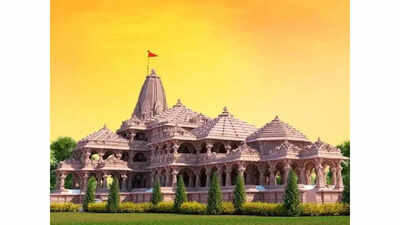
If you're curious about the height of the under-construction Ram Temple in Ayodhya, it's approximately seventy percent of the Qutub Minar's height. Designed in the Nagara style, a prominent tradition in North Indian temple architecture, the temple boasts curvilinear towers (shikharas), a front hall (mandapa), a sanctum (garbhagriha), and intricate carvings. Considered an architectural masterpiece, it reflects traditional Indian heritage. Renowned architect Chandrakant B Sompura, along with his son Ashish Sompura, conceived the temple's design nearly 30 years before construction commenced.
Situated on a 2.7-acre plot, the temple stands 161 feet tall, 235 feet wide, and spans 360 feet in length. It adheres to the ancient Indian Nagara construction, incorporating traditional Vedic rituals alongside modern technology, blending classic architecture with contemporary methods.
Untitled Carousel The three-story structure, spanning 57,000 square feet, reaches about 70 percent of Qutub Minar's height. Elevated on a platform, the holiest part, the 'garbha griha' or sanctum sanctorum, occupies the third floor, crowned by the 'shikhara,' resembling a mountain peak.
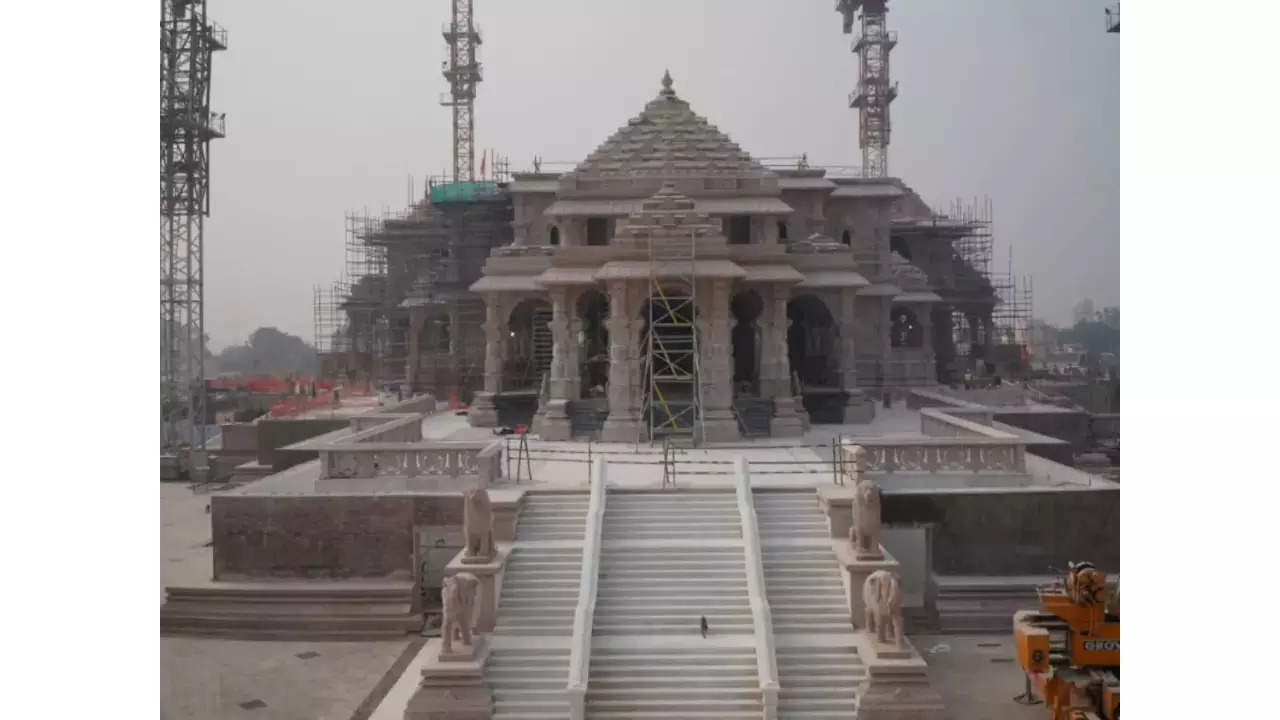
The temple features five mandapas with five shikharas, supported by 300 pillars and adorned with 44 teak doors. Constructed with bricks inscribed with Lord Ram's name, the sanctum sanctorum boasts Makrana marble, the same stone used in the Taj Mahal.
During the Gupta period, the Nagara style emerged, eschewing iron or steel for materials like clay and marble. This practice is reflected in the Ram Temple, promoting longevity and durability. Unlike iron, which typically lasts 80 to 90 years, the temple's construction, using granite, sandstone, and marble, ensures it stands for at least 1000 years. Remarkably, no cement or mortar was used.
Untitled Carousel
The temple's foundation comprises 47 layers of carefully engineered soil laid on excavated ground, reaching depths of 15 meters. Strengthened by a 1.5-meter-thick M-35 concrete raft and a 6.3-meter-thick plinth of solid granite, the structure is robust and enduring.
What adds intrigue is the temple's incorporation of Hindu philosophies alongside the names of top scientists and scientific organisations involved in its creation. The director of the Central Building Research Institute (CBRI) has actively contributed to the project.
Additionally, a special "Surya Tilak" mirror, a lens-based apparatus designed by CBRI and the Indian Institute of Astrophysics (IIA), has been installed. This mirror will be used for the ceremonial appointment of Lord Ram on every Ram Navami, casting light on the idol's forehead.


Situated on a 2.7-acre plot, the temple stands 161 feet tall, 235 feet wide, and spans 360 feet in length. It adheres to the ancient Indian Nagara construction, incorporating traditional Vedic rituals alongside modern technology, blending classic architecture with contemporary methods.
The temple features five mandapas with five shikharas, supported by 300 pillars and adorned with 44 teak doors. Constructed with bricks inscribed with Lord Ram's name, the sanctum sanctorum boasts Makrana marble, the same stone used in the Taj Mahal.
During the Gupta period, the Nagara style emerged, eschewing iron or steel for materials like clay and marble. This practice is reflected in the Ram Temple, promoting longevity and durability. Unlike iron, which typically lasts 80 to 90 years, the temple's construction, using granite, sandstone, and marble, ensures it stands for at least 1000 years. Remarkably, no cement or mortar was used.
The temple's foundation comprises 47 layers of carefully engineered soil laid on excavated ground, reaching depths of 15 meters. Strengthened by a 1.5-meter-thick M-35 concrete raft and a 6.3-meter-thick plinth of solid granite, the structure is robust and enduring.
What adds intrigue is the temple's incorporation of Hindu philosophies alongside the names of top scientists and scientific organisations involved in its creation. The director of the Central Building Research Institute (CBRI) has actively contributed to the project.
Additionally, a special "Surya Tilak" mirror, a lens-based apparatus designed by CBRI and the Indian Institute of Astrophysics (IIA), has been installed. This mirror will be used for the ceremonial appointment of Lord Ram on every Ram Navami, casting light on the idol's forehead.
Earthquake won’t affect Ram Temple for 2500 years: Ram Temple’s Chief Architect Chandrakant Sompura
08:45