Lunar Eclipse 2025: Date and Time in India, Significance of the Chandra Grahan 2025
etimes.in | Mar 13, 2025, 09.17 PM IST
Lunar Eclipse is a rare celestial event when the Earth passes between the Sun and the Moon. Due to this, the Earth blocks the Sun's light from falling on the Moon, thus not making it visible. According to astrology, many people believe that eclipses have a profound impact on our lives. Lunar eclipses are often linked to one's letting go of the past and bottled-up emotions, thus leading to one's spiritual growth. As per reports, the first Lunar Eclipse of 2025 is just around the corner. Read on to know all about it here:
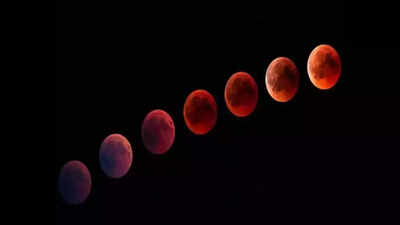
The first Lunar Eclipse, also called Chandra Grahan in Hindi, of 2025 is set to happen on March 14 (Friday) which is also set to be the day of Holi. Reports suggest that this Lunar Eclipse will be a total eclipse, and so the Moon will appear a bit reddish this time also called the Blood Red Moon.
But, this Chandra Grahan or Lunar Eclipse on March 14 will not be visible in India. Instead, it will be visible from America, Western Europe, and the Atlantic Ocean.
Meanwhile, the second Chandra Grahan or Lunar Eclipse of 2025 is expected to happen on September 7-8 and it is said to be visible from India, as per reports.
See More: Lunar Eclipse 2025: Chandra Grahan on the day of Holi; know how to celebrate Holi
Lunar Eclipses or Chandra Grahan are said to hold profound cultural, spiritual, and scientific importance. In 2025, there are said to be two Lunar Eclipses:
1. The first Chandra Grahan will occur on March 14, 2025 and it will coincide with Holi and the Phalguna Purnima i.e. full moon, as per the Hindu calendar. This is a significant occurance as the festival of Holi-- which is celebrated with great joy and enthusiasm symbolises the arrival of spring and the victory of good over evil. Meanwhile, the alignment of the Sun, Earth and Moon during the lunar eclipse with such a major festival is quite rare, which make it unique.
Since this Lunar Eclipse will not be visible in India, the Sutak Kaal-- a time which is considered inauspicious for starting anything new or performing significant rituals— will not be marked in India.
2. The second Chandra Grahan will happen on September 7 or 8, 2025 and the specific timing are not yet widely known. Traditionally, lunar eclipses are considered as a period for reflection, and spiritual practices.People in many cultures also believe that Lunar Eclipses are a great time for meditation, chanting, and one's spiritual growth.
In Hinduism, a Lunar Eclipse or Chandra Grahan is more than just an astronomical event. They are believed to be periods of heightened cosmic activity, which greatly influences human affairs and natural phenomena. Astrologically, this time is considered to offer opportunities for one's transformation and realignment with their higher goals in life.


Lunar Eclipse 2025: Date and Time in India
The first Lunar Eclipse, also called Chandra Grahan in Hindi, of 2025 is set to happen on March 14 (Friday) which is also set to be the day of Holi. Reports suggest that this Lunar Eclipse will be a total eclipse, and so the Moon will appear a bit reddish this time also called the Blood Red Moon.
But, this Chandra Grahan or Lunar Eclipse on March 14 will not be visible in India. Instead, it will be visible from America, Western Europe, and the Atlantic Ocean.
Meanwhile, the second Chandra Grahan or Lunar Eclipse of 2025 is expected to happen on September 7-8 and it is said to be visible from India, as per reports.
See More: Lunar Eclipse 2025: Chandra Grahan on the day of Holi; know how to celebrate Holi
Significance of the Chandra Grahan 2025
Lunar Eclipses or Chandra Grahan are said to hold profound cultural, spiritual, and scientific importance. In 2025, there are said to be two Lunar Eclipses:
1. The first Chandra Grahan will occur on March 14, 2025 and it will coincide with Holi and the Phalguna Purnima i.e. full moon, as per the Hindu calendar. This is a significant occurance as the festival of Holi-- which is celebrated with great joy and enthusiasm symbolises the arrival of spring and the victory of good over evil. Meanwhile, the alignment of the Sun, Earth and Moon during the lunar eclipse with such a major festival is quite rare, which make it unique.
Since this Lunar Eclipse will not be visible in India, the Sutak Kaal-- a time which is considered inauspicious for starting anything new or performing significant rituals— will not be marked in India.
2. The second Chandra Grahan will happen on September 7 or 8, 2025 and the specific timing are not yet widely known. Traditionally, lunar eclipses are considered as a period for reflection, and spiritual practices.People in many cultures also believe that Lunar Eclipses are a great time for meditation, chanting, and one's spiritual growth.
In Hinduism, a Lunar Eclipse or Chandra Grahan is more than just an astronomical event. They are believed to be periods of heightened cosmic activity, which greatly influences human affairs and natural phenomena. Astrologically, this time is considered to offer opportunities for one's transformation and realignment with their higher goals in life.
Super Blood Wolf Moon: Watch the Last Total Lunar Eclipse of 2019
00:59