
They brought 40 sheep to graze near a solar plant, and showed how solar farms can share land with grazing
TIMESOFINDIA.COM | Jun 5, 2026, 10.53 AM IST
Almost every request for a new solar farm in Britain has been met with criticism for years: while renewable energy is important, does it come at the expense of farmland?
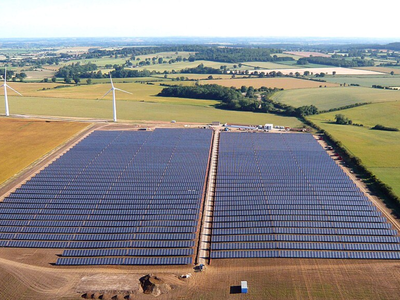
That argument has heated up as the UK works to increase capacity for renewable energy while preserving food production and replenishing wildlife. A new solution, however, is being provided by a community-owned solar park on the Oxfordshire-Wiltshire boundary, where solar panels, wildflowers, and grazing sheep all coexist on the same property.
Sheep are assisting in the upkeep of plants under solar panels at Westmill Solar Park, which is close to Watchfield. This concept challenges the notion that agriculture and renewable energy must compete with one another.
A Solar Farm Built Around Biodiversity
Westmill is not any typical renewable energy facility. It is situated next to one of the UK's first 100 percent community-owned onshore wind farms, on the site of the former RAF Watchfield airfield.
A community-owned solar farm was built on the property in 2012, and the wind farm was put into service in 2008, according to the Westmill Wind Farm Co-operative. When taken as a whole, the projects have developed into a showcase for locally driven renewable energy production.
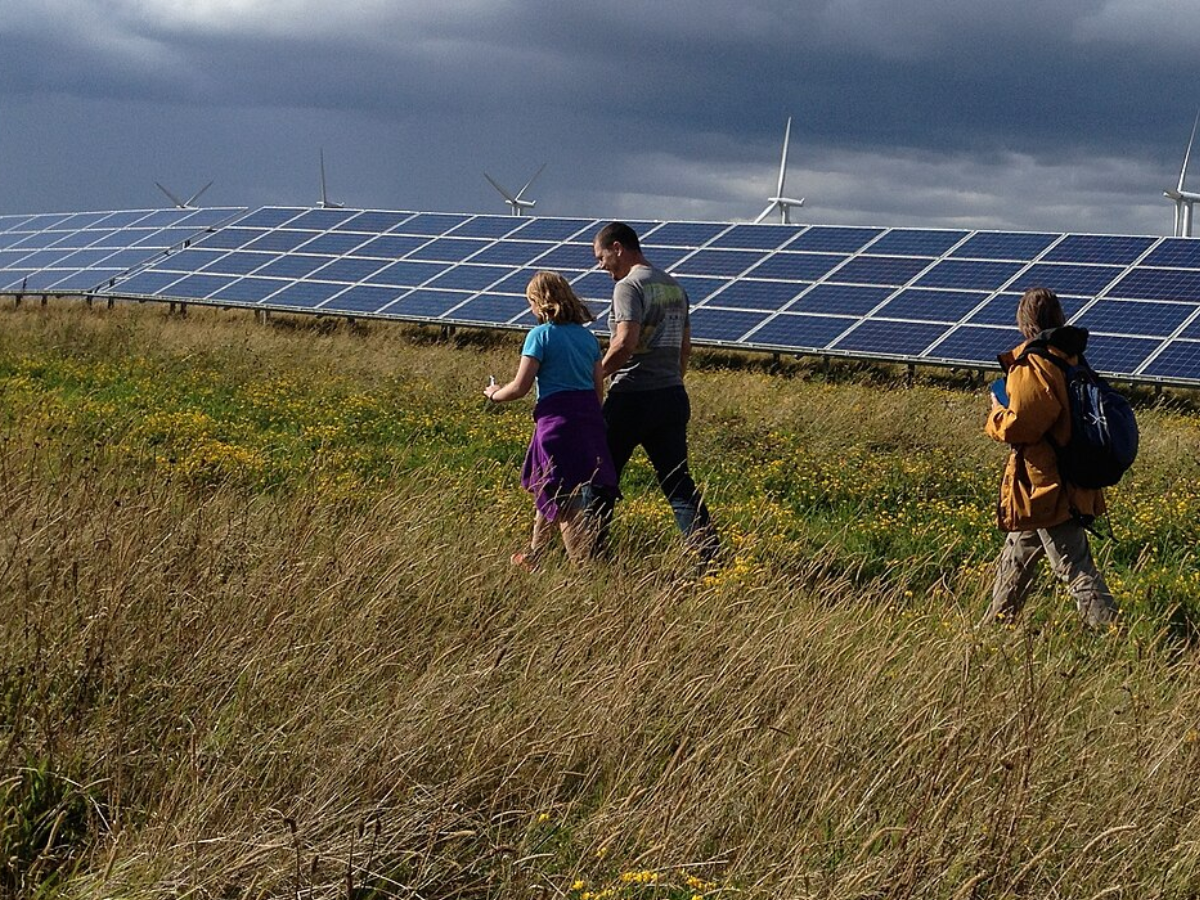
What makes Westmill stand out is the fact that they care about ecological management. They don't see the land under the solar panels as wasted space; instead, it was set up to nurture local plants and animals.
This strategy lines up with what the experts are saying too. The US National Renewable Energy Laboratory (NREL) says that agrivoltaics, which means mixing solar energy with farming activities, can support grazing, supporting grazing, pollinators and native vegetation, while still making power.
Why Sheep Have Become Part of the Energy Equation
Vegetation control is necessary for solar farms in order to keep weeds and grass from blocking maintenance access or shading panels. This is often accomplished by mowing or, occasionally, using herbicides.
Sheep offer a natural substitute at Westmill. They reduce the need for machinery while controlling vegetation by grazing under and between solar arrays. Additionally, their dung returns nutrients to the soil, helping maintain soil health and vegetation cover.
The idea is a component of the larger "solar grazing" movement, which is becoming more popular all around the world.
Well, the advantages go beyond managing grass. Research highlighted by NREL suggests that solar panels can provide livestock with shade and shelter during hot or adverse weather, while grazing animals help manage vegetation naturally.
A Glimpse of the Future
Although the topic of agrivoltaics is still relatively new, interest is rising quickly. NREL researchers have identified agrivoltaics as a supporting approach for reducing potential conflicts between renewable energy development and agricultural land use. Agrivoltaic systems can maximise land use while promoting regional ecosystems by combining solar infrastructure with farming operations.
Westmill's performance raises the possibility that energy generation and farmland won't have to be competing land uses. Rather, it might be in figuring out how to get both to cooperate.
The sheep grazing peacefully beneath the solar panels at Watchfield serve as an unexpected reminder that some of the most creative climate solutions aren't always high-tech, as Britain rushes towards its net-zero targets. Occasionally, they are in the field already.
That argument has heated up as the UK works to increase capacity for renewable energy while preserving food production and replenishing wildlife. A new solution, however, is being provided by a community-owned solar park on the Oxfordshire-Wiltshire boundary, where solar panels, wildflowers, and grazing sheep all coexist on the same property.
Sheep are assisting in the upkeep of plants under solar panels at Westmill Solar Park, which is close to Watchfield. This concept challenges the notion that agriculture and renewable energy must compete with one another.
A Solar Farm Built Around Biodiversity
Westmill is not any typical renewable energy facility. It is situated next to one of the UK's first 100 percent community-owned onshore wind farms, on the site of the former RAF Watchfield airfield.
A community-owned solar farm was built on the property in 2012, and the wind farm was put into service in 2008, according to the Westmill Wind Farm Co-operative. When taken as a whole, the projects have developed into a showcase for locally driven renewable energy production.
What makes Westmill stand out is the fact that they care about ecological management. They don't see the land under the solar panels as wasted space; instead, it was set up to nurture local plants and animals.
This strategy lines up with what the experts are saying too. The US National Renewable Energy Laboratory (NREL) says that agrivoltaics, which means mixing solar energy with farming activities, can support grazing, supporting grazing, pollinators and native vegetation, while still making power.
Why Sheep Have Become Part of the Energy Equation
Vegetation control is necessary for solar farms in order to keep weeds and grass from blocking maintenance access or shading panels. This is often accomplished by mowing or, occasionally, using herbicides.
Sheep offer a natural substitute at Westmill. They reduce the need for machinery while controlling vegetation by grazing under and between solar arrays. Additionally, their dung returns nutrients to the soil, helping maintain soil health and vegetation cover.
The idea is a component of the larger "solar grazing" movement, which is becoming more popular all around the world.
Well, the advantages go beyond managing grass. Research highlighted by NREL suggests that solar panels can provide livestock with shade and shelter during hot or adverse weather, while grazing animals help manage vegetation naturally.
A Glimpse of the Future
Although the topic of agrivoltaics is still relatively new, interest is rising quickly. NREL researchers have identified agrivoltaics as a supporting approach for reducing potential conflicts between renewable energy development and agricultural land use. Agrivoltaic systems can maximise land use while promoting regional ecosystems by combining solar infrastructure with farming operations.
Westmill's performance raises the possibility that energy generation and farmland won't have to be competing land uses. Rather, it might be in figuring out how to get both to cooperate.
The sheep grazing peacefully beneath the solar panels at Watchfield serve as an unexpected reminder that some of the most creative climate solutions aren't always high-tech, as Britain rushes towards its net-zero targets. Occasionally, they are in the field already.