
Bharathiraja was too ‘real’ for Bollywood
Jun 10, 2026, 11.57 PM IST
For most filmmakers, success in Tamil cinema is enough. For Bharathiraja, Bollywood represented a new frontier.
In 1979, just two years after ‘16 Vayathinile’, Bharathiraja crossed the Vindhyas. ‘Solva Sawan’ (meaning ‘Sixteenth Spring’) was his Hindi romantic drama starring Amol Palekar and Sridevi. It marked 15-year-old Sridevi’s debut as a leading actress in Hindi cinema, following her successful career in South Indian cinema.
Unlike many South Indian directors who adapted to Bollywood’s conventions, Bharathiraja believed that human emotions transcended language and geography, and that the rural stories that resonated in Tamil Nadu could connect with audiences there as well.
It should have been a triumph. Instead, unlike the original, the film failed at the box office. The problem would shadow the director across all his Hindi ventures. The sensibilities of his Tamil films — the silences of a drought-stricken village, the unspoken class tensions between a young woman and two men — did not survive the crossing into Bollywood’s more operatic grammar.
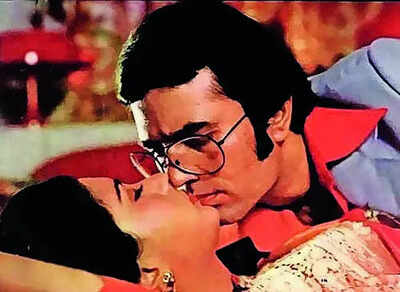
His most notable Hindi venture was ‘Red Rose’ (1980), starring Rajesh Khanna. A remake of his Tamil psychological thriller ‘Sigappu Rojakkal’, the film demonstrated the director’s ability to move beyond village dramas. He often found himself stereotyped as a chronicler of rural life, but ‘Red Rose’ proved he was equally comfortable navigating the darker corners of the human mind.
Working with Khanna, then one of India’s biggest stars, was a significant milestone. Yet Bharathiraja approached the superstar much as he approached newcomers in Tamil cinema — focusing on the character rather than the image.
His Bollywood journey continued with ‘Lovers’ (1983), a Hindi adaptation of ‘Alaigal Oivathillai’. However, Bharathiraja soon discovered that what worked organically in Tamil Nadu’s cultural landscape did not always translate seamlessly to Hindi-speaking audiences.
The challenge was not merely language. It was culture. His stories drew strength from local customs, caste dynamics, rural landscapes and the emotional rhythms of village life. When these narratives were transplanted into the Hindi belt, some of their authenticity inevitably got diluted. The director later admitted that the emotional connection he shared with Tamil audiences was difficult to replicate elsewhere.
There was also a clash of filmmaking cultures. Bollywood of the 1980s was star-driven, emphasising glamour, larger-than-life storytelling, and commercial formulas. Bharathiraja believed in realism and preferred newcomers to established stars. His approach had revolutionised Tamil cinema but found fewer takers in Mumbai.
Ironically, Bharathiraja played an important role in encouraging actors from the South to explore opportunities in Bollywood. He was among those who believed that talents such as Sridevi could become national stars, a prediction that proved accurate.
Despite his limited success in Hindi cinema, Bharathiraja never viewed the experience as a failure. Instead, it reinforced his understanding of what made his filmmaking unique. The villages of Tamil Nadu, the dialects, the landscapes.
In 1979, just two years after ‘16 Vayathinile’, Bharathiraja crossed the Vindhyas. ‘Solva Sawan’ (meaning ‘Sixteenth Spring’) was his Hindi romantic drama starring Amol Palekar and Sridevi. It marked 15-year-old Sridevi’s debut as a leading actress in Hindi cinema, following her successful career in South Indian cinema.
Unlike many South Indian directors who adapted to Bollywood’s conventions, Bharathiraja believed that human emotions transcended language and geography, and that the rural stories that resonated in Tamil Nadu could connect with audiences there as well.
It should have been a triumph. Instead, unlike the original, the film failed at the box office. The problem would shadow the director across all his Hindi ventures. The sensibilities of his Tamil films — the silences of a drought-stricken village, the unspoken class tensions between a young woman and two men — did not survive the crossing into Bollywood’s more operatic grammar.
His most notable Hindi venture was ‘Red Rose’ (1980), starring Rajesh Khanna. A remake of his Tamil psychological thriller ‘Sigappu Rojakkal’, the film demonstrated the director’s ability to move beyond village dramas. He often found himself stereotyped as a chronicler of rural life, but ‘Red Rose’ proved he was equally comfortable navigating the darker corners of the human mind.
Working with Khanna, then one of India’s biggest stars, was a significant milestone. Yet Bharathiraja approached the superstar much as he approached newcomers in Tamil cinema — focusing on the character rather than the image.
His Bollywood journey continued with ‘Lovers’ (1983), a Hindi adaptation of ‘Alaigal Oivathillai’. However, Bharathiraja soon discovered that what worked organically in Tamil Nadu’s cultural landscape did not always translate seamlessly to Hindi-speaking audiences.
The challenge was not merely language. It was culture. His stories drew strength from local customs, caste dynamics, rural landscapes and the emotional rhythms of village life. When these narratives were transplanted into the Hindi belt, some of their authenticity inevitably got diluted. The director later admitted that the emotional connection he shared with Tamil audiences was difficult to replicate elsewhere.
There was also a clash of filmmaking cultures. Bollywood of the 1980s was star-driven, emphasising glamour, larger-than-life storytelling, and commercial formulas. Bharathiraja believed in realism and preferred newcomers to established stars. His approach had revolutionised Tamil cinema but found fewer takers in Mumbai.
Ironically, Bharathiraja played an important role in encouraging actors from the South to explore opportunities in Bollywood. He was among those who believed that talents such as Sridevi could become national stars, a prediction that proved accurate.
Despite his limited success in Hindi cinema, Bharathiraja never viewed the experience as a failure. Instead, it reinforced his understanding of what made his filmmaking unique. The villages of Tamil Nadu, the dialects, the landscapes.