
- News
- Auto News
- Motorsports News
- ABB FIA Formula E: Sustainable racing, charging tech behind Gen 3 cars and other key insights
Trending
This story is from February 16, 2023
ABB FIA Formula E: Sustainable racing, charging tech behind Gen 3 cars and other key insights
Driving EV adoption is currently obstructed by our country’s charging infrastructure. However, the lack is also an opportunity to build an optimised and future-ready infrastructure with technologies such as the ABB Ability™ OPTIMAX® software, which can maximise charger-up time by leveraging connectivity and remote monitoring. To ensure the proper installation of these energy units, ABB prioritises the right collaborations.
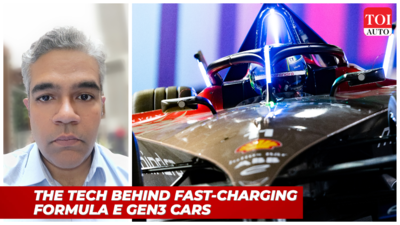
India got its first-ever Formula-E world championship on February 11 and the crowds gathered in Hyderabad to witness the sustainable equivalent of the Formula 1 races. Formula-E was brought into the country in partnership with an e-mobility solutions provider, ABB. We recently got a chance to interact with Hitender Vigamal, Country Lead, ABB India, who shared intricate details about the races, the fast-charging technology behind Gen 3 cars and how testing information gathered at the championship can help EV manufacturers fast-track development.
Vigamal told TOI Auto, “From Season 9, ABB has taken on its new role within the series as Official Charging Partner. Working with engineers from the motorsport governing body, the FIA and Formula E. ABB developed a compact, reliable and safe solution for charging the new Gen3 cars before race day and between sessions. The ABB Formula E Race Charger has been designed in a robust, custom and ergonomic way that allows for easy global transportation and installation.”

Earlier (2018-2022), Gen 2 Formula E cars featured batteries that had a peak output of 200 kW, this required drivers to swap cars midway into the race, this was later upgraded and allowed the cars to last a full race. However, in the latest Gen 3 cars, the peak power output has been increased to 350 kW and can go up to 600 kW. These new cars also feature regenerative braking which further increases energy consumption, leading to over 40 percent of the vehicle’s energy consumption coming from regeneration.
“The ABB Formula E Race Charger features ABB’s newest charging technology and draws on the company’s leading position in the sector. Its design adapts technology already proven in road car charging applications to suit a demanding motorsport environment. It offers the greatest reliability and consistency of performance, wherever in the world the chargers are used, from various power sources managed by the ABB Ability™ OPTIMAX® energy management software.” Vigamal said.
The ABB Ability™ OPTIMAX® software is deployed at race circuits to monitor and analyze total race-specific energy output more efficiently. Up to 14 metering boxes are installed at host venues, collecting data on how much electrical power (kilowatts) is being used by teams and other race partners at any given moment, and how much electricity (kilowatts hours) is consumed. This information is then relayed back to race control via the Microsoft Azure cloud. “Total consumption across entire E-Prix sites is also monitored, encompassing operations including the TV broadcast suite, E-Village fan zone, media centre, catering facilities, the paddock and, of course, the teams’ pit garages,” Vigamal added.
Driving EV adoption is currently obstructed by our country’s charging infrastructure. However, the lack is also an opportunity to build an optimised and future-ready infrastructure with technologies such as the ABB Ability™ OPTIMAX® software, which can maximise charger-up time by leveraging connectivity and remote monitoring. Vigamal told TOI Auto, “Remote monitoring and diagnostics can detect up to 90% of cases remotely, of which 75% of reliability issues can be solved without on-site intervention.”
To ensure the proper installation of these energy units, ABB prioritises the right collaborations. Then there is the barrier of personnel with the correct qualifications, a problem being faced by many in the sector. According to Vigamal, ABB navigates this issue by, “Investing in training programs that support our partners and customers to ensure the highest levels of safety and competence for the technicians who install our charging systems. Not only does this strengthen the charging infrastructure rollout but also positively impacts the reliability and longevity of the chargers.”
He further pointed out, “Another key development is Vehicle-to-Grid (V2G) technology, which opens new opportunities for energy trading and smart energy management. V2G technology utilizes bi-directional chargers to access the energy stored in EV batteries, counterbalancing the uneven distribution of renewable energy and allowing businesses and households to better balance loads and mitigate grid bottlenecks.”
Vigamal is confident that by using the ABB FIA Formula E held in Hyderabad as a test bed for innovation, EV manufacturers and suppliers can fast-track development. Charging the Formula E cars has also given ABB valuable testing information in a high-paced, competitive environment. The experience and knowledge gained will be used to improve ABB chargers for customer and consumer use.
Vigamal told TOI Auto, “From Season 9, ABB has taken on its new role within the series as Official Charging Partner. Working with engineers from the motorsport governing body, the FIA and Formula E. ABB developed a compact, reliable and safe solution for charging the new Gen3 cars before race day and between sessions. The ABB Formula E Race Charger has been designed in a robust, custom and ergonomic way that allows for easy global transportation and installation.”
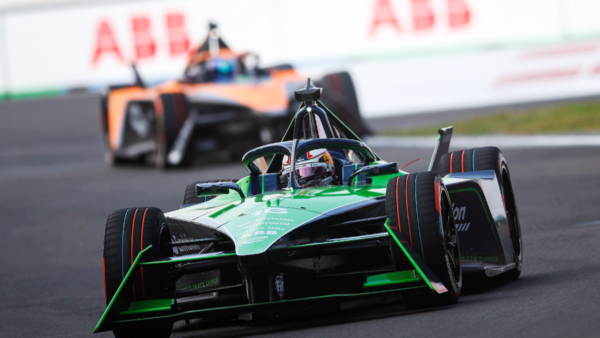
Earlier (2018-2022), Gen 2 Formula E cars featured batteries that had a peak output of 200 kW, this required drivers to swap cars midway into the race, this was later upgraded and allowed the cars to last a full race. However, in the latest Gen 3 cars, the peak power output has been increased to 350 kW and can go up to 600 kW. These new cars also feature regenerative braking which further increases energy consumption, leading to over 40 percent of the vehicle’s energy consumption coming from regeneration.
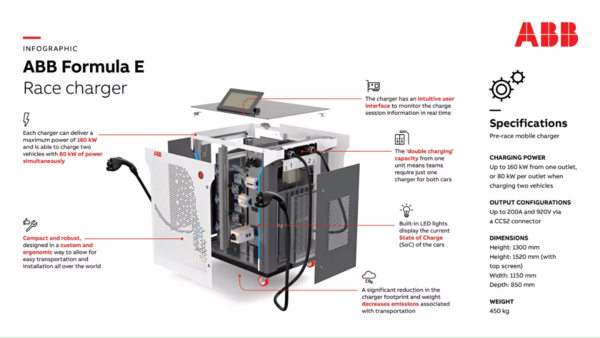
However, the cars still need to be charged and that is where the ABB fast-chargers came in. The ABB Formula E fast-chargers deliver a maximum power of 160 kW and can charge two cars simultaneously at 80 kW capacity each. This particularly comes in handy for race teams, who get double charging capacity during championships.
Source: ABB Global
“The ABB Formula E Race Charger features ABB’s newest charging technology and draws on the company’s leading position in the sector. Its design adapts technology already proven in road car charging applications to suit a demanding motorsport environment. It offers the greatest reliability and consistency of performance, wherever in the world the chargers are used, from various power sources managed by the ABB Ability™ OPTIMAX® energy management software.” Vigamal said.
The ABB Ability™ OPTIMAX® software is deployed at race circuits to monitor and analyze total race-specific energy output more efficiently. Up to 14 metering boxes are installed at host venues, collecting data on how much electrical power (kilowatts) is being used by teams and other race partners at any given moment, and how much electricity (kilowatts hours) is consumed. This information is then relayed back to race control via the Microsoft Azure cloud. “Total consumption across entire E-Prix sites is also monitored, encompassing operations including the TV broadcast suite, E-Village fan zone, media centre, catering facilities, the paddock and, of course, the teams’ pit garages,” Vigamal added.
Driving EV adoption is currently obstructed by our country’s charging infrastructure. However, the lack is also an opportunity to build an optimised and future-ready infrastructure with technologies such as the ABB Ability™ OPTIMAX® software, which can maximise charger-up time by leveraging connectivity and remote monitoring. Vigamal told TOI Auto, “Remote monitoring and diagnostics can detect up to 90% of cases remotely, of which 75% of reliability issues can be solved without on-site intervention.”
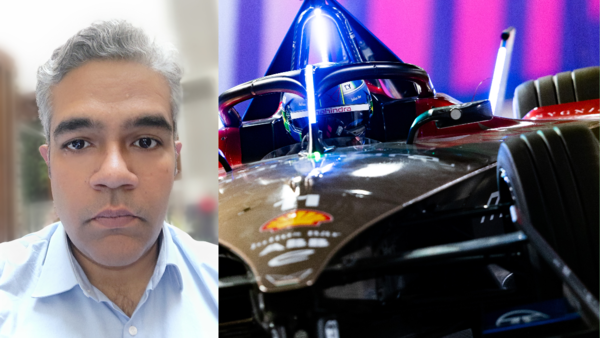
Left - Hitender Vigamal, Country Lead, ABB India.
To ensure the proper installation of these energy units, ABB prioritises the right collaborations. Then there is the barrier of personnel with the correct qualifications, a problem being faced by many in the sector. According to Vigamal, ABB navigates this issue by, “Investing in training programs that support our partners and customers to ensure the highest levels of safety and competence for the technicians who install our charging systems. Not only does this strengthen the charging infrastructure rollout but also positively impacts the reliability and longevity of the chargers.”
He further pointed out, “Another key development is Vehicle-to-Grid (V2G) technology, which opens new opportunities for energy trading and smart energy management. V2G technology utilizes bi-directional chargers to access the energy stored in EV batteries, counterbalancing the uneven distribution of renewable energy and allowing businesses and households to better balance loads and mitigate grid bottlenecks.”
Mitch Evans, Jaguar TCS Racing talks about Hyderabad Street Circuit & racing | 2023 Formula E season
Vigamal is confident that by using the ABB FIA Formula E held in Hyderabad as a test bed for innovation, EV manufacturers and suppliers can fast-track development. Charging the Formula E cars has also given ABB valuable testing information in a high-paced, competitive environment. The experience and knowledge gained will be used to improve ABB chargers for customer and consumer use.
About the Author
Amber BanerjeeEnd of Article
FOLLOW US ON SOCIAL MEDIA
Visual Stories

Hot Picks
TOP TRENDING
Trending Stories
In Auto
Entire Website
- MG Windsor EV launched at Rs 9.99 lakh: Pay-per-km plan takes on petrol cars!
- Govt introduces free highway travel for private cars, with a condition: Details
- September 2024 auto launches: Hyundai Alcazar, MG Windsor EV, Tata Nexon CNG, and more
- Honda's first EV two-wheeler in FY25: Electric Activa on cards?
- Massive discounts of up to Rs 2.05 lakh on Tata cars: Tiago, Nexon, Harrier and more!
- Hyundai Alcazar facelift launched at Rs 14.99 lakh: Variant prices, changes and more
- World EV Day 2024: Celebrating milestone for electric mobility
- Aprilia India's plans for RS 457: Smart dealerships, community building and more
- Mercedes-Maybach EQS 680 review: Decoding India's top luxury electric SUV
- BMW XM review: Most powerful M-spec model yet but truly an M?
- Bajaj Housing Finance's IPO gets record Rs 3.2 lakh crore demand
- 2 Army officers thrashed, their female friend gang-raped in Madhya Pradesh
- While Kamala focused on substance, Trump's lies had the final word
- Watch: Irked over snags in e-scooter, buyer torches Ola showroom
- Lucknow doctors remove brain tumour while patient fiddles with mobile
- 4,4,6,6,6,4: Travis Head smashes 30 runs off Sam Curran's over - Watch
- Kamala may have won debate. But election is still too close to call
- Apple iPhone 16 vs iPhone 15: Which iPhone to buy and why
- 16 fall ill at Jharkhand excise fitness test
- Jr doctors reject 2nd talks offer with Mamata, set fresh conditions

Popular Categories
Hot on the Web
Top Trends
Trending Topics
Alia BhattMalaika Arora Father DeathArbaaz KhanJayram RaviMr Bachchan OTT ReleaseSlat WaterSelena GomezGOAT CollectionVikas Sethi DeathMalayalam ProducersIndia's Best Dancer 4Simi GarewalDilli BabuIndian National ParksLaung BenefitsVikas SethiiPhone 16Dubai Princess Sheikha MahraMG Windsor EvWordle Answer
Living and entertainment
Latest News
Kapil Sharma gives fans a peek into his Ganesh Chaturthi festivities with wife GinniNot MS Dhoni and Rohit Sharma, Gautam Gambhir calls this Indian player 'Shahenshah'. WatchPolice registered 10 cases against Ganapati mandals for using laser beam lightsThe Zodiac Signs Most Naturally Inclined to HealingWhy Banyan trees survive for centuries and spread indefinitely?Telangana government pushes for increased flood relief from CentrePolicy of 'Padak Lao, Pad Pao' will be implemented again for the sportspersons, says Deepender HoodaBest 20000mAh Power Banks To Power Your Devices Wherever You GoWalking dog in Goa? Mouth guard, leash soon to be mustKamala may have won debate. But election is still too close to callCommunal violence erupts in Karnataka during Ganpati Visarjan, section 144 imposed'On basis of fairness and equality': Bangladesh seeks good relations with India, says YunusMpox kills two, six other confirmed cases in Cameroon: GovernmentTrump's claim about sending Taliban leader Abdul his house photo fuels social media frenzyJalen Ramsey demands action against Miami Police following Tyreek Hill's pulled from car49ers RB Christian McCaffrey misses win over JetsWWE Superstar Blames the Company for Failing to Utilize Omos’ PotentialFinding divinity in a world addicted to noise
Copyright © 2024 Bennett, Coleman & Co. Ltd. All rights reserved. For reprint rights: Times Syndication Service