
- News
- Business News
- India Business News
- Union Budget 2020: New tax deal for the common man
Trending
This story is from February 2, 2020
Union Budget 2020: New tax deal for the common man
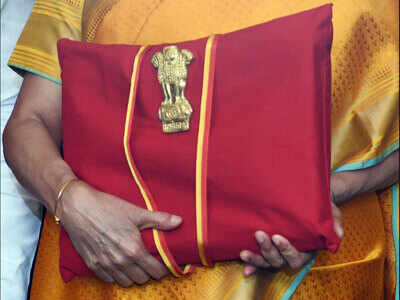
Finance minister Nirmala Sitharaman on Saturday rolled out a new optional income tax regime that offers lower rates as a trade-off for foregoing exemptions for annual incomes up to Rs 15 lakh. The move was projected as an effort to provide relief and simplicity to taxpayers, particularly those at lower and middle income levels.
The tax structure has been rejigged with the introduction of four thinly-sliced tax slabs between Rs 5 lakh and Rs 15 lakh with the rate applicable to each of them going down — from 20% to 10% between Rs 5 lakh and Rs 7.5 lakh, from 20% to 15% in the Rs 7.5 lakh-Rs 10 lakh bracket, from 30% to 20% for Rs 10 lakh-Rs 12.5 lakh and from 30% to 25% between Rs 12.5 lakh and Rs 15 lakh.
In return for the lower taxes, those opting for this new scheme would have to forgo all deductions available under the existing regime.The FM in her speech said this would lead to “substantial tax benefit” and gave the example of a person earning Rs 15 lakh and not using any exemptions now. Such a person, she said, could save Rs 78,000 in tax annually.
This optional scheme, the FM said, is estimated to cost the exchequer Rs 40,000 crore a year in foregone I-T revenues. What the speech did not spell out, but the budget documents did, is that the option to choose the new scheme would be reversible for those who do not have any business income.
The other major change that will impact individual taxpayers is in dividend distribution tax (DDT) currently imposed on companies or funds. Under DDT, companies or mutual funds pay 15% but dividend income up to Rs 10 lakh annually is not added to a person’s taxable income. The Budget has scrapped DDT; dividend income will henceforth form part of an individual’s taxable income. That means it could be taxed at up to 42.7%, the highest rate of tax including surcharges and cesses. The move is seen as a big disincentive for those using investments as tax saving instruments and could explain much of the market’s negative reaction to the Budget.
The FM promised that a “taxpayers charter” clearly enumerating their rights would soon be made part of the statutes. The details of the charter were, however, not spelt out in the Budget speech. The purpose of the charter, according to the FM, is to establish trust between the taxpayer and the tax administration.
End of Article
FOLLOW US ON SOCIAL MEDIA











Hot Picks
TOP TRENDING
Trending Stories
In Business
Entire Website
- Will banks open only for 5 days a week? Here’s what you should know about IBA’s proposal
- India set to be third largest economy, says S&P Global
- Dalal Street bull run continues! BSE Sensex crosses 69,000 for the first time; Nifty above 20,800
- Byju’s reduces notice period for employees as troubles mount
- Sensex surges over 900 points, Nifty above 20,550 as BJP state election wins bolster Modi's Lok Sabha 2024 prospects
- UltraTech to buy building materials business of Kesoram in 7,600 crore deal
- Tata Technologies stock debuts at a bumper 140% premium; share price at Rs 1200 on BSE
- Tata Technologies share allotment: How to check IPO allotment status, listing date, GMP
- BSE m-cap rides rally in Adani stocks, tops $4 trillion
- Charlie Munger, who helped Warren Buffett build Berkshire, dies at 99
- Band of 10 from Europe struck by J&K’s ‘peace and serenity’
- Iran calls for emergency UN Security Council meeting after Nasrallah killed
- Why Trump wants to take back to the US these 5,000 Pune jobs
- Rohit Sharma: 'Only reason I retired from T20Is is...'
- 'Karma’ that Pak ills are consuming its own society: Jaishankar at UNGA
- Government unveils draft rules to take terminally ill off life support
- Why people out on bail should not end up as virtual prisoners
- Zomato co-founder Arkriti Chopra resigns: Read 'resignation email' to CEO
- Country’s first memorial for Military Intelligence personnel up in Pune
- Man, 4 daughters in their 20s found dead at South Delhi home


Popular Categories
Hot on the Web
Top Trends
Trending Topics
Devara CollectionNavya Naveli NandaPawan KalyanJungle SafariStree 2 OTT ReleaseRose GardenDevara CollectionOTT Release MovieMasala OmeletteEmergencyDevaraTaaza Khabar 2 Twitter ReviewDevara Movie ReviewHealthy RaitasSwatantrya Veer SavarkarColdplay India tour 2025Smartphone DealsApple Macbook Air M1Amazon SaleWordle Answer
Living and entertainment
Latest News
The Power of Color: Zodiac Signs and Their Energetic HuesRs 40.87 crore cash, goods seized since inception of mode code: DGP Kapoor'That was the last time I saw my friend': Rahul Gandhi remembers Sitaram YechuryTulsi Gabbard calls Kamala Harris shameless as VP inspects US-Mexico border: 'No conscience'Cockroach found in Air India passenger's meal on Delhi-New York flight; know what airline respondedSC handbook lists terms to be avoided to refer to persons with disabilities, provides alternativesScrap dealer dad celebrates son's board exam success by gifting multiple iPhones | Watch videoWatch: Pakistan Test team head coach Jason Gillespie to make changes only after...Ex-WWE Writer Vince Russo Voices Frustration Over Triple H's Handling of LA KnightQueen Camilla does not want King Charles to meet Prince Harry because...Mapusa rain surges past 4,000mm markCongress leader Pawan Khera asserts people of Haryana want change ahead of assembly electionsRG Kar case: West Bengal junior doctors to resume 'cease work' following SC hearing on MondayIt’s ‘karma’ that Pakistan ills are consuming its own society: Jaishankar in UNGAZodiac Signs as Barbie Dolls: Finding Your Cosmic DollWeekly Horoscope, September 29 to October 5, 2024: Read weekly astrological predictionsMS Dhoni to be 'uncapped' player as IPL retention rules announced ahead of mega auctionMaharashtra: UMC collects more than Rs 5 crore property tax in single day, over Rs 60 crore in six months in Ulhasnagar
Copyright © 2024 Bennett, Coleman & Co. Ltd. All rights reserved. For reprint rights: Times Syndication Service