
- News
- City News
- chennai News
- New cheese on the block
Trending
This story is from November 7, 2021
New cheese on the block
It was a deep desire to write a book on food that made Shalini Padmanabhan delve into vegan cuisine. Once she realised that a lot of people are looking for dairy substitutes, she began experimenting with vegan cheese and butter.
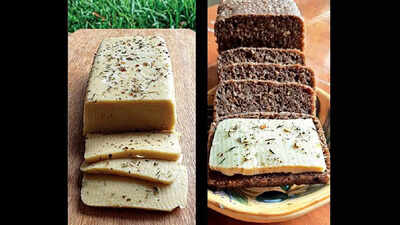
Potato cheese by Shalini Padmanabhan can be had plain, on a cracker, in a sandwich and on pizzas

“I was working on a nachos cheese sauce and went online for inspiration. That’s when I got to know about potato cheese and decided to give it a try,” says Shalini, who in 2020 launched The Veganator, which offers a variety of breads, cheese, crackers and cookies free of dairy, gluten and white sugar.
Made of boiled potato, olive oil, tapioca starch, nutritional yeast and a dash of lemon juice, her potato cheese is popular with children as well. “It’s easy to make and takes just about an hour. It can be had plain, on a cracker, in a sandwich and even on pizza,” says Shalini.
The vegan community is always on the lookout for dairy substitutes. So far, soy, almond and oat milk have been popular, but now, the humble potato has emerged as a hot favourite with people developing a taste for milk and cheese derived from it. Swedish company Veg of Lund launched potato milk under the brand DUG. According to the brand, it is more sustainable, as its production requires “half as much land as oat milk, and 56 times less land than almond milk.”
Commercially, potato milk is made by boiling potatoes, and then emulsifying them with rapeseed oil and other foods for calcium, pea proteins and chicory fibre. It is then fortified industrially with different vitamins and minerals. While potato milk is not sold in India, DIY recipes are available online. Potato cheese, on the other hand, is sold by a few brands and is popular with adults and kids alike.
“I was always a vegetarian but a few years ago, I developed intolerance to lactose and gluten. So, while looking for substitutes online, I came across a recipe for potato milk that needs only boiled potatoes, almonds, honey, vanilla extract and a pinch of salt. You just blend and strain it,” says Puducherry-based Anandhapriya Shanmugham.
In Bengaluru, Millie Mitra, who makes vegan cheeses, has been making potato cheese for the last seven years but purely for her own consumption. “I discovered it in South Africa, and have been making it ever since. It’s a good option for those who are looking for non-nut vegan cheeses,” says Millie, who makes this variant by seasoning boiled or steamed potatoes with apple cider vinegar, salt, and pepper. “It really works well for a mac n cheese recipe; it has a sticky gooeyness and swirls around the pasta very well,” she says.
Nutritionist Shiny Surendran says potato cheese is a good choice for vegans and people who are lactose intolerant. “Potato cheese is loaded with carbs, so it will be good for physically active people, such as children who are into sports, or someone who is training for a marathon. It contains potassium and B complex,” she says.
Meenakshi Bajaj, dietician, Tamil Nadu Government Multi Super Specialty Hospital, says homemade potato milk may lack flavour and, since it is not fortified with vitamins, may lack nutritional value too.
Nutritionally, potatoes are low in sodium, high in potassium and glycaemic index. “100g of boiled potato consists of 77 cal and 1.7g protein. Though low in saturated fat, it will raise triglycerides when consumed regularly and in large quantities. It is also inadequate in protein though moderate amounts of phytonutrients will satisfy the palate for those looking for vegan alternatives of protein,” she says, adding that though potatoes contain vitamin C, it’s lost during cooking. “It is useful for lactose intolerant people and those allergic to nuts, gluten, milk alternates and those with malabsorption.”
End of Article
FOLLOW US ON SOCIAL MEDIA




Photostories

Hot Picks
TOP TRENDING
Popular Categories
Hot on the Web
Top Trends
Trichy School Bomb ThreatIsrael Hezbollah WarKerala Lottery ResultsRohit SharmaBrittany MahomesHarbhajan SinghUP Police Constable ResultRamiz RazaStock Market TodayTirupati Laddu CaseICC Women t20 World CupWomen's T20 World CupDiddyTop Management Colleges of IndiaT20 WC ScheduleWomen T20 World Cup Points TableLive Cricket Score
Trending Topics
Samantha Ruth PrabhuNavratri Colours 2024Navratri WishesHappy Navratri 2024 WishesNaga ChaitanyaDevara CollectionGOAT OTT ReleaseRajinikanthRajinikanth Health UpdateNavratri HistoryDevaraGovinda NewsDevara Movie ReviewHealthy RaitasSwatantrya Veer SavarkarColdplay India tour 2025Upcoming Smartphones In OctoberNavratri JewellerySony Bravia 55 inch 4k Ultra HD TVWordle Answer
Living and entertainment
Latest News
ICC Women’s T20 World Cup ninth-edition: Will India capture their first title? Key players, schedule, and where to watchPower outages, water shortages emerge as Hurricane Helene smashes US' SoutheastEver wondered how business and corporate laws provide organisations with a competitive edge? Learn their nuances with IIM Calcutta5 must follow rules of Ayurveda to lose 5kg in 30 days'Was screaming, hitting him': 5-year-old Florida boy suffers cardiac arrest on Disney rollercoaster rideMicrosoft launches developer feedback program to address Xbox platform pain pointsKiara Advani shakes up the internet with her backless crochet and ruffle-dressTwo youths held captive in Manipur’s Kangpokpi released after week-long abductionNavarathri is all about inspiration and motivation: Shivani NarayananWho is S Iswaran? Former Singapore minister of Indian origin sentenced to one year in prisonMahima Chaudhry reveals she begged Ajay Devgn and Prakash Jha to keep her near-fatal car accident secret: 'I feared industry boycott'There’s a huge angle of woman empowerment also in our story of Ram and Vaishnavi: Shiv SagarGlobal Chess League 2024: Indians in action, teams, format, scoring system, timeCan mosquitoes spread HIV? Here’s what you need to knowSomen Mishra sets record straight on Alia Bhatt and Vasan Bala 'Jigra' controversy: We were DYING to get Alia on boardVijay's 'GOAT' gets an OTT release; official date announced!Rachel Zegler discusses 'Snow White', defends herself over backlash on commentsCalifornia's 'piss bandit' leaves bottles of urines in elite neighborhood
Copyright © 2024 Bennett, Coleman & Co. Ltd. All rights reserved. For reprint rights: Times Syndication Service