Hundreds of British sailors aboard the Royal Fleet Auxiliary ship RFA Lyme Bay are preparing for a possible mine-clearing mission to the Strait of Hormuz, though deployment remains uncertain as the United States, Iran and regional powers continue negotiations over a proposed peace agreement.
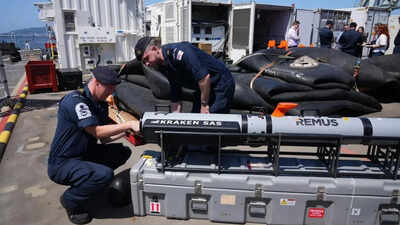
Docked off the coast of Gibraltar, the British vessel is being loaded with ammunition and advanced mine-hunting sea drones equipped with sonar systems, according to news agency AP.
Rubio Warns Iran Of ‘PLAN B’ If Hormuz Payment Push Threatens Global Shipping Again
With a crew of several hundred sailors on board, the ship remains on standby for a possible multinational operation aimed at reopening one of the world’s most critical maritime chokepoints after weeks of conflict involving Iran, Israel and the US.
The operation, expected to be led by Britain and France along with allied nations, would begin only after hostilities formally end. US President Donald Trump said on Saturday that a deal with Iran had been “largely negotiated”, although final details were still under discussion.
Global shipping disruption
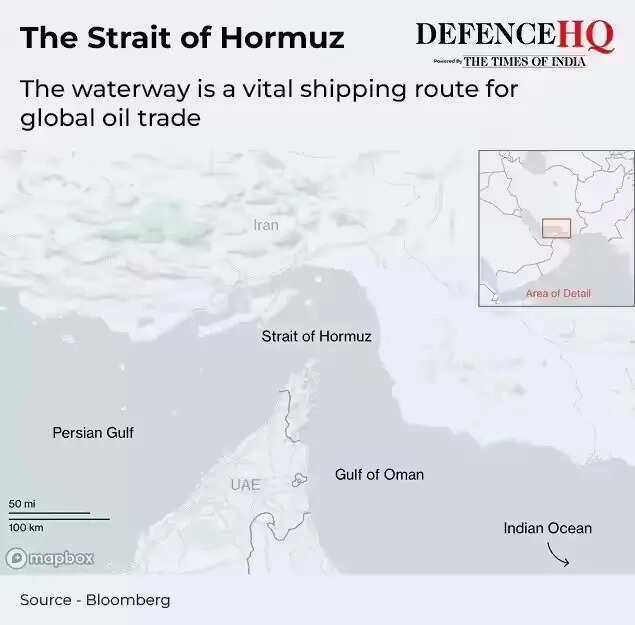
The Strait of Hormuz crisis began after the US and Israel launched military strikes against Iran on February 28, triggering retaliation from Tehran.
Iran subsequently moved to effectively shut down the strait, through which a major share of the world’s oil, natural gas and commercial cargo passes every day.
According to British armed forces minister Al Carns, at least 6,000 ships have been blocked from crossing the strait since the conflict began, sending freight costs and global energy prices sharply higher.
Speaking aboard the Lyme Bay during a media visit in Gibraltar, Carns said the Royal Navy was preparing for a large international operation to secure the waterway once fighting stops.
“Which other country can pull together 40 nations and come up with a solution to deal with a complex problem that we couldn’t predict because we weren’t involved?” Carns said while responding to criticism from Trump over Europe’s role in the crisis, as per AP.

Strait Of Hormuz
Trump’s pressure on allies
Trump has repeatedly attacked Nato allies for relying too heavily on US military power.
Earlier this year, he told European nations to “go get your own oil” and secure shipping routes themselves.
Britain has emerged as one of his key targets during the crisis, with Trump mocking the Royal Navy and questioning Prime Minister Keir Starmer’s leadership.
Lyme Bay preparing for Gulf deployment
The RFA Lyme Bay is expected to depart Gibraltar and link up with the Royal Navy destroyer HMS Dragon and allied naval assets providing air support before sailing through the Suez Canal towards the Persian Gulf.
At the centre of the operation are advanced mine-hunting systems designed to clear dangerous underwater explosives without placing sailors directly inside minefields.
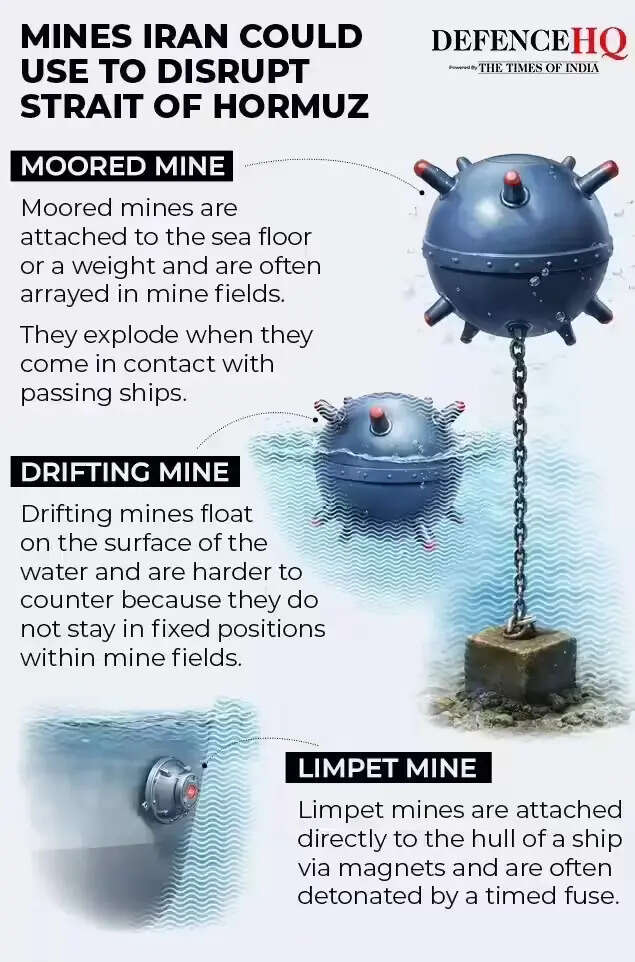
Commander Gemma Britton, who heads the Royal Navy’s Mine and Threat Exploitation Group, said Iran could deploy a “huge” variety of naval mines in the strait, including seabed mines, tethered explosives and rocket-propelled systems triggered by sound, movement or light.
Britton said autonomous sonar-equipped sea drones can scan underwater terrain in nearly half the time required by conventional crewed vessels.
The systems generate detailed underwater images capable of identifying suspicious objects ranging from fishing traps and pipelines to naval mines. Once detected, the targets can be examined using advanced acoustic systems and remote-controlled cameras.
Some of the mine-hunting systems can also be mounted onto smaller autonomous vessels launched directly from the Lyme Bay, allowing the main ship to remain outside potential minefields while remotely operating the drones.
Britton also revealed that the Navy is trialling remotely operated underwater vehicles capable of placing explosive charges beside mines before detonating them remotely. The system is intended to replace the traditional method in which divers manually attach explosives underwater before swimming away.
Aim to free stranded ships
The first objective of any future operation would be to create a secure transit lane allowing around 700 stranded ships to safely exit the strait. A second lane would then be cleared for incoming commercial traffic.
Britton cautioned that fully clearing the entire Strait of Hormuz could take months or even years.
Despite the extensive preparations, uncertainty still surrounds the mission. Western officials have not confirmed whether Iran has actually deployed large-scale minefields in the strait.
When asked whether the British deployment was partly symbolic or intended to appease Washington, Carns acknowledged that some mines may already have drifted away or exploded. However, he stressed that shipping insurers would require “absolute certainty” before allowing commercial maritime traffic to resume normally.
“That’s what this capability will provide,” Carns said.
Sea Mine
What are sea mines?
Sea mines are underwater explosive weapons used to damage or sink ships and submarines. They can float below the surface, remain attached to the seabed or drift with ocean currents. The explosives may be triggered either by direct contact or by detecting a vessel’s sound, vibration, movement or magnetic field.
In the current Iran conflict, naval mines have emerged as one of Tehran’s biggest threats in the Strait of Hormuz. Even a limited number of mines can severely disrupt shipping, push up oil prices and force countries to launch large-scale mine-clearing missions because commercial vessels and insurers avoid potentially mined waters.
For now, the RFA Lyme Bay and its crew remain on standby in Gibraltar as diplomats continue negotiations over a possible agreement between Washington and Tehran.
“We don’t know when the Americans, Iranians and Israelis are going to come up with a suitable solution,” Carns said.
In the meantime, he added, the Lyme Bay and its crew are “really, really ready.”