
- News
- Elections News
- Hear us out, candidates to tell PM Modi
This story is from April 2, 2019
Hear us out, candidates to tell PM Modi
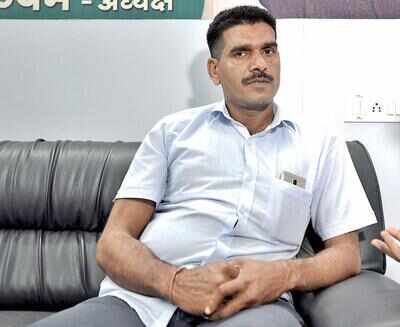
Tej Bahadur Yadav, who was dismissed from duty for posted a video on the 'substandard food' served to soldiers, during an event held by Congress in Mumbai on Monday, 08 May 2017. Mumbai Mirror. Photo--Deepak Turbhekar
Whether it is to genuinely highlight a neglected issue or to just prove a point, there are several aspiring contestants from the Prime Minister’s constituency which they are sure will grab eyeballs like no other. Most of them make no bones about saying that wining the election is not their objective.
Among the first contenders against Modi is Chandrashekhar Azad Ravan, the president of the Bhim Army, a five-year-old Dalit organisation. Azad, who staged a road show in Varanasi on March 30 and declared that “the countdown to Modi’s defeat has begun”, attracts youths from the Dalit sections because of his fiery speeches.
The second unlikely opponent to Modi is former constable in the Border Security Force (BSF) Tej Bahadur Yadav, who made headlines after he uploaded a video last year criticising the allegedly sub-standard food served to BSF jawans.
In what appears to be an honest answer to justify his decision, he said, “It’s only about the high-profile constituency that Varanasi is. I can use it as a platform to highlight concerns of troopers. I may not win, but I only want to send out a message.” Yadav, who was dismissed from service after his allegations were declared false by a court of inquiry, plans to contest as an independent. Also willing to challenge Modi is a motley group of farmers from Tamil Nadu who had staged a demonstration in Delhi in 2017 to highlight their demands such as profitable prices for farm produce. The group, comprising 111 farmers, is led by P Ayyakannu.
The latest contender against Modi is again a group from down south. Two victims of fluorosis from Nalgonda (Telangana) and Prakasam (Andhra Pradesh), led by two activists, Vadde Srinivas and Jalagam Sudheer, are planning to join the fray.
4th candidate in fray in Varanasi is a BHU professor
Ayyakannu has said that if their demand is included in the BJP manifesto, they will drop their decision to contest against Modi.
The fourth interesting candidate is a BHU professor and the mahant of Sankat Mochan temple in Varanasi. Vishambhar Nath Mishra, known for spearheading a prolonged struggle to clean the Ganga, has also said he will contest against Modi from Varanasi. While local reports said he might contest on a Congress party ticket, nothing has been officially confirmed.
Fluoride contamination of groundwater is a serious issue in the two states and the objective is to highlight it at a place where it will be heard, said Sudheer. The names of the victims are yet to be finalised.
“The ailment affects physical movement. So, without making it difficult for them, we will take only those who can travel to Varanasi to file the nominations,” added Sudheer.
“Fluorosis has crippled the lives of people in Nalgonda. While the Telangana government has allocated eight acres for setting up a Regional Fluoride Mitigation Centre in Nalgonda, the Centre did not release the promised Rs 100 crore,” Sudheer told TOI.
Varanasi will go to polls on May 19. The nominations begin on April 22.
Till then, more such candidatures may come up with more issues that need to be heard.
The Congress party and the SP-BSP combine are also expected to declare candidates soon. Those names, too, will be well-thought ones.
In 2014, when PM Modi had decided on Varanasi as his second constituency after Vadodara, Aam Aadmi Party chief and Delhi chief minister Arvind Kejriwal had contested against him and lost by more than 3 lakh votes.
(With inputs from Rohan Dua and Sushil Rao)
End of Article
FOLLOW US ON SOCIAL MEDIA
Photostories

Hot Picks
TOP TRENDING
Popular Categories
Hot on the Web
Top Trends
IND vs BAN Live ScoreNEET UG CounsellingDolly ChaiwalaKamindu MendisDU ElectionIsrael StrikesRavichandran AshwinHigh Paying Freelance JobsElon Musk Dating MeloniUS FDAKerala Lottery ResultsRohit SharmaTamil Nadu NEET UG CounsellingWho is Dominik Mysterios WifeChina SubmarineIsrael Hezbollah WarLive Cricket Score
Trending Topics
Devara ReviewNavya Naveli NandaPawan KalyanJungle SafariStree 2 OTT ReleaseRose GardenDevara CollectionOTT Release MovieMasala OmeletteEmergencyDevaraTaaza Khabar 2 Twitter ReviewDevara Movie ReviewHealthy RaitasSwatantrya Veer SavarkarColdplay India tour 2025Best Branded HandbagsApple Macbook Air M1Amazon SaleWordle Answer
Living and entertainment
Latest News
Archana Puran Singh opens up on turning down multiple film offers for ‘The Kapil Sharma Show’Seasonal Rituals According to the Zodiac CalendarJr NTR's 'Devara' takes over USA; fans garland actor's photoFirst person died in UK from ‘liquid’ Brazilian butt lift: All you need to know about liquid BBL and risks it posesNayanthara and Vignesh Shivan share emotional notes on their twins Ulag and Uyir's second birthdayPressure Cooker: How Hypertension Can Lead to Heart FailureWeight loss and more: 5 reasons to eat soaked methi seeds every morningBad Boy electric trike unveiled in India: F1-inspired cockpit, 400 km range and more!Best Watches Under 5000: Stylish Picks For EveryoneNFL Offenses Grounded, But Fans Still Soaring: Why TV Ratings Are Thriving Despite Fewer Passing Yards'Attempt to defame my govt': Kerala CM Vijayan rejects allegations of independent MLA P V AnvarIlaiyaraaja thanks Tamil Nadu CM MK Stalin for naming a street after his late friend SPBBig Story -Has Kollywood lost its plot?Did Vincent van Gogh’s paintings have a connection with Bihar? Research says yes!Bangladeshi fan hospitalised after 'falling ill' in Green Park stands; Police denies assault speculationTirupati Laddu row: Police likely to serve notices to ex-CM Jagan Mohan Reddy ahead of his Tirumala temple visitIndian economy projected to grow 6.5-7% in FY 2024-25: Chief economic advisor NageswaranCong, PDP & NC 'sinners' for encouraging terrorism in J&K: UP CM Yogi Adityanath
Copyright © 2024 Bennett, Coleman & Co. Ltd. All rights reserved. For reprint rights: Times Syndication Service