
- ETimes
- Movies
- Movie Reviews
- Bengali
- Phool Pishi O Edward

Phool Pishi O Edward
UAReleased: 29 May, 2026
Bengali
Drama
& Mystery
3.5
Critic's Rating
3.5
Users' Rating
About the Movie
In a decaying zamindar household, a sudden death on the night of a controversial marriage unravels a web of secrets, entitlement, and long-buried tensions. As Phool pishi – a sharp, observant outsider – begins to probe the family’s carefully maintained façade, the deeply embedded patriarchal structures governing the household are slowly exposed. Blending elements of slow-burn suspense with social commentary, the narrative moves toward a reckoning where silence, complicity, and resistance collide.
Cast







Phool Pishi O Edward Movie Review: A slow-burning whodunnit wrapped in generational secrets

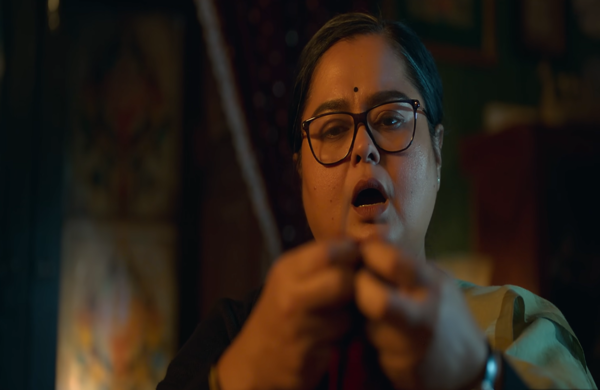
With Phool Pishi O Edward, Nandita Roy and Shiboprosad Mukherjee consciously disrupt the cinematic space they’ve comfortably occupied for over a decade. This is not the warm, reassuring, middle-class emotional universe of Belaseshe or Praktan. Instead, they lean into something darker, structurally a slow-burn mystery, thematically a critique of feudal patriarchy, and tonally flirting with Gothic unease. It’s an ambitious pivot. And while the film doesn’t always sustain its own weight, it remains compelling precisely because of that ambition.The film’s opening stretch is its most assured. Joy Sarkar’s Laaje hoi alta ranga paa plays over a visually rich wedding sequence, but the music carries an undercurrent of dread that immediately unsettles the surface beauty. This tonal contradiction becomes the film’s defining aesthetic choice. The background score deserves special mention, it is restrained but persistent, creating a low hum of anxiety that rarely lets the viewer relax.Visually, the film is striking. The crumbling zamindar mansion is not treated with nostalgia but with hostility. The cinematography avoids romanticism, instead focusing on decay, peeling walls, dim corridors, stagnant air. The lighting design is particularly effective; shadows are not just aesthetic but narrative, often obscuring as much as they reveal. The production design and costumes complement this world-building, ornate, but heavy with a sense of exhaustion rather than grandeur.The premise is both simple and disturbing. A man arranging a third marriage because his second wife refuses to donate a kidney is not just a plot device, it is the film’s central moral indictment. The casual entitlement embedded in that decision sets the tone for everything that follows. The narrative, especially in the first half, balances mystery and social commentary with surprising control.Where the film truly excels is in its performances. Sohini Sengupta is the film’s anchor and its most complete achievement. Her Phool pishi operates with authority, she observes, waits, and intervenes with precision. What makes her performance remarkable is how effortlessly she balances tones. Her humour never feels like relief inserted for the audience; it emerges organically from character, making her both disarming and deeply perceptive. She controls the film without ever appearing to dominate it.Rajatava Dutta leans into the film’s comic register, providing much-needed relief without undercutting the narrative. His exchanges with Sohini Sengupta are easily the film’s most entertaining stretches, their timing, ease, and mutual rhythm elevating scenes that might otherwise feel functional. Shyamoupti Mudly, making her screen debut as Binita, the sister coerced into the patriarch's marriage, is a genuine and unexpected pleasure. There is a watchful intelligence to her performance that elevates what could have been a purely victimised role. She internalises conflict rather than externalising it, and that choice pays off. It’s a remarkably assured performance.Raima Sen delivers exactly what the role demands-controlled, composed, and emotionally contained. However, the script doesn’t allow her arc to fully unfold. Given the weight of her character’s central decision, the lack of deeper exploration in the latter half feels like a missed opportunity.Soumya Mukherjee, like always, falls into a pattern that is becoming increasingly predictable. The “heartbroken, sidelined lover” is a space he has occupied too often now, and the film does little to complicate or reinvent that dynamic.The supporting cast remains consistently strong. Ananya Chatterjee brings intensity, though her extended emotional stretch in the final act feels overlong. Saheb Chatterjee, Rishav Basu, and Arjun Chakraborty fit seamlessly into the film’s tonal fabric. Anamika Saha is particularly effective, her comic interludes are well-timed and, importantly, never feel forced, which helps maintain tonal balance.However, the film’s most significant flaw is its pacing. At 139 minutes, Phool Pishi O Edward overstays its welcome. The pacing issues aren’t confined to the second half alone. Even the first half shows signs of indulgence, with the pre-interval stretch in particular feeling unnecessarily prolonged. The film’s instinct to explain rather than trust the audience weakens its impact. However, the strength of the core narrative and its underlying tension manage to compensate for these drifts. Thematically, the film is sharp. Its critique of patriarchal entitlement within zamindari structures is both direct and unflinching. The kidney donation thread is not merely symbolic, it is brutally literal in exposing control over women’s bodies. More importantly, the film’s shift toward collective female resistance becomes its most compelling narrative payoff. The idea of women choosing not to uphold a system that has historically failed them feels both timely and quietly powerful. What remains is a film that is uneven but undeniably engaging. It drags, it over-explains, and it occasionally struggles with tonal consistency. But it also delivers strong performances, a compelling atmosphere, and a narrative core that is far more daring than the directors’ most previous work.Phool Pishi O Edward is ambitious, uneven, and often compelling. It stumbles in parts, but its performances, atmosphere, and thematic clarity ensure it lingers well beyond its runtime. What ultimately stays with you is not its flaws, but how much it gets right.
User Reviews
0/1500
Post ReviewTrailer

Phool Pishi O Edward - Official Teaser

Photos




Latest Movie Reviews


How would you rate the movie?

Hot on the Web
Salman KhanVishalAjith KumarPriya KapurCM VijayRanveer SinghFart WalkBlast ReviewMaya JamaBrown TrailerImitiaz AliArun GovilAnkita LokhandeDrishyam 3 Box Office CollectionPooja BhattDhurandhar Television PremiereSai PallaviRakhi SawantChand Mera Dil Box Office CollectionKattalan ReviewAishwarya Rai BachchanKaruppu Box Office CollectionSonakshi SinhaAshoke PanditGuru Purnima 2026Neeraj Chopra HouseBlast ReviewDhurandhar 2 Box Office CollectionBlast Box Office CollectionHoroscope TodayMahmud Sadis BubaParveen ShaikhUS Powerball LotteryGemini AI Prompts For EidOla Compensation CaseINS KolkataNyt ConnectionsOperation Sindoor 2.0Jellyfish That Never DiesBlue Origin Rocket ExplodingDelivery Firm Refund DeniedCaptions For Instagram Posts
Trending Topics
Latest MoviesBollywood MoviesHollywood MoviesTamil Movies 2026Telugu Movies 2026Malayalam Movies 2026Kannada MoviesMarathi MoviesBengali Movies 2026Top Rated Movies 2026Best Hindi MoviesBest English MoviesBest Telugu MoviesBest Tamil MoviesBest Malayalam MoviesBest Kannada MoviesBest Bengali MoviesUpcoming Hindi MoviesBest Movies Of All TimeBest Hindi Movies of All TimeLatest English MoviesLatest Malayalam MoviesEnglish TV NewsTamil TV NewsTelugu TV NewsMalayalam TV NewsKannada TV NewsMovie ReviewsBhojpuri Cinema NewsGujarati Cinema News
Popular Categories
Viral NewsK Pop NewsWeb Series NewsAnime NewsUpcoming English MoviesUpcoming Tamil MoviesUpcoming Telugu MoviesUpcoming Malayalam MoviesUpcoming Kannada MoviesFashion TipsTravel NewsEntertainment NewsBollywood NewsTollywood NewsKollywood NewsMollywood NewsFood NewsLatest Hindi MoviesLatest Tamil MoviesParenting TipsHome RemediesWeight LossBeauty TipsParenting TipsHindi VideosHindi Video SongsBhojpuri Music VideosLatest Telugu MoviesBhojpuri Music VideoHindi TV News
Latest News
Hazaribag man drowns while fishing in lake"Behen Darr Gayi!": Fans relive ‘Bhagam Bhag’ era after watching Akshay Kumar's 'Bhooth Bangla' trailerMBOSE HSLC result 2026 to release tomorrow: Check details hereIran war risk: JPMorgan CEO Jamie Dimon warns of oil shocks, sticky inflation and higher interest ratesMake your clutch last longer with these easy driving tips“Three-against-one situation”: El Rubius opens up on being “targeted” in MrBeast’s viral $1M challengeBihar BTSC lab assistant notification released for 1091 posts at btsc.bihar.gov.in; apply hereIPL craze costs techie Rs 1.46 lakh in fake RCB vs CSK ticket scamRaising “robot-proof” kids: Why creativity and curiosity matter more than everInside ‘Satguru Sharan’: Exploring Saif Ali Khan and Kareena Kapoor Khan’s Rs 100 crore Bandra homeHow selling Alaska in 1867 was a costly mistake for Russia'Hera Pheri 3 is coming': Paresh Rawal dismisses delay reports and reveals he will 'start shooting soon'US-Iran War: A daring rescue Hollywood blockbuster is on its way. Till then, pick your favourite from these 10 films on bringing someone home against all oddsKolkata team unveils fan mural at Rash Behari Avenue, celebrating city’s first loveHow US spread a lie to rescue a pilot of a jet shot down in IranNetflix unveils ‘VOID’, an AI model that can change a movie plotAI data centers are causing 'stress' not just to tech companies, but also private insurers"Trans women are.....": Clavicular’s viral moment with trans women sparks fresh conversation on internet culture