- News
- entertainment
- bengali
- movies
- Filmmaking is my passion, says National Award winner Sushmit Ghosh
Trending
This story is from April 7, 2013
Filmmaking is my passion, says National Award winner Sushmit Ghosh
The Bong connect of this years National Awards have been pretty obvious, what with Bongs bagging a slew of awards one after the other. One of them is Sushmit Ghosh, who bagged the award for his film Timbaktu, in the Best Environment Documentary category, along with friend Rintu Thomas.
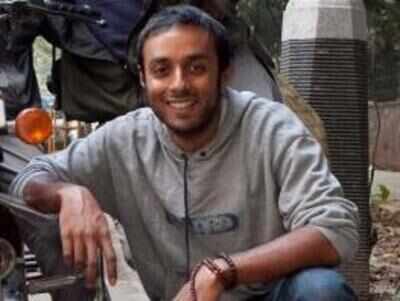
The Bong connect of this years national awards have been pretty obvious, what with Bongs bagging a slew of awards one after the other. One of them is Sushmit Ghosh, who bagged the award for his film Timbaktu, in the Best Environment Documentary category, along with friend Rintu Thomas.
Though Sushmit was never based in Bengal, he was born to Bengali parents. The 30-year-old documentary maker spent his early years in Central Africa. The postgraduate from Jamia Millia Islamia talks about his accidental foray into filmmaking and how the happy accident eventually led to a National Award. Excerpts:
How did you start making documentaries?
It was a complete accident. I had done my BCom and wanted to do an MBA. But before heading into an MBA, I wanted to work for a year and after spending a year in a corporate job, I realized it wasn���t my cup of tea! So I quit and decided to back-pack across India. On one of these trips, I ended up traveling to the Himalayas with a differently-abled street child. A friend of mine handed me a camera and asked me to film the entire trip. Just like that. When I returned from the trip and watched the video, it looked interesting. I decided to make a documentary out of all the travel footage and called the film Bullets and Butterflies. It was an absolutely amateur attempt at filmmaking since I wasn���t equipped with any formal filmmaking knowledge. To all of our surprise, the film ended up doing very well in the national and international festival circuits and also got broadcast in India. That���s how my first film happened ��� a complete accident.
Isn't it hard sustaining yourself, just being a documentary maker? That too, when you are so young? If you are passionate about something, you���ll find means and ways to make things work. That it is difficult sustaining oneself just as a documentary maker is a complete myth. Moreover, at Black Ticket Films, we do a spectrum of work with a diverse set of clients, ranging from development sector organizations to corporate institutions so there is never a dull day! The best part is the creative freedom we have running our own show and when I think back, this is exactly where I���d imagined myself 10 years ago.
How did Timbaktu happen? Timbaktu is essentially this little community in Andhra Pradesh that we discovered while researching online for an environment film project. What really interested us in Timbaktu���s story (apart from the name, which first caught our eye!) was the fact that this community of farmers had completely changed their approach to farming and growing food and in effect, shown the world what ���sustainable agriculture��� is all about. They stopped agricultural practices that were promoted during the Green Revolution era and shifted to a wholly organic approach to growing food. But at its heart, Timbaktu is more than just how we���re growing and consuming food. It���s a story of hope that shows the world that grassroots level change is something that can truly impact the world positively in the long run and this is a story we had to tell. Imagine living completely off the grid ��� no electricity, mobile phones, TV or internet. Yet, living a life that is wholesome and fulfilling. That is Timbaktu���s story in brief. So after our initial research, we tried to get in touch with Bablu Ganguly, one of the founders of the Timbaktu Collective, but by the time we could connect, weeks had passed and we���d moved on to working on another environment documentary. Timbaktu���s story stayed with us and we pitched it a couple of years later to the Public Service Broadcasting Trust ��� they liked it and commissioned the film.
How did you come to know about the win?
Rintu got a call from a journalist who was at the press conference when the Awards were being announced. To be honest, it didn���t sink in then but we eventually, all I can say is that we were really pleasantly surprised with the win!
Did you know that your film was nominated? We happened to find out by accident on the PSBT website. There was a ticker with names of 7 films PSBT had nominated for the awards and Timbaktu was 7th on the list.
What was your reaction?
Of course I was overjoyed. The National Awards are the highest honour in filmmaking in this country and typically in non-fiction, given to fairly senior filmmakers. That has been the trend, more or less. Even though Timbaktu has been received well by audiences as well as screened in numerous film festivals, I didn���t expect we���d bag the National Award!
Recently, National Award winning directors haveslammed the government for their lack of support. What do you have to say about that? I sincerely hope things change. It's true that non-fiction doesn't enjoy the kind of resources and support in India, that is provided in the west. In the non-fiction category, a lot needs to be done. Government and corporate houses need to step in. If documentary filmmakers are provided a fraction of the budget that mainstream Hindi cinema operates with, I see that quality of documentaries becoming much better. It���s just a question of making the resources available for us to really be able to increase our production values. But hopefully, things should change in the near future.
Apart from the national Award, Timbaktu has two more awards in its bag:Best Cinematography, Mumbai Shorts International Film Festival, 2012 and Best Documentary Film, the Jaipur International Film Festival, 2013
Though Sushmit was never based in Bengal, he was born to Bengali parents. The 30-year-old documentary maker spent his early years in Central Africa.
How did you start making documentaries?
It was a complete accident. I had done my BCom and wanted to do an MBA. But before heading into an MBA, I wanted to work for a year and after spending a year in a corporate job, I realized it wasn���t my cup of tea! So I quit and decided to back-pack across India. On one of these trips, I ended up traveling to the Himalayas with a differently-abled street child. A friend of mine handed me a camera and asked me to film the entire trip. Just like that. When I returned from the trip and watched the video, it looked interesting. I decided to make a documentary out of all the travel footage and called the film Bullets and Butterflies. It was an absolutely amateur attempt at filmmaking since I wasn���t equipped with any formal filmmaking knowledge. To all of our surprise, the film ended up doing very well in the national and international festival circuits and also got broadcast in India. That���s how my first film happened ��� a complete accident.
How did it develop into a full-time profession? In 2006, I did my MA in mass communication from The Mass Communication Research Centre in Jamia. And in 2009, I, along with a friend of mine Rintu (Thomas), formed our own company, Black Ticket Films.
Isn't it hard sustaining yourself, just being a documentary maker? That too, when you are so young? If you are passionate about something, you���ll find means and ways to make things work. That it is difficult sustaining oneself just as a documentary maker is a complete myth. Moreover, at Black Ticket Films, we do a spectrum of work with a diverse set of clients, ranging from development sector organizations to corporate institutions so there is never a dull day! The best part is the creative freedom we have running our own show and when I think back, this is exactly where I���d imagined myself 10 years ago.
How did Timbaktu happen? Timbaktu is essentially this little community in Andhra Pradesh that we discovered while researching online for an environment film project. What really interested us in Timbaktu���s story (apart from the name, which first caught our eye!) was the fact that this community of farmers had completely changed their approach to farming and growing food and in effect, shown the world what ���sustainable agriculture��� is all about. They stopped agricultural practices that were promoted during the Green Revolution era and shifted to a wholly organic approach to growing food. But at its heart, Timbaktu is more than just how we���re growing and consuming food. It���s a story of hope that shows the world that grassroots level change is something that can truly impact the world positively in the long run and this is a story we had to tell. Imagine living completely off the grid ��� no electricity, mobile phones, TV or internet. Yet, living a life that is wholesome and fulfilling. That is Timbaktu���s story in brief. So after our initial research, we tried to get in touch with Bablu Ganguly, one of the founders of the Timbaktu Collective, but by the time we could connect, weeks had passed and we���d moved on to working on another environment documentary. Timbaktu���s story stayed with us and we pitched it a couple of years later to the Public Service Broadcasting Trust ��� they liked it and commissioned the film.
How did you come to know about the win?
Rintu got a call from a journalist who was at the press conference when the Awards were being announced. To be honest, it didn���t sink in then but we eventually, all I can say is that we were really pleasantly surprised with the win!
Did you know that your film was nominated? We happened to find out by accident on the PSBT website. There was a ticker with names of 7 films PSBT had nominated for the awards and Timbaktu was 7th on the list.
What was your reaction?
Of course I was overjoyed. The National Awards are the highest honour in filmmaking in this country and typically in non-fiction, given to fairly senior filmmakers. That has been the trend, more or less. Even though Timbaktu has been received well by audiences as well as screened in numerous film festivals, I didn���t expect we���d bag the National Award!
Recently, National Award winning directors haveslammed the government for their lack of support. What do you have to say about that? I sincerely hope things change. It's true that non-fiction doesn't enjoy the kind of resources and support in India, that is provided in the west. In the non-fiction category, a lot needs to be done. Government and corporate houses need to step in. If documentary filmmakers are provided a fraction of the budget that mainstream Hindi cinema operates with, I see that quality of documentaries becoming much better. It���s just a question of making the resources available for us to really be able to increase our production values. But hopefully, things should change in the near future.
Apart from the national Award, Timbaktu has two more awards in its bag:Best Cinematography, Mumbai Shorts International Film Festival, 2012 and Best Documentary Film, the Jaipur International Film Festival, 2013
End of Article
FOLLOW US ON SOCIAL MEDIA









entertainment videos

Featured In Movies
Popular Categories
Entertainment NewsBollywood NewsTollywood NewsKollywood NewsMollywood NewsMovie ReviewsLatest Hindi MoviesLatest Tamil MoviesMX PlayerParenting TipsHome RemediesWeight LossBeauty TipsParenting TipsHindi VideosHindi Video SongsBhojpuri Music VideosLatest Telugu MoviesBhojpuri Music VideoHindi TV News
Trending in Entertainment
Latest MoviesBollywood MoviesHollywood MoviesTamil Movies 2024Telugu Movies 2024Malayalam Movies 2024Kannada Movies 2024Marathi Movies 2024Bengali Movies 2024Top Rated Movies 2024Best Hindi MoviesBest English MoviesBest Telugu MoviesBest Tamil MoviesBest Malayalam MoviesBest Kannada MoviesBest Bengali MoviesUpcoming Hindi MoviesBest Movies Of All TimeBest Hindi Movies of All Time
Trending in Etimes
Horoscope TodayNumerology Predictions TodayDinner With TrumpTim WalzIvanka TrumpJose LopezKristina JoksimovicJoe WilsonTrump Eating The Dogs SongGermany NewsKamala HarrisPrince HarryPatriot Day 2024Diabetes RiskHappy Mindfulness Day 2024Trump Vs HarrisJoe JonasPositive Thinking Day 2024Dave Bautista
Trending in TV
Trending in Lifestyle
Trending in Regional
Movie Reviews
Berlin ReviewThe Buckingham Murders ReviewSpeak No Evil ReviewVisfot ReviewThalapathy Is The G.O.A.T ReviewRebel Ridge ReviewDetective Conan vs. Kid the Phantom Thief ReviewBeetlejuice Beetlejuice ReviewPad Gaye Pange ReviewA Wedding Story ReviewThe Diary Of West Bengal ReviewTikdam ReviewKinds Of Kindness ReviewAfraid Review
Upcoming Hindi Movies
Upcoming Regional Movies
Latest News
Regina Cassandra calls herself a 'serial dater,' had many relationships :'But I’m taking a break now'Kaun Banega Crorepati 16: Can you guess the answer for this Rs 3,20,000 question on Navy, which contestant Naman Jain incorrectly answered?Exclusive - Has Palak Sindhwani aka Sonu from Taarak Mehta Ka Ooltah Chashmah breached her contract; Neela Film Productions to issue a legal notice to the actress?Mexico's president asks Sinaloa cartel to act 'responsibly' as violence escalates in the northKitchen Tips: How to elevate home cooking to Michelin levelFord drives into India for 3rd timeGrowth potential 7.5% or more: RBI governorHindus take to Bangladesh streets to stop attacks and demand justiceE-commerce speeds up to catch up with Quick commerce'Will take digital public infrastructure stack to 50 nations'Tragic road accident on Mogili ghat road claims seven lives in Chittoor districtSebi gives clean chit to NSE, ex-executives in co-location caseRusty or Ready? Falcons' Cousins Falls Flat in $180M NFL DebutRaveena Tandon apologizes to fans for not photo snub in London: "It was not my intention to offend"Preschools turn nursing homes, retirement age raised: China's demographic crisis explodesBest Phones Under 35000 To Smoothly Carry Out Multiple Tasks On A BudgetBest 50 Inch TV Models: Find Your Perfect Match Across Budgets from Leading BrandsHow to manage eczema in babies
Other Group Sites -
ETimes is an Entertainment, TV & Lifestyle industrys promotional website and carries advertorials and native advertising.