- News
- entertainment
- hindi
- bollywood
- Jamna paar ke dost-yaar
Trending
This story is from December 21, 2013
Jamna paar ke dost-yaar
Yamuna Paar, or Jamna Paar, as most Delhiites call it, made its Bollywood debut this year with Mrighdeep Lamba’s Fukrey. Other than the four fresh faces, also starring in the movie was the ancient Yamuna Loha Pul and 100 gaj ki Geeta Colony kothis in all their unmistakable East Delhi-ness.
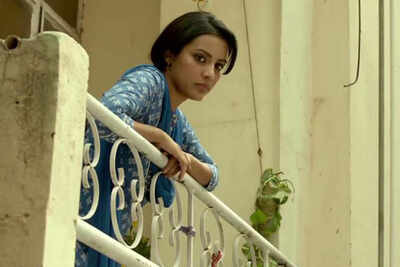
Yamuna Paar, or Jamna Paar, as most Delhiites call it, made its Bollywood debut this year with Mrighdeep Lamba’s Fukrey. Other than the four fresh faces, also starring in the movie was the ancient Yamuna Loha Pul and 100 gaj ki Geeta Colony kothis in all their unmistakable East Delhi-ness. The stuck-in-time images of the small houses, government schools and balconies with sookhte kapde made every East Delhiite say, ‘Bhai, yeh toh apni story hai’
The way Bollywood taught Delhi walas ‘tapori’ and ‘dabang’, we taught them the term ‘fukrey'
The story was that of the typical good-for-nothing Dilli fukras, who’re usually found playing cricket in the society gali or flying kites on the building chhatt. The director, Mrighdeep Singh Lamba, a Delhi boy himself, structured the movie according to the Delhi he remembered from the 80s and the 90s. In the movie, set to the tunes of the beautiful Ambarsariya, is the terrace sequence where Hunny, played by Pulkit Samrat, proposes ‘frandship’ with a kite to the girl-next-door, played by Priya Anand. In chhaje-chhaje ka pyaar style, when she agrees by giving kanni to the same kite, Hunny jumpes across four-five terraces to reach her. This location was one of the most difficult to find, says Mrighdeep. He told us, “The east Delhi that I was trying to show had small kothis, all built together in continuation. Wahaan pe the houses are smaller in width, 100 gaj ki kothiyan, and are built height-wise. They go up to three-four floors – not the DDA flats kind of area. So we searched through Geeta Colony and Laxmi Nagar houses, where we found two-three buildings together. But I needed at least six to seven buildings of the same height to get the scene right. Finally, our Delhi line producers showed me this lane is Subhash Nagar in West Delhi, where we finally shot the scene. And even though I wanted the East Delhi look, this Subhash Nagar lane was beautiful and perfect for what I had in mind. Finally, woh film mein East Delhi hi lag raha hai.” About the scene, he adds, “Ab kaun patang pe propose karta hai? But while growing up, the kite flying season was a major part of our lives – my brother and mine. Aap Delhi ki kisi bhi middle class colony mein chale jao and you’ll hear some mummy papa uncle aunty shouting at the fukra of their locality. The way Bollywood taught Delhi walas ‘tapori’ and ‘dabang’, we taught them the term ‘fukrey’. It is Delhi’s addition to the Bollywood dictionary and now everyone is using it.”
Woh har baat pe ‘bhai, bhai’ bolne ka tareeka, the laugh and the ‘oyi oyi’, not ‘oye oye’
Everyone takes the Loha Pul to get to East Delhi
Mrighdeep was clear about not shooting at the by-now-cliched Connaught Place-India Gate kind of locations because he wanted to show the story of the Delhi resident, not the Delhi tourist. And his demand for virgin locations and East Delhi relatability took them to the old Loha Pul built over the Yamuna, connecting Central Delhi to East. He told us, “We shot different sequences on and around the old Loha Pul that connects the whole of Delhi to the Jamna Paar region. My line producers were shocked when I told them I wanted to shoot a chase sequence on the Loha Pul. Highway wagerah pe you still get permission to shoot – they let you use one lane and the remaining traffic is not affected. For the first scene, when Lalli (Manjot Singh) is chasing the ‘doped’ beggar, we had to shoot it in the middle of real traffic as we could not block the road at all. For the climax scene, Manjot meets the smack head below the bridge again. His dialogue, ‘Meri Gandhi Nagar mein 12 dukaanein hain’ – that just proves he is an East Delhi ka banda too.That scene could have been shot anywhere, in a park, parking lot – anywhere. But we did it there, because the Yamuna and the bridge in the background would immediately connect with any Delhiwala.”
The way Bollywood taught Delhi walas ‘tapori’ and ‘dabang’, we taught them the term ‘fukrey'
The story was that of the typical good-for-nothing Dilli fukras, who’re usually found playing cricket in the society gali or flying kites on the building chhatt.
Woh har baat pe ‘bhai, bhai’ bolne ka tareeka, the laugh and the ‘oyi oyi’, not ‘oye oye’
Other than the voice training given by the team of the film, newbie Varun Sharma (aka Choocha) took a special trip to Delhi from his home in Punjab to get the ‘government school fukra’ accent right. He told us, “I came to Delhi once before the beginning of the shooting schedule. Even though I have that natural Punjabi accent, I was in a boarding school and my Hindi was more urban. On my trip here, I went to government schools in different areas and stood outside during their chutti time, just to observe how they spoke. Woh har baat pe ‘bhai, bhai’ bolne ka tareeka, the laugh and the ‘oyi oyi’ (instead of oye oye) – all of that came from interacting with these east Delhi government school boys.”
Everyone takes the Loha Pul to get to East Delhi
Mrighdeep was clear about not shooting at the by-now-cliched Connaught Place-India Gate kind of locations because he wanted to show the story of the Delhi resident, not the Delhi tourist. And his demand for virgin locations and East Delhi relatability took them to the old Loha Pul built over the Yamuna, connecting Central Delhi to East. He told us, “We shot different sequences on and around the old Loha Pul that connects the whole of Delhi to the Jamna Paar region. My line producers were shocked when I told them I wanted to shoot a chase sequence on the Loha Pul. Highway wagerah pe you still get permission to shoot – they let you use one lane and the remaining traffic is not affected. For the first scene, when Lalli (Manjot Singh) is chasing the ‘doped’ beggar, we had to shoot it in the middle of real traffic as we could not block the road at all. For the climax scene, Manjot meets the smack head below the bridge again. His dialogue, ‘Meri Gandhi Nagar mein 12 dukaanein hain’ – that just proves he is an East Delhi ka banda too.That scene could have been shot anywhere, in a park, parking lot – anywhere. But we did it there, because the Yamuna and the bridge in the background would immediately connect with any Delhiwala.”
End of Article
FOLLOW US ON SOCIAL MEDIA








entertainment videos

Featured In Movies
Popular Categories
Entertainment NewsBollywood NewsTollywood NewsKollywood NewsMollywood NewsMovie ReviewsLatest Hindi MoviesLatest Tamil MoviesMX PlayerParenting TipsHome RemediesWeight LossBeauty TipsParenting TipsHindi VideosHindi Video SongsBhojpuri Music VideosLatest Telugu MoviesBhojpuri Music VideoHindi TV News
Trending in Entertainment
Latest MoviesBollywood MoviesHollywood MoviesTamil Movies 2024Telugu Movies 2024Malayalam Movies 2024Kannada Movies 2024Marathi Movies 2024Bengali Movies 2024Top Rated Movies 2024Best Hindi MoviesBest English MoviesBest Telugu MoviesBest Tamil MoviesBest Malayalam MoviesBest Kannada MoviesBest Bengali MoviesUpcoming Hindi MoviesBest Movies Of All TimeBest Hindi Movies of All Time
Trending in Etimes
Horoscope TodayNumerology Predictions TodayDinner With TrumpTim WalzIvanka TrumpJose LopezKristina JoksimovicJoe WilsonTrump Eating The Dogs SongGermany NewsKamala HarrisPrince HarryPatriot Day 2024Diabetes RiskHappy Mindfulness Day 2024Trump Vs HarrisJoe JonasPositive Thinking Day 2024Dave Bautista
Trending in TV
Trending in Lifestyle
Trending in Regional
Movie Reviews
Visfot ReviewThalapathy Is The G.O.A.T ReviewRebel Ridge ReviewDetective Conan vs. Kid the Phantom Thief ReviewBeetlejuice Beetlejuice ReviewPad Gaye Pange ReviewA Wedding Story ReviewThe Diary Of West Bengal ReviewTikdam ReviewKinds Of Kindness ReviewAfraid ReviewThe Deliverance ReviewBlue Lock: Episode Nagi ReviewDaddio Review
Upcoming Hindi Movies
Upcoming Regional Movies
Latest News
7. Hindi becomes officialKitchen Tips: How to elevate home cooking to Michelin levelJulie Chen to miss Big Brother live eviction for first time, taps Jerry O'Connell to hostTragic road accident on Mogili ghat road claims seven lives in Chittoor districtRaveena Tandon apologizes to fans for not photo snub in London: "It was not my intention to offend"Bonedi baris hope for a peaceful start to PujoPreschools turn nursing homes, retirement age raised: China's demographic crisis explodesTovino Thomas praises Prithviraj Sukumaran as director: "One of the brilliant directors I have ever worked with"Man shot near Delhi's Greater Kailash-I gym, gang war suspected'Cops stood as mute spectators': Protesting doctors write to President over RG Kar impasseFatal crash in Australia's Netherby claims life of ToddlerNASA to establish New Lunar Time Standard with Coordinated Lunar Time (LTC) initiativeDivya Bansal explores themes of human resilience, love and positive transformation in debut poetry bookWWE Superstar Cody Rhodes and his Wife Brandi Rhodes Share Special Messages on Their 11th AnniversaryAnupamaa: Anuj and Anu to go legal against Ankush and Barkha'Dead cat hanging from a tree': Origin of Haitian immigrants row. Everyone heard itTop 5 least private zodiac signsPerfect comfort foods for every zodiac sign
Other Group Sites -
ETimes is an Entertainment, TV & Lifestyle industrys promotional website and carries advertorials and native advertising.