- News
- entertainment
- hindi
- bollywood
- Majid Majidi: Politics has an expiry date, art doesn’t. An artiste should stay away from political games
Trending
This story is from April 20, 2018
Majid Majidi: Politics has an expiry date, art doesn’t. An artiste should stay away from political games
Director of 'Beyond The Clouds' Majid Majidi alks about his views on Bollywood cinema, how he idolises the legendary filmmaker Satyajit Ray and more.
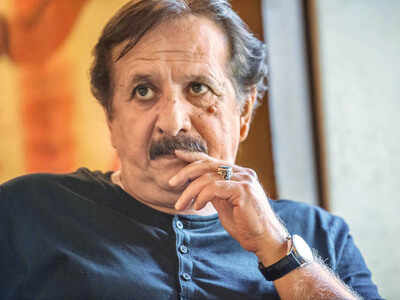
Majid Majidi

Most of your films show compassion for the underprivileged. You seem to have a deep connect with such subjects...
The middle class and the lower middle class form the majority of any society, so from my point of view, they are the most important and the most vulnerable, too. As a society and as filmmakers, we do not pay enough attention to their stories and lives. The people belonging to this level of society do not have as many opportunities to come out and talk about their trials and troubles, so it is our responsibility as artistes to draw attention to their problems. In India, women have a great role to play in society, but at the same time, they are oppressed and become victims in the same environment. My stories shed light on the bitterness that a human being goes through in life. It is common everywhere. Everyone needs hope, and that is my aim; to bring hope in each and every aspect of my character and my film. So, hope is the biggest reference point, not only for me, but for the whole of humanity.
The common thread in your films is the focus on a strong value system within the family and how that can stand the test of difficult times and circumstances…
Family as an institution has always been a very important part of my films. I believe that protecting and preserving this institution is a crucial function of any society. If cracks appear in the institution of the family, it gets reflected in society. Very often, the disorders that we see around us, is a reflection of the state of the family system. I think before we can build a proper society, we need to put our energies into building a solid family.
What were the challenges of shooting in real locations in Mumbai? Did you explore the length and breadth of the city while conducting recce for
locations?
The first day when I showed my crew the locations where we would be shooting, they were taken aback. They said, “We cannot shoot here!” Unless there is no option, I shoot on real locations. I really enjoyed shooting at Dhobi Ghat, though it was a big challenge. Now I know Mumbai better than you (laughs!). I visited almost every place in the city during my previous trips, before I started filming. Since then, I have been observing the city and its people closely. Mumbai is a real city. I find it very fascinating to see the wealthy and the poor living side by side and co-existing. You can rarely see this anywhere else in the world. This is a unique and an absolutely remarkable feature of this city. In every other society, there is a clear geographical divide in the city between the rich and the poor, but in Mumbai it is all mixed up, which makes the city so dramatic and fascinating.
You did hundreds of auditions before signing on Ishaan Khatter and Malavika Mohanan. We also heard that you often identify interesting faces and people around you and go ahead and cast them in your movies?
Yes, besides the location, the casting process is very important for my films. My crew helped me a lot by reaching out to different actors, and showing me pictures that fit the brief for my characters in the film. I even met some extremely popular actors like Deepika Padukone, who is a superstar and a loving personality. For this film, there was no opportunity for us to work together; I hope we can make it happen in the future. We did a lot of auditions and we were facing a tough time finding the perfect male lead. When Ishaan came to me, he was all beefed up and flexing his muscles. I looked at him and said that everything about him was good, except his amazing physique (laughs!). So my brief to him was to lose all the muscle and become a thin-looking boy. Ishaan is a talented actor; he grabbed this opportunity to the fullest. Even Malavika is a fine actress; I think both of them will shine in Bollywood. The child artiste Asha (played by Amruta Santosh Thakur) in the film, I found her playing outside while scouting for locations. I was so fascinated by her that I requested if I could click a picture, as she fit the character in my film beautifully. There is another lovable child artiste Chotu (played by Shivam Pujar), I lost my breath because of him. He was the director on the set, I wasn’t! Whenever we were ready with the shot, he was in a mood to play, so we all had to wait for him. I think everywhere in the world, children are the same. We have to make the environment comfortable to bring out the best in them.
What is your view of Indian cinema? Our country is very diverse, and so is our cinema. The popular Bollywood fare is what rules the box office mostly, though we’ve seen a growing trend and interest in different kinds of cinema, too, which goes beyond song, dance and drama.
India has all the potential to make good cinema; you have good actors, directors and technicians. India also has plenty of great stories that are deep rooted in their culture, which can resonate strongly with the audience. Let’s say that there are about thousand films that are made in India every year, but only about 200 of them are successful at the box office and the rest don’t even make it there. Remember that there are two key players in the global film industry — Hollywood and Bollywood. Overall, Hollywood has been able to strike a balance between commercial and art cinema. Bollywood has been more inclined towards commercial cinema, even though there is some great art house/parallel cinema being made here. So, even while there is an audience for different kinds of films, the balance has tilted in favour of commercial cinema. India needs to find the right balance between mainstream and parallel cinema as it has the potential to emerge as a major player globally. The youth of India have very strong opinions and they know what good cinema is, hence, they need to be shown more of that as they are the future of this country.
Did you ever deliberate over the language of the film, whether it should be made in Hindi or English?
I was contemplating this when I first came here. There were other creative people who said that I should make the film in English for an international audience. I took my time and thought about it. I felt that this is an Indian film and I am making it for the people of India. So, I was ready to take that risk and make it in Hindi. After the film was made and it was translated into English, I knew I had made the right decision.
How important is it for you to see your films reach out to the world, beyond your country? Would you ever make a film with Western sensibilities so that it appeals to a larger section of the audience?
For every filmmaker, it is a dream to be accepted by the audience around the world. But the important thing is that, if a filmmaker wants worldwide acceptance, he needs to tell a story about his or her own culture. Yes, I want my films to be viewed by a wider audience, but I don’t make films just so that they can travel to festivals. I know that all my films are deep-rooted in culture. Even with 'Beyond The Clouds', I knew that it was a risk making the film in Hindi, but I was aware that it would make it culturally richer and would eventually pay off. For instance, let’s talk about dance. Over the years, you might have seen films which showed their culture through dance. But right now, the dance that we see in movies is very Westernised, which is not a part of our culture. If you want to show that, you can. There’s nothing bad in doing that, but it would also be great to see your own traditional dance forms in your movie.
You have said that you are inspired by the genius filmmaker Satyajit Ray. His stories too, stemmed from the lives of real people, and they were hard-hitting subjects that were a reflection of our society. Is there any one film of his that has impacted you deeply?
One of my favourite Satyajit Ray films is 'Pather Panchali' (1955). It ranks in my top 10 list of most favourite movies. Every time I watch it, I feel like I am discovering something new. Watching 'Pather Panchali' is like going through an entire term of college. I can take a masterclass on the film and discuss every aspect of it for hours and days, because it is not a film, it’s a study of life itself. Even after watching it over fifty times, the acting, direction, cinematography and story doesn’t cease to amaze me.
Iranian filmmakers have often faced opposition and resistance from the government; in some cases they have been banned and imprisoned for their films. Some filmmakers have even moved out of Iran, because of the censorial policies of the nation. Do you ever feel creatively stifled as a filmmaker in your country?
I think art should not be contaminated with politics, because politics is ever-changing. So, if I make a movie which makes a political statement, after one year, when the politics change, people will ask, ‘Why did he do this?’ So, an artiste should stay away from politics. That way, your art will not have an expiry date. Politics has an expiry date; art doesn’t. So, an artiste should stay away from political games. I have not seen any successful films by filmmakers who have migrated from Iran to other countries.
End of Article
FOLLOW US ON SOCIAL MEDIA
Visual Stories









entertainment videos
Featured In Movies

Popular Categories
Entertainment NewsBollywood NewsTollywood NewsKollywood NewsMollywood NewsMovie ReviewsLatest Hindi MoviesLatest Tamil MoviesMX PlayerParenting TipsHome RemediesWeight LossBeauty TipsParenting TipsHindi VideosHindi Video SongsBhojpuri Music VideosLatest Telugu MoviesBhojpuri Music VideoHindi TV News
Trending in Entertainment
Latest MoviesBollywood MoviesHollywood MoviesTamil Movies 2024Telugu Movies 2024Malayalam Movies 2024Kannada Movies 2024Marathi Movies 2024Bengali Movies 2024Top Rated Movies 2024Best Hindi MoviesBest English MoviesBest Telugu MoviesBest Tamil MoviesBest Malayalam MoviesBest Kannada MoviesBest Bengali MoviesUpcoming Hindi MoviesBest Movies Of All TimeBest Hindi Movies of All Time
Trending in Etimes
Horoscope TodayNumerology Predictions TodayKamala HarrisMarcellus WilliamsVivek RamaswamyElon MuskAnna Paulina LunaChappell RoanGhost Shark SpeciesRyan RouthDonald TrumpLaurene Powell JobsKamala HarrisSituationship TipsMagnesium DeficiencyRelationship TipsSean Diddy CombsAlzheimers DiseaseJennifer Lopez
Trending in TV
Trending in Lifestyle
Trending in Regional
Movie Reviews
Yudhra ReviewJo Tera Hai Woh Mera Hai ReviewKahan Shuru Kahan Khatam ReviewHis Three Daughters ReviewNever Let Go ReviewDancing Village: The Curse Begins ReviewTransformers One ReviewFirst Love ReviewBerlin ReviewThe Buckingham Murders ReviewSpeak No Evil ReviewVisfot ReviewThalapathy Is The G.O.A.T ReviewRebel Ridge Review
Upcoming Hindi Movies
Upcoming Regional Movies
Latest News
BJP is ending reservation by ending permanent jobs, government education, says HoodaAstraZeneca gets nod to launch cancer drugMountaineers scaled unclimbed high peak, names it 'Tsangyang Gyatso Peak’ after Sixth Dalai LamaWitnessed a different level of dedication from Rohit Sharma, Virat Kohli: Akash Deep8 Lesser-known uses of ghee beyond cookingKaun Banega Crorepati Season 16: Amitabh Bachchan recalls the shooting of 'Sara Zamana' from Yaarana; says 'I was getting electric shocks'India chess federation announces Rs 3.2 crore rewards for Olympiad-winning teamsTurn stubble into bio-CNG, bio-LNG, Gadkari says Haryana farmer can be fuel provider tooCoromandel International to buy additional 8.82 per cent stake in BMCC‘Yek Number’ trailer launch: Aamir Khan, Raj Thackeray, Rajkumar Hirani and Sajid Nadiadwala grace the eventIndia urges citizens to avoid travel to Lebanon amid escalating tensionsLeo, Daily Horoscope Today, September 26, 2024: Positive developments are expected in love lifeSony unveils iridescent "Chroma Collection" for PS5 Slim and DualSenseJ&K will never have a BJP government: Mehbooba MuftiStanford Graduate School of Business tops QS Global MBA Rankings 2025: What is the Military/Yellow Ribbon scholarship program that it provides to the studentsDelhi CM Atishi gets 'Z' category securityFirst Blood Match, Stretcher Match, and 3 other classic stipulations that should return in WWEHere’s why free airport lounge access was denied for many flyers
Other Group Sites -
ETimes is an Entertainment, TV & Lifestyle industrys promotional website and carries advertorials and native advertising.