- News
- entertainment
- hindi
- music
- Jagjit Singh made ghazal popular: Pankaj Udhas
Trending
This story is from October 11, 2011
Jagjit Singh made ghazal popular: Pankaj Udhas
The entertainment industry mourns the death of ghazal maestro Jagjit Singh as he breathed his last on Monday morning
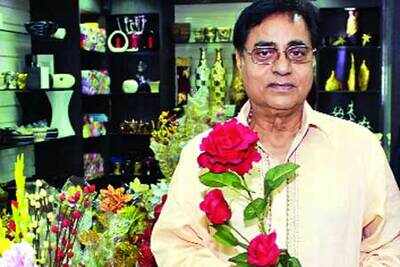
His voice Stired Emotions
Jagjit Singh gave an emotional syntax to my generation. In the 80s, when I conceived “Arth”, he had already mesmerised the audience by giving a complete new dimension to singing ghazals to the accompaniment of the guitar.

I still remember the enchanting evenings Jagjit and I had at Janki kutir with Kaifi Azmi. Both Jagjit and I would carry his harmonium to the lawns of Kaifi saab’s house. While Kaifi saab would recite the lyrics, we would listen to him with rapt attention. Once Kaifi saab was done, Jagjit would inhale it all, and soon enough, he would exhale a tune. That’s how the three songs, “Jhuki Jhuki”, “Tum Itna Jo” and “Koi Yeh Kaise Bataye” were composed. An artiste should create his works effortlessly and Jagjit seemed so much at ease when he created the songs. He never tried to force his songs on anyone. While rhythm is the be all and end all for music today, he knew how to stir the emotions of the listeners with his soothing numbers.
HE was fond of racing
This is just too devastating a news. I was numb. I must have been 17/18 when I was first introduced by Badal Dhar Chowdhury to Jagjitji. Chitra didi (his wife) is from Kolkata. He was very fond of racing. He loved horses and would so often encourage me to get a taste of it. I feel a strange sense of void today.
He made ghazal popular
I had to immediately cancel my show at Pune and am now rushing back to Mumbai. It is very tragic and shocking. Jagjitbhai was an artiste who revolutionized this genre of music. I remember in 1975 we came out with an album – “Unforgettable”. He always showcased his versatility and promoted his form of music not only amongst our generation but also among the youth. His music left a mark on everyone’s life. He made the world aware of what ghazal is. I remember post his 70th birthday he spoke to me and told me that he was planning to do a 70-concert show across the world. Unfortunately Anup Jalota and Talat Aziz are both out of India and have their shows in USA. They will be also very shocked when they come to know about the news. I hope I’ll be able to do a show with Anupji and Talat as a tribute to Jagjitbhai.
He Transcended Pain
I missed out on the programme in September that had the city witnessing the maestro for the last time. I remember meeting him at a programme in 2009. This was right after Chitra Singh’s daughter, Monica Chaudhry, had ended her life. Though Jagjit Singh was extremely cordial, his musicians later told me how he was sinking into depression. An extremely soft-spoken man, it would be difficult keeping pace with him when he spoke. But on stage, he was a transformed soul. He transcended beyond pain and pleasure and spoke the universal language called music.
Pt Tejendra Narayan Majumdar
He Wanted To Teach Me Ghazals
I came to know Jagjit Singh in the early 90s through my father, Salil Chowdhury. He was scoring music for the serial, “Darar”, and had given me the responsibility of making Jagjit Singh learn the lines. The song, “Rishton mein darar ayi” was recorded in Mumbai and went on to become a rage. Jagjit Singh not just rehearsed the lines at our place, but also spent an hour at the studio doing just the same. He was touched by the song. At that time, it was thought that Bengalis can’t compose ghazals. My father had, in fact, told me, “Let me show the world that Bengalis too can make some lively ghazals.” Later, when I had gone out to eat with Jagjit Singh in Mumbai, he had said: “Beti, tum kyon nahin aa jati mere paas?” He wanted to teach me ghazals, but because of my commitments in Kolkata, I could never do that.
ANTARA CHOWDHURY, Singer
He Could Not Keep His Promise
Jagjit would regularly visit Kolkata in the mid-70s and essentially put up at Mirza Ghalib
Street. He was of the opinion that the city was keen on keeping Mirza Ghalib’s works
alive. During that time, my father’s friend, C h u n i N a s h k a r, would accompany him on tabla as he sang thumris. He hadn’t got into ghazals in a big way till then. He was associated with my father, Jahnabi Ranjan Mishra, and Shanti Bardhan, both disciples of Ustad Ali Akbar Khan and would even be a regular at our Chanditala residence. My father and Chuni Nashkar would also learn tabla under the tutelage of Kanai Dutta. At that time, there would be mujras at the Bengal Film Laboratory and baijis would come down from Lucknow to perform. My father would often play tabla there and Jagjit used to be present as well. Another connection with I shared with him is through Salil Chowdhury. Jagjit sang the title track of the serial “Darar”, which was composed by Salil Chowdhury. The last time I spoke to him was a few months back when I was working on the Urdu transcreations of Tagore’s songs. I remember sending him two songs and that mail is still there in my sent items. He asked me like a child whether he would be able to sing those songs as he was not keeping too well. “But I would do the narration in the album,” he had promised. Sadly, he couldn’t keep this promise.
Debajyoti Mishra, composer
I Received My First Remuneration From Him
Jagjit Singh gave me my first break. He’s the one to have made me Kumar Sanu. I was recording Kishore Kumar’s songs when he heard me first. The very next day, he called me to another studio for recording. I got my first remuneration, 1,500, from him! He later introduced me to Kalyanji (of Kalyan-Anand) and that set the ball rolling for me in Bollywood. I last met him eight months back at my audio release in Mumbai. Throughout my career, I was in touch with him. He was my greatest source of inspiration.
Kumar Sanu, Singer
As told to Priyanka Dasgupta, Zinia Sen and Piyali Dasgupta
Listen to Jagjit's Ghazals on Gaana
End of Article
FOLLOW US ON SOCIAL MEDIA









Photostories
entertainment videos
Featured In Movies

Popular Categories
Entertainment NewsBollywood NewsTollywood NewsKollywood NewsMollywood NewsMovie ReviewsLatest Hindi MoviesLatest Tamil MoviesMX PlayerParenting TipsHome RemediesWeight LossBeauty TipsParenting TipsHindi VideosHindi Video SongsBhojpuri Music VideosLatest Telugu MoviesBhojpuri Music VideoHindi TV News
Trending in Entertainment
Latest MoviesBollywood MoviesHollywood MoviesTamil Movies 2024Telugu Movies 2024Malayalam Movies 2024Kannada Movies 2024Marathi Movies 2024Bengali Movies 2024Top Rated Movies 2024Best Hindi MoviesBest English MoviesBest Telugu MoviesBest Tamil MoviesBest Malayalam MoviesBest Kannada MoviesBest Bengali MoviesUpcoming Hindi MoviesBest Movies Of All TimeBest Hindi Movies of All Time
Trending in Etimes
Horoscope TodayNumerology Predictions TodayAustria ElectionJoe BidenKamala HarrisPopulated Indian CitiesAlcohol Cancer RiskIsrael Beirut WarSunita WilliamsIsrael Hezbollah WarNepal FloodBarbra StreisandSnoring Prevention TipsDonald TrumpMagnesium DeficiencyRelationship TipsLake Michigan DiscoveryElon MuskEkadashi in October 2024
Trending in TV
Trending in Lifestyle
Trending in Regional
Movie Reviews
Binny And Family ReviewLove, Sitara ReviewWill & Harper ReviewWolfs ReviewYudhra ReviewJo Tera Hai Woh Mera Hai ReviewKahan Shuru Kahan Khatam ReviewHis Three Daughters ReviewNever Let Go ReviewDancing Village: The Curse Begins ReviewTransformers One ReviewFirst Love ReviewBerlin ReviewThe Buckingham Murders Review
Upcoming Hindi Movies
Upcoming Regional Movies
Latest News
Zodiac Signs as Romantic Movie CouplesJapanese artist’s tribute to Indian classical dance formAnanya Panday unveils her Amol Palekar-inspired look in quirky BTS PICS from 'CTRL’Sanjay Dutt celebrates 'Gandhigiri', shares a scene from 'Lage Raho Munna Bhai'Women's T20 World Cup 2024: Teams, format, venues, defending champions and more FAQs answeredGovinda's bullet injury: Mumbai police not convinced with actor's version but rule out foul playGovt proposes to bring motorcycles under ‘contract carriage’ by amending MV ActHaircuts and colours to try out this PujoTriptii Dimri denies skipping the Jaipur event after allegations of charging an appearance feeMaharashtra assembly polls: Deputy CM Ajit Pawar meets Union home minster Amit Shah amid Mahayuti tensions over NCP, seat-sharingWatch: Orry channels Aishwarya Rai in a hilarious tribute to Shah Rukh Khan and Amitabh Bachchan starrer 'Mohabbatein'NFL insider reveals Raiders’ asking price for star wide receiver Davante Adams amid trade speculationAnanya Panday on being called the upcoming Alia Bhatt: I can't touch what she has doneFormer WWE Champion Jeff Hardy talks about “addiction struggles”'Scam marathon' under JMM-Congress-RJD rule 'biggest obstacle' to Jharkhand's development: PM ModiWhy you must run in the morning on an empty stomachManipur CM Biren Sing bats for political talks to resolve crisis in stateWHO chief praises PM Modi on 10th anivarsary of Swachh Bharat mission
Other Group Sites -
ETimes is an Entertainment, TV & Lifestyle industrys promotional website and carries advertorials and native advertising.