
These 5 simple exercises can help women build muscle and boost fitness without a gym
Why bodyweight training actually works for women
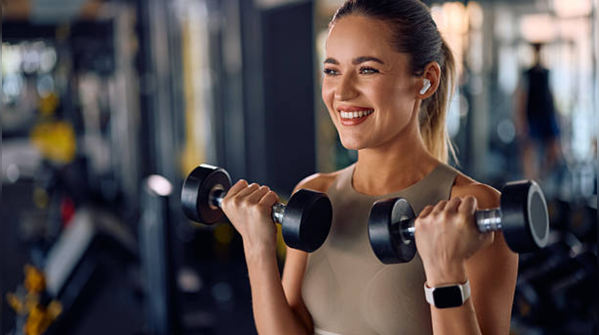
There's a persistent myth that strength training requires barbells, machines, and a gym that smells faintly of protein powder. But resistance is resistance. When you're moving against your own bodyweight — especially through full range of motion — you're loading muscle fibres, triggering adaptation, and building the kind of functional strength that translates to real life.
Bodyweight training produces significant gains in both muscular strength and endurance, particularly for beginners and intermediate exercisers. And for women specifically, strength training has documented benefits well beyond appearance: improved bone density, better insulin sensitivity, reduced injury risk, and a meaningful boost in metabolic rate over time.
So no, you don't need to "go to the gym" to get stronger. You just need to move consistently, progressively, and with intention.
The bodyweight squat
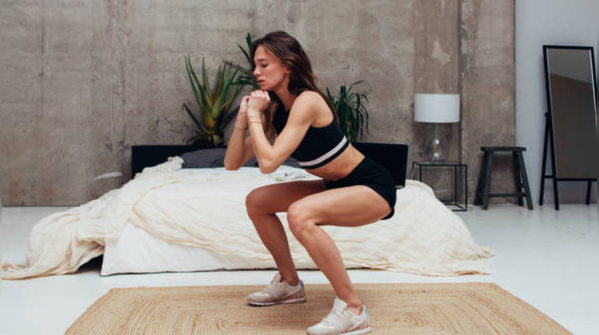
If you could only do one exercise for the rest of your life, a strong case could be made for the squat. It works the glutes, quadriceps, and hamstrings all at once three of the largest muscle groups in the body and it mimics the movement patterns you use every single day, from getting out of a chair to picking something up off the floor.
Stand with feet shoulder-width apart, toes turned out slightly. Lower yourself as if sitting back into a chair, keeping your chest up and knees tracking over your toes. Drive through your heels to stand. That's it. Three sets of 12 to 15 reps is a solid starting point. As you get stronger, you can slow the tempo, add a pause at the bottom, or eventually load it with a backpack to increase resistance.
Push-ups
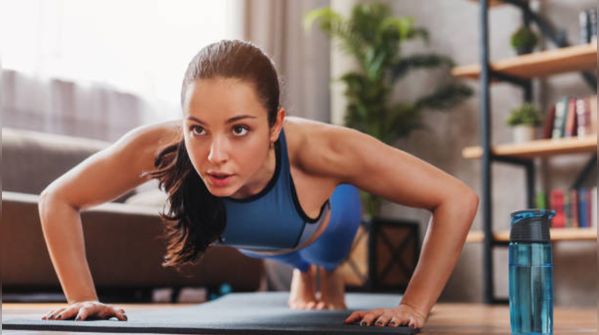
Women are often talked out of push-ups early on, which is a shame, because they're one of the most effective upper body strength exercises available. They hit the chest, shoulders, and triceps while demanding serious core stability throughout.
But here's the thing: there's zero shame in starting with an incline. Hands on a countertop, a bench, or even a wall means you're working the exact same movement pattern with less load. Over weeks, you lower the surface and increase the challenge. By the time you're doing full push-ups from the floor, you've earned it the right way, through progressive overload, not ego.
Aim for three sets of eight to twelve reps, whatever variation you're currently working with. Focus on a straight body line, controlled descent, and full extension at the top.
Reverse lunges for legs and balance
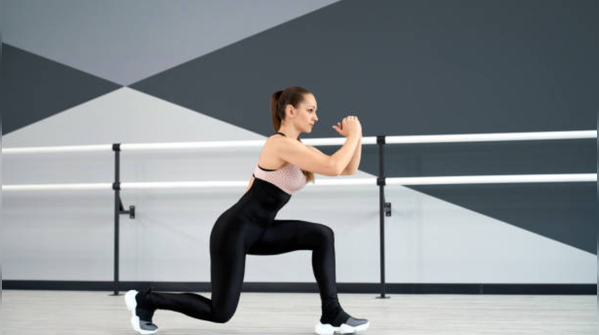
Lunges get a bad reputation among beginners because the forward version can feel unstable and harsh on the knees. The reverse lunge solves most of that. Step back instead of forward, lower your back knee toward the floor, then drive off the front foot to return to standing.
It's a unilateral move — meaning you're training one leg at a time — which builds balance, corrects muscle imbalances between sides, and works the glutes and quads through a long, powerful range of motion. Ten reps per leg, three rounds. And if balance is genuinely a challenge at first, holding a wall or doorframe is not cheating. It's sensible.
Glute bridges
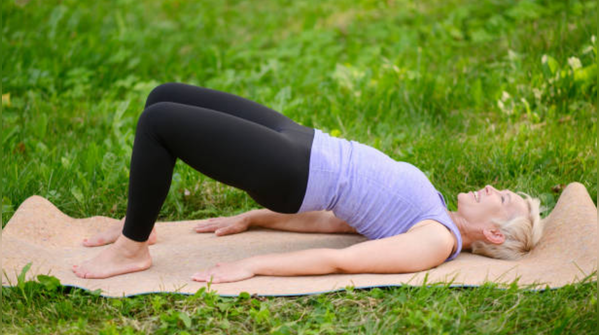
If you sit for most of the day, the glute bridge might be the most important exercise on this list. It directly targets the muscles that get switched off and lengthened from prolonged sitting — the glutes and hamstrings — and it's gentle enough to do every single day if you want to.
Lie on your back, feet flat on the floor about hip-width apart. Push through your heels and lift your hips toward the ceiling until your body forms a straight line from knees to shoulders. Squeeze hard at the top, hold for a beat, then lower with control. Fifteen reps, three sets. To make it harder without any equipment, try single-leg variations or elevate your feet on a chair.
The Plank
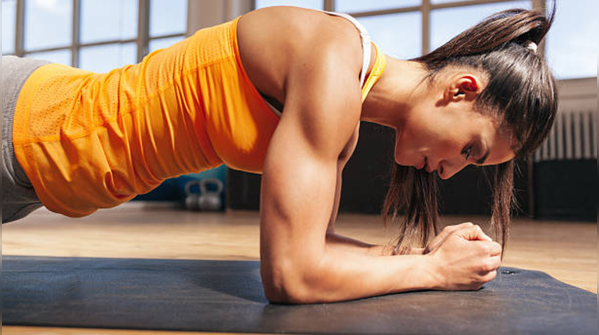
The plank is either loved or despised, and honestly, the people who dislike it are usually the ones who need it most. It's a static hold — forearms or hands on the floor, body in a straight line — that trains the deep core muscles responsible for spinal stability, posture, and injury prevention.
Twenty to 45 seconds is the target range depending on your current level. But duration matters far less than quality. Hips level, glutes engaged, breathing steady. The moment your lower back starts to sag or your hips pike up, the set is over. Three rounds, with 30 seconds of rest in between.
How to put it all together
Run through all five exercises as a circuit, three times over, with minimal rest between moves and about 60 seconds between rounds. The whole thing takes under 30 minutes. Do it three to four times a week, give yourself a rest day between sessions, and focus on small improvements — an extra rep here, a slower tempo there — rather than dramatic overhauls.
Strength doesn't come from one hard session. It comes from showing up consistently, moving well, and trusting the process enough to stay boring about it. These five exercises aren't exciting. But they work.
Featured In etimes

