
- News
- India News
- Who ruled Tamil Nadu? A look at the state’s chief ministers since Independence — in pictures
Who ruled Tamil Nadu? A look at the state’s chief ministers since Independence — in pictures

C Rajagopalachari (1952–1954)
C Rajagopalachari, popularly known as Rajaji, was the first chief minister of Madras State after elections in 1952. A veteran freedom fighter and close associate of Mahatma Gandhi, he focused on administrative consolidation in the early years of Indian democracy. His tenure is remembered for educational reforms, including the controversial Modified Scheme of Elementary Education. Rajaji later resigned and went on to play a major role in national politics, including founding the Swatantra Party. He also served as India’s last governor-general. (Image credit: Constitution of India)

K Kamaraj (1954–1963)
K Kamaraj is regarded as one of Tamil Nadu’s most influential leaders. Known for simplicity and grassroots connect, he prioritised education, infrastructure, and social welfare. The expansion of schools and free education schemes transformed Tamil Nadu’s literacy landscape. He also played a crucial role in national politics through the “Kamaraj Plan,” which reshaped the Congress leadership at the Centre. His governance style earned him the title “Kingmaker” in Indian politics. (Image credit: Indian National Congress/INC.in)

M Bhaktavatsalam (1963–1967)
M Bhaktavatsalam succeeded Kamaraj and served during a politically turbulent period. His tenure coincided with rising anti-Hindi agitations in Tamil Nadu, reflecting growing resistance to language imposition. Law and order challenges dominated his administration, which eventually faced strong opposition from Dravidian parties. The 1967 elections marked a turning point, ending Congress dominance in the state and ushering in Dravidian rule. (Image credit: https://heritage.iitm.ac.in/)

CN Annadurai (1967–1969)
CN Annadurai, founder of the DMK, became the first Dravidian chief minister of Tamil Nadu. His government implemented landmark reforms, including renaming Madras State as Tamil Nadu and institutionalising the two-language policy. Annadurai focused on social justice, rationalism, and Tamil identity. His leadership marked a decisive shift away from Congress politics and laid the ideological foundation for Dravidian governance in the state. (File photo)

M Karunanidhi (1969–1976, 1989–1991, 1996–2001, 2006–2011)
M Karunanidhi served multiple terms and was one of Tamil Nadu’s longest-serving chief ministers. A prolific writer and orator, he strengthened social justice policies, expanded welfare schemes, and promoted Tamil language and culture. His tenure saw administrative reforms, infrastructure growth, and political confrontations with the Centre. Karunanidhi’s legacy remains central to Dravidian politics and Tamil Nadu’s political identity. (File photo)

MG Ramachandran (1977–1987)
Popularly known as MGR, the former film star revolutionised Tamil Nadu politics. As founder of the AIADMK, he introduced people-centric welfare schemes such as the nutritious noon meal programme. His charisma and mass appeal translated into electoral dominance. MGR’s tenure strengthened welfare politics and created a strong alternative to the DMK, reshaping the state’s political landscape for decades. (File photo)

V N Janaki Ramachandran (1988)
Janaki Ramachandran, widow of MGR, served briefly as chief minister amid intense political turmoil following her husband’s death. Her short tenure was marked by factionalism within the AIADMK and instability in the Assembly. She remains one of the few women to have held the post, though her government was soon dismissed. (File photo)

J Jayalalithaa (1991–1996, 2001, 2002–2006, 2011–2014, 2015–2016)
J Jayalalithaa emerged as one of Tamil Nadu’s most powerful leaders. Known as “Amma,” she combined strong leadership with expansive welfare schemes such as Amma Canteens and subsidised essentials. Her tenure saw both administrative achievements and legal challenges. Jayalalithaa’s electoral resilience and centralised leadership style left a lasting imprint on the state’s governance and politics. (File photo)

O Panneerselvam (2001–2002, 2014–2015, 2017)
O Panneerselvam served as caretaker chief minister on three occasions, stepping in during Jayalalithaa’s legal or political absences. Known for loyalty and administrative continuity, his tenures were transitional but critical in maintaining government stability. He later played a key role in AIADMK’s internal power struggles following Jayalalithaa’s death. (File photo)

Edappadi K Palaniswami (2017–2021)
Edappadi K Palaniswami led the AIADMK government after prolonged political uncertainty. His tenure focused on infrastructure development, disaster management, and administrative stability. He successfully completed a full term despite factional challenges within the party. Palaniswami later emerged as a principal leader of the AIADMK opposition. (PTI photo)
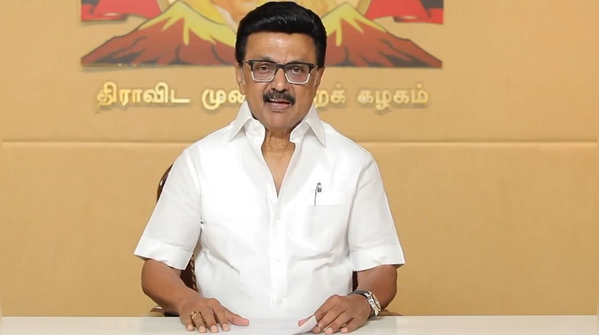
MK Stalin (2021–Present)
MK Stalin became chief minister in 2021, leading the DMK back to power after a decade. His government emphasised social welfare, healthcare expansion, education reforms, and administrative outreach through initiatives like “Singara Chennai” and “Innuyir Kappom.” In 2022, Stalin consolidated his leadership, positioning the DMK as both a regional and national political force. His governance style focuses on inclusivity, institutional reforms, and urban development. (PTI image)
Featured In India

