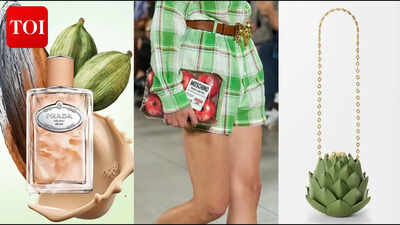
Gastro fashion has become luxury's newest aesthetic language. Creamy pasta, juicy tomatoes, buttery croissants and gooey cheese are no longer confined to the plate. In April 2026, Loewe, one of the world's major luxury houses, dropped its new artichoke clutch, crafted to mimic a real artichoke, featuring green leather leaves held together by a classic 'donut' chain. The piece swiftly went viral, becoming yet another marker of fashion's growing fixation with food. In recent seasons, luxury labels have increasingly turned to the culinary world, weaving edible motifs into handbags, jewellery, runway sets and ready-to-wear with striking regularity.
What is gastro fashion
Gastro fashion refers to the growing intersection of food and fashion, where culinary elements are used as part of a brand's aesthetics, storytelling and identity. Shreya Shrivastava, fashion commentator, founder & EIC, Ayerhs Magazine, says, "It goes way beyond just food prints on clothes. It can be food-shaped products, food-centric product photoshoots, luxury cafés, and complete fashion campaigns and products built around fancy food and dining."
Rise in gastro fashion: Multiple factors at play
From a basic necessity to a marker of status and identity, food has undergone a remarkable transformation. It is no longer solely about what we eat, but about how and where we consume the food, the emotions and memories it evokes, and the lifestyles and identities attached to it.
The luxury and fashion world has recognised this shift, increasingly using food as a cultural and emotional reference point. Niti Gupta, luxury and design expert, founder & creative director, Afra World, says, "People associate food with comfort, family, desire, pleasure, memory, celebration and intimacy. Fashion can sometimes feel distant or elitist. Combining fashion with food can thus soften luxury branding and make it emotionally warmer."
Food is also one of the most engaging visual categories on social media. Bright fruits, glossy desserts, coffee foam and layered pastries have strong recall value and attract attention quickly, lending themselves to digital virality. Extravagant food in abundance has long symbolised wealth and power, and fashion borrows this language through overflowing tables, rich desserts and lavish feasts, reinforcing ideas of excess, pleasure and exclusivity.
After years of quiet luxury and beige minimalism, people are seeking joy, colour, and personality. Food motifs deliver that instantly. It's nostalgic, domestic, and deeply human. In times when life feels stressful, putting on your grandmother's pomegranate motif or your favourite snack on your outfit feels grounding. I see clients pick those pieces almost intuitively, like they're reaching for something familiar.
Palak Shah, celebrity fashion stylist
Instagram and TikTok completely changed the way people consume aesthetics. Items like butter, cherries, pastries and branded café culture became fashion signifiers because creators turned them into lifestyle markers. Food now strongly exists inside microtrends and internet subcultures. Luxury brands are obviously paying attention to that because they know these visuals are highly shareable and easy for audiences to participate in online
Shreya Shrivastava, fashion commentator
Global brands' food-fashion playbook
Luxury brands are no longer just selling products, they are selling an entire lifestyle — food naturally becoming an extension of this strategy. Beyond food-inspired prints on clothing, edible elements are increasingly used as props in campaigns to evoke indulgence and sensory appeal. Among the most visible expressions of this trend are accessories shaped like food items — tomato clutches, croissant bags, pasta-inspired designs — alongside colour palettes borrowed from fruits and desserts. Several luxury houses are also expanding into cafés and restaurants, blurring the lines between fashion and dining, and turning food into a pillar of the luxury experience.
Moschino unveiled a spaghetti-inspired clutch at its Fall 2025 show in Milan — crafted from printed leather with faux noodles intertwined with basil leaves and cherry tomatoes, turning a classic Italian dish into a playful luxury accessory. In April 2026, Dior opened a temporary pop-up in China designed to resemble a giant sliced cake, with soft curved displays, pastel tones and sculptural elements echoing cake icing and layered textures. For Easter 2026, Dior and Louis Vuitton unveiled limited-edition chocolate Easter eggs, turning seasonal confectionery into an extension of their craftsmanship.
How Indian designers and labels use food
Indian gastro fashion, however, is starkly different from the global one. Shrivastava says, "Most global brands approach food in a very pop-cultural, trend-driven and internet-focused way. Indian designers lean more into nostalgia, heritage and emotional familiarity. The references feel more homely and culturally rooted rather than just pretty." Palak Shah, celebrity fashion stylist, adds, "In a Sabyasachi ensemble, the food motifs are woven into the embroidery itself: mangoes, pomegranates, lotus seed pods. When I look at a brand like House of Masaba, I get a joyful pop-irreverence —
mirchi, peas,
chai paired with contemporary silhouettes. Global luxury treats food as a wink. Indian fashion treats it as a memory. Both are stylable, but they require completely different approaches in how you build the rest of the look."