
- News
- lifestyle
- fashion
- style-guide
- 7 forgotten Indian sarees that deserve to trend again
7 forgotten Indian sarees that deserve to trend again
Lesser-Known Indian Sarees That Deserve Comeback
Walk into any big Indian wedding, and you'll be blinded by the flash of heavy Kanjeevarams and rich Banarasis. We love them, sure. But did you know that the actual foundation of India's handloom history wasn't built on these heavy celebration silks? It was built on deeply functional, highly localized, and incredibly smart everyday sarees. Sadly, thanks to a flood of cheap synthetics and the ruthless efficiency of power looms, hundreds of our historical weaves are quietly vanishing. Fast fashion might give us instant gratification, but it's costing us our textile heritage. Let’s take a look at seven forgotten masterpieces that we desperately need to bring back.
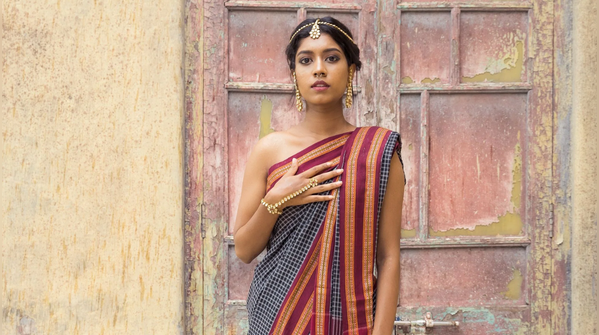
The Pre-Colonial Goan Check
When you think of Goa, you probably picture beaches and shacks, right? You definitely don't picture the Kunbi. Worn traditionally by tribal communities, this stunning red-and-black checkered drape was woven on backstrap looms. Women wore them short, without a blouse or petticoat, so they could easily work in the paddy fields. Portuguese colonial dress codes and modern power looms almost wiped them out entirely. Today, only a handful of weavers know the technique, but this breathable, minimalist pattern is honestly perfect for modern fashion.
(Image Credits: Pinterest)
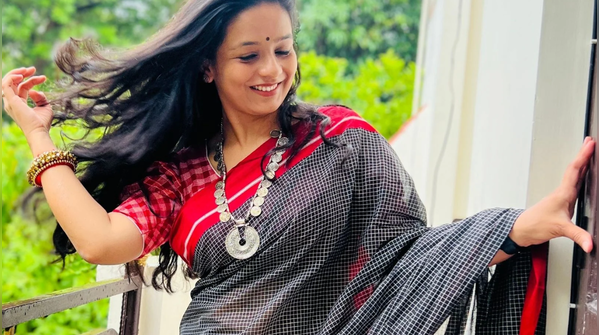
The Zero-Maintenance Wonder
Meet the Patteda Anchu. Hailing from North Karnataka and dating all the way back to the 10th century, this heavy cotton saree is a marvel of ancient sustainability. It features a bold mustard or red border against a checked body. The best part? It’s completely reversible. You can wear it on both sides. Plus, it requires absolutely no fall, no lining, and zero ironing. It faded away as cheap synthetics took over rural markets, but as far as eco-friendly, zero-maintenance clothing goes, it simply doesn't get better than this.
(Image Credits: Pinterest)
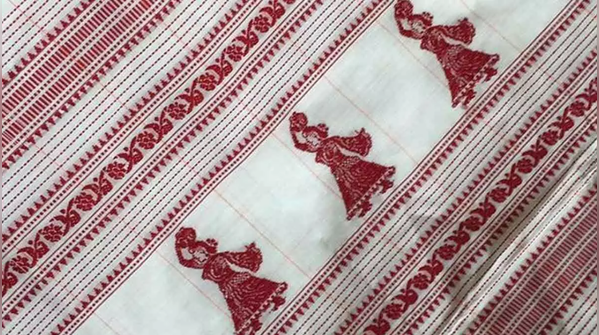
Telangana’s Storytelling Drape
The Siddipet Gollabhama literally tells a story on cloth. It features beautiful motifs of a "Gollabhama" (a milkmaid) carrying a pot. And here’s the catch: these aren't embroidered later. The weavers painstakingly weave them directly into the fabric using a complex extra-weft technique. It's wildly labor-intensive. Because weavers just aren't paid enough for this slow, meticulous storytelling, younger generations are walking away from the craft.
(Image Credits: Pinterest)
The Smart Silks of the West
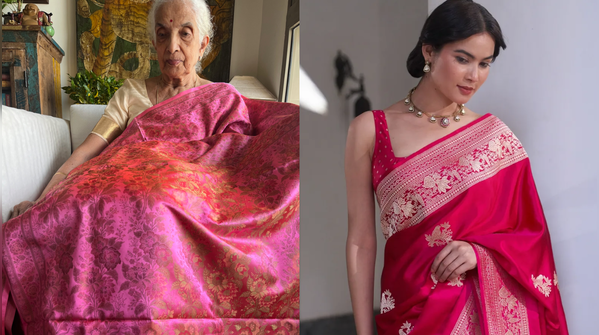
Himroo: Coming from Aurangabad with roots in the Mughal era, Himroo is a genius blend of silk and cotton. The Persian word Hum-ruh means "similar"—as in, similar to pure silk. It gives you the luxurious look of a heavy brocade but breathes easily in the harsh Indian heat. Sadly, the market is now flooded with cheap power-loom knockoffs passed off as the real deal.
Mashru: Up in Patan, Gujarat, weavers created Mashru (Arabic for "permitted"). Religious laws didn't allow Muslim men to wear pure silk against their skin. The solution? A masterfully engineered weave with opulent silk on the outside and soft cotton on the inside. It’s the ultimate "comfort-luxury" fabric, though genuine handwoven Mashru is incredibly rare today.(Image Credits: Pinterest)
Summer Cottons and Wild Silks
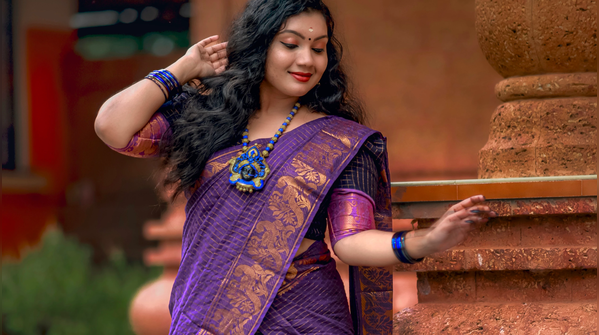
Down south, Saurashtrian weavers in Madurai created the Sungudi. Authentic Sungudi involves tying thousands of tiny knots by hand before dyeing the fine cotton in natural colors. It’s incredibly breathable and perfect for scorching Southern summers. Today, almost everything sold as Sungudi is actually just screen-printed imitation cloth. Finally, we have Maharashtra’s Karvath Kati. While everyone obsesses over Paithani sarees, the weavers in the Vidarbha region are struggling. Woven from pure, wild Tussar silk, it gets its name from its geometric borders that look like saw teeth (karvath). It has a brilliant, earthy elegance that completely stands out in a sea of embellished silks.
(Image Credits: Pinterest)
Featured In lifestyle

MORE FROM ETIMES
life & style