
- News
- lifestyle
- parenting
- parenting-stories
- 5 science-backed ways parents can build a child’s confidence
5 science-backed ways parents can build a child’s confidence

5 science-backed ways parents can build a child’s confidence
Confidence is not something children magically “have” or “do not have.” It is built in small, repeatable moments: when a child is heard without being dismissed, encouraged without being overpraised, and guided without being controlled. Research-backed parenting practices point to a simple truth: children tend to feel more secure, capable, and resilient when home is predictable, warm, and emotionally steady. They also grow stronger when adults make room for effort, autonomy, movement, sleep, and good nutrition, because these basics shape learning, mood, and self-regulation. Here are five science-backed ways parents can help build lasting confidence in children.

1) Lead with warmth, not pressure
Children read emotional climate long before they understand lectures. The studies says effective parenting practices include responding predictably, showing warmth and sensitivity, keeping routines and household rules, and using discipline without harshness; together, these help children do well emotionally, behaviorally, cognitively, and socially. In plain terms, warmth tells a child, “You are safe here,” and safety is the ground confidence stands on.
This does not mean lowering standards. It means correcting behavior without making the child feel like a problem. A child who knows that mistakes will be met with guidance rather than humiliation is more likely to take risks, ask questions, and recover after setbacks. That recovery is where confidence quietly takes root.

2) Praise the process, not the label
A child who is told “You are so smart” may feel good for a moment, but research from the APA and Stanford points to a better strategy: praise effort, strategy, persistence, and improvement. APA says effort-and-strategy praise leads to real accomplishments, while Stanford’s summaries of Carol Dweck’s work note that process praise is linked with a growth mindset and a greater desire for challenge later on.
That matters because confidence built on labels is fragile. A child praised only for being “brilliant” may panic when work gets hard, while a child praised for trying, revising, and sticking with it learns that ability grows. The message becomes: hard things are not proof of failure; they are part of learning.

3) Let children make real choices
Confidence grows fastest when children get to practice it. The APA notes that motivation is tied to whether students have opportunities to be autonomous and make important choices. That does not mean handing over the family structure. It means giving children age-appropriate control, which shirt to wear, which book to read, which project to start first, or how to solve a small problem on their own.
Choice teaches a child a powerful lesson: “My decisions matter.” Even small decisions build a sense of agency, and agency is one of the quiet engines of confidence. When parents step in too quickly, children can become dependent on approval. When parents step back just enough, children begin to trust their own judgment.

4) Protect routines, sleep, and movement
Confidence is not only emotional; it is also physical. The CDC says children’s physical activity improves brain health, attention, memory, academic performance, and mood, while also reducing depression risk. The same logic extends to everyday routines: structure helps children feel safe and secure because they know what to expect, and the studies say routines and rules make life more predictable for both children and parents.
Sleep matters too, because tired children are often more reactive, less focused, and less able to handle frustration. The CDC’s child development guidance highlights sleep as a major issue, noting that many children do not get enough. A rested child is more likely to cope, concentrate, and bounce back after a bad moment, all of which feed confidence in school, play, and friendships.
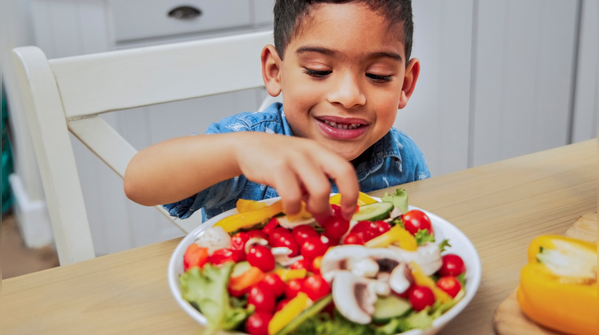
5) Feed the body well, and the mind follows
Nutrition does not build confidence by itself, but it supports the brain and body systems that make confidence possible. The studies say healthy eating supports brain development, healthy growth, and immunity; it also notes that healthy breakfasts are associated with improved cognitive function, better memory, reduced absenteeism, and improved mood, while drinking enough water may improve cognitive function in children and adolescents. Guidance also emphasizes a pattern built around vegetables, fruits, whole grains, protein foods, dairy, and water.
That nutrition piece matters more than many parents realize. A child who is hungry, underfuelled, or running on sugar spikes and crashes is not starting from the same place as a child with steady energy. Good nutrition is part of the emotional background music of confidence: it helps children show up with clearer attention, better mood, and more stamina for learning and play. The studies also note that good nutrition is essential across life stages, from child growth and brain development onward.
Featured In lifestyle

MORE FROM ETIMES
life & style