
- News
- lifestyle
- soul-search
- Thought of the day inspired by the Bhagavad Gita: “Self-control is greater than controlling others
Thought of the day inspired by the Bhagavad Gita: “Self-control is greater than controlling others
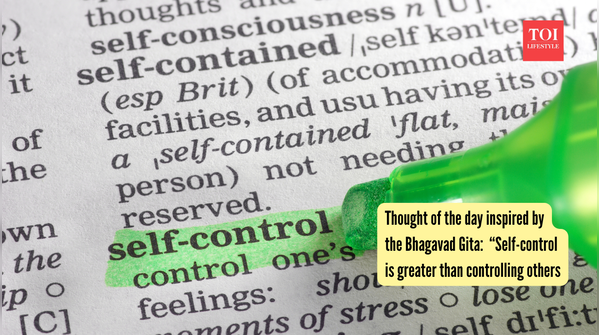
Thought of the day inspired by the Bhagavad Gita: “Self-control is greater than controlling others
People often want others to react, behave, and perform the actions as they want them to do, and are so driven by this mindset that they forget that this costs their own peace if anything goes otherwise.
It is also necessary to understand that it is only possible to think and act as you do and how you do it, and not what and how others do their deeds.
Leadership, authority, power, and being a leader in society are frequently seen as signs of success. Yet, the wisdom of the Bhagavad Gita teaches something which is above all of this, that true greatness begins with mastery over oneself. The thought, “Self-control is greater than controlling others,” reminds us that inner discipline is more powerful than exercising control.
A person may win arguments, command teams, or influence crowds, but if they cannot control their anger, desires, ego, or emotions, their victories remain incomplete.

Thought of the day inspired by the Bhagavad Gita (5)
“A person must elevate oneself through one’s own mind, not degrade oneself. The mind can be the best friend of a person, and also the worst enemy.”
Chapter 6, Verse 5

What does the quote mean?
The Gita explains that the highest form of power is the ability to have control over one’s own thoughts, emotions, actions, and desires. It directs that being full of strength in terms of controlling people’s actions to being the master of one’s own thoughts.
According to the Bhagavad Gita, the mind is naturally restless and difficult to control. Lord Krishna explains that a disciplined mind becomes a friend, while an uncontrolled mind acts like an enemy.
Although attempting to have control over others may provide authority in the short term, it rarely produces long-term respect or satisfaction. Managers may put pressure on staff, parents may make their kids obey, or leaders may use fear to control others.
But this kind of control usually leads to anger and resistance. On the other hand, someone who develops patience, emotional restraint, and self-control naturally gains respect and trust.
It's important to understand, that developing self-control does not include suppressing feelings or becoming dispassionate. Instead of reacting with anger, ego, or authority, it means learning how to react coolly and intelligently. A person with self-control can handle distractions, prevent bad habits, remain composed in the face of criticism, and make conscious decisions even under stress.

Impact of this thought process on daily life
People with strong emotional intelligence often show that they build healthier relationships, perform better professionally, and handle stress more effectively.
Another important lesson from the Gita is that self-control begins with small daily actions, like controlling how you speak, what you speak, managing anger, limiting unnecessary desires, and inculcating discipline. Over time, these habits create inner stability and confidence.
Featured In lifestyle

MORE FROM ETIMES
life & style