Trending
This story is from August 21, 2013
In India, there aren’t many opportunities for pianists
There is an Indian talent rising in the West. He is Julian Clef, a
rather timid lad from Kerala, with a UK accent, whose fingers can fly
across the piano keys,
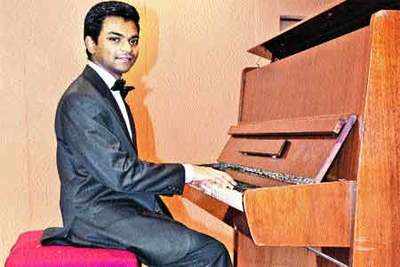
There is an Indian talent rising in the West. He is Julian Clef, a rather timid lad from Kerala, with a UK accent, whose fingers can fly across the piano keys, during the course of which mesmerising music is created.
The rather untold story of this youngster, who was in Vizag recently for a concert, reveals the gaping holes in India’s cultural scene.
When Clef’s dexter hands recreated the tunes of Beethoven, Mozart, Bach and Chopin at the concert here, it was not a just a coincidence. “When he was in school, he had fallen in love with the only piano in our locality, which was two kilometres from our home in Cavadiar. When other boys of his age hit the playground for football, he would rush to Cyril Perrera’s house, for his rendezvous with the instrument. On Sundays, I used to bring him lunch there, because he forgets about his food when he is lost in playing the piano,” said Wilfred George, Julian Clef’s father.
Julian attributes his musical genes to his father. Wilfred himself was an amateur musician, who was so passionate about music that he used to conduct a grand festival called the Bach Festival, on July 28, every year. It was musician Bach’s death anniversary and incidentally, Julian Clef’s birthday. It was during one of these festivals that an NRI couple, Dr Celestine and wife Linda John, spotted the talent in Julian and invited him to UK. “This was after my Class X. I was 15 then. I flew to UK and stayed with the couple for a while. They enrolled me in Chetam School of Music in Manchester. I started my formal education in music there, under Murray McLachlan,” says Julian. Later, he went for his bachelors at Royal Northern College of Music, where he is currently pursuing his masters, under the guidance of Dina Parakhina, a Russian musician.
However, that wasn’t the one concert he would cherish the most. He performed at a concert in Bonn, Germany, the birthplace of none other than Beethoven. “I went on to visit the Beethoven Haus, where the legendary pianist lived. It was a small house, and in one of the rooms, his piano was displayed. We were not supposed to
By now, Julian Clef has attended scores of concerts in Europe, America, Germany, Norway and Australia. He has performed at Wig MarkHall and St Martin in the field at London and has attended the Dvorak International Music Festival at Prague, Czech Republic, where Indian musicians like Subin Mehta participated. He has conducted concerts across India too, shuttling between Delhi, Mumbai, Bangalore, Kolkata and many more.
However, there is a flip side to Julian’s story, which is not all that rosy. “I am struggling to support his education in the West. I had written several times to the ministry of culture and made several representations to politicians like MP Shashi Tharoor. I once wrote to Abdul Kalam when he was the President, who ordered the department of arts and culture to look into the matter. The department sent me a meagre amount of `25,000. And said they will support his education only if he learns the Indian music,” said Wilfred George, who shot off a reply saying that would spoil the music and the instrument, because piano is not an Indian instrument and is most suitable for Westerna music.
In Manchester, Julian Clef’s fans have started a fund-raiser programme, which is currently taking some burden off his father’s shoulders. Julian seems undaunted by all this hoopla doing the rounds. He wears that distant look in his eyes though, which is a rarity, found only in these extremely talented ones. When quizzed about his dreams, he said, “I want to do more concerts in the West. In India, there are not many patrons or opportunities for pianists, like in the West. So, I want to be there, learn more, get deep into it.”
The rather untold story of this youngster, who was in Vizag recently for a concert, reveals the gaping holes in India’s cultural scene.
When Clef’s dexter hands recreated the tunes of Beethoven, Mozart, Bach and Chopin at the concert here, it was not a just a coincidence. “When he was in school, he had fallen in love with the only piano in our locality, which was two kilometres from our home in Cavadiar. When other boys of his age hit the playground for football, he would rush to Cyril Perrera’s house, for his rendezvous with the instrument. On Sundays, I used to bring him lunch there, because he forgets about his food when he is lost in playing the piano,” said Wilfred George, Julian Clef’s father.
Julian attributes his musical genes to his father. Wilfred himself was an amateur musician, who was so passionate about music that he used to conduct a grand festival called the Bach Festival, on July 28, every year. It was musician Bach’s death anniversary and incidentally, Julian Clef’s birthday. It was during one of these festivals that an NRI couple, Dr Celestine and wife Linda John, spotted the talent in Julian and invited him to UK. “This was after my Class X. I was 15 then. I flew to UK and stayed with the couple for a while. They enrolled me in Chetam School of Music in Manchester. I started my formal education in music there, under Murray McLachlan,” says Julian. Later, he went for his bachelors at Royal Northern College of Music, where he is currently pursuing his masters, under the guidance of Dina Parakhina, a Russian musician.
During the course of his education, Julian’s talent was recognised, and he was chosen to play with many an eminent musician at prestigious music festivals. “One of the memorable concerts was when I played at Buckingham Palace in 2010. Prince Edward was a patron of our college and we performed for him. For me, it was a once-in-a-lifetime kind of feeling,” the pianist says.
However, that wasn’t the one concert he would cherish the most. He performed at a concert in Bonn, Germany, the birthplace of none other than Beethoven. “I went on to visit the Beethoven Haus, where the legendary pianist lived. It was a small house, and in one of the rooms, his piano was displayed. We were not supposed to
touch it, because over the years, it has become so fragile that it would powder down with one touch. But there was a replica of it next to it, on which I played. It was like a pilgrimage,” he recollects.
By now, Julian Clef has attended scores of concerts in Europe, America, Germany, Norway and Australia. He has performed at Wig MarkHall and St Martin in the field at London and has attended the Dvorak International Music Festival at Prague, Czech Republic, where Indian musicians like Subin Mehta participated. He has conducted concerts across India too, shuttling between Delhi, Mumbai, Bangalore, Kolkata and many more.
However, there is a flip side to Julian’s story, which is not all that rosy. “I am struggling to support his education in the West. I had written several times to the ministry of culture and made several representations to politicians like MP Shashi Tharoor. I once wrote to Abdul Kalam when he was the President, who ordered the department of arts and culture to look into the matter. The department sent me a meagre amount of `25,000. And said they will support his education only if he learns the Indian music,” said Wilfred George, who shot off a reply saying that would spoil the music and the instrument, because piano is not an Indian instrument and is most suitable for Westerna music.
In Manchester, Julian Clef’s fans have started a fund-raiser programme, which is currently taking some burden off his father’s shoulders. Julian seems undaunted by all this hoopla doing the rounds. He wears that distant look in his eyes though, which is a rarity, found only in these extremely talented ones. When quizzed about his dreams, he said, “I want to do more concerts in the West. In India, there are not many patrons or opportunities for pianists, like in the West. So, I want to be there, learn more, get deep into it.”
End of Article
FOLLOW US ON SOCIAL MEDIA
Visual Stories








Photostories
Featured In Lifestyle

Popular Categories
Entertainment NewsBollywood NewsTollywood NewsKollywood NewsMollywood NewsMovie ReviewsLatest Hindi MoviesLatest Tamil MoviesMX PlayerParenting TipsHome RemediesWeight LossBeauty TipsParenting TipsHindi VideosHindi Video SongsBhojpuri Music VideosLatest Telugu MoviesBhojpuri Music VideoHindi TV News
Trending in Entertainment
Latest MoviesBollywood MoviesHollywood MoviesTamil Movies 2024Telugu Movies 2024Malayalam Movies 2024Kannada Movies 2024Marathi Movies 2024Bengali Movies 2024Top Rated Movies 2024Best Hindi MoviesBest English MoviesBest Telugu MoviesBest Tamil MoviesBest Malayalam MoviesBest Kannada MoviesBest Bengali MoviesUpcoming Hindi MoviesBest Movies Of All TimeBest Hindi Movies of All Time
Trending in Etimes
Horoscope TodayNumerology Predictions TodayDinner With TrumpTim WalzIvanka TrumpJose LopezKristina JoksimovicJoe WilsonTrump Eating The Dogs SongGermany NewsKamala HarrisPrince HarryPatriot Day 2024Diabetes RiskHappy Mindfulness Day 2024Trump Vs HarrisJoe JonasPositive Thinking Day 2024Dave Bautista
Trending in TV
Trending in Lifestyle
Trending in Regional
Movie Reviews
Berlin ReviewThe Buckingham Murders ReviewSpeak No Evil ReviewVisfot ReviewThalapathy Is The G.O.A.T ReviewRebel Ridge ReviewDetective Conan vs. Kid the Phantom Thief ReviewBeetlejuice Beetlejuice ReviewPad Gaye Pange ReviewA Wedding Story ReviewThe Diary Of West Bengal ReviewTikdam ReviewKinds Of Kindness ReviewAfraid Review
Upcoming Hindi Movies
Upcoming Regional Movies
Latest News
Challenges won’t stop me from making films that matter: Aditya Kripalani3 Reasons Why Hell in a Cell Tag Team Match Between Cody Rhodes, Roman Reigns and The Bloodline 2.0 Would Be perfect for Bad Blood 2024Odisha to join Ayushman plan; Delhi, Bengal to be only holdoutsRobert's wild encounter with Henry, the world's oldest 124-year old crocodile; internet shocked | Watch videoHooda says Congress coming to power in Haryana, asks criminals to give up crime or leave state‘I Hate Taylor Swift!’: Donald Trump rages after singer endorses Kamala HarrisFather-son duo Eugene and Dan Levy's dazzling entrance at the EmmysBakuchiol: Nature’s answer to youthful skin radianceSaudi Arabia footballer Fahad Al-Muwallad hospitalized after fall from balcony'Will hug my kids extra tight tonight': JD Vance after Trump 'assassination attempt'Bengal govt blames junior docs for logjam but sends fresh offer for talksLodi-era mosque collapses in AgraVineet Kumar Singh calls Superboys of Malegaon standing ovation at TIFF a 'magical experience': 'I can still hear the clapping and whistling" - ExclusiveFoods to pair with dates for boosting immunityLast Lunar Eclipse of 2024: What it means for your zodiac signNeeraj Chopra misses second Diamond League title by an agonising 1 cm; finishes second behind AndersonRain washes out England-Australia T20I series finaleKejriwal says he will quit as CM in 2 days, wants aam aadmi's 'honesty certificate'
Other Group Sites -
ETimes is an Entertainment, TV & Lifestyle industrys promotional website and carries advertorials and native advertising.