Trending
This story is from February 3, 2013
Mumbai LGBTs walk with pride
The sixth Mumbai Queer Azadi March took place on Saturday and saw the biggest turn out since the city first began to hold its Pride celebrations in 2008.
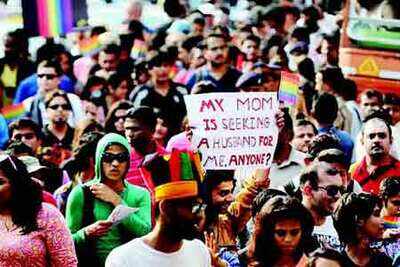
It concluded a series of celebrations by the LGBTIQ (Lesbians, Gay, Bi-sexual, Transgender, Intersex and Queer) community that included film screenings, fundraising parties and a spoken word event at an Andheri bar.

An estimated 1,000 people attended the march, which kicked off from August Kranti Maidan, a historic site from where Mahatma Gandhi had issued his Quit India speech in August 1942.
While the big names from the march, including Prince Manvendra Singh Gohil and Lakshmi Narayan Tripathi, were absent this year, the Pride retained its carnivalesque flavour. Several people turned up in brightly coloured costumes and elaborate headgears, and danced to the beats of dholak-walas. This year also saw a tremendous drop in face masks, a staple in previous marches. “It shows that people are gaining confidence,” said LGBT rights activist Ashok Row Kavi.
Writers Annie Zaidi and Musharraf Ali Farooqi, who are in town to attend the Times of India Kala Ghoda Arts Festival, also walked in the march to show support.
“There are stereotypes about the LGBT community, with reference to how they dress and talk. The fact that many people have come here in burlesquecostumesisacalltoembracetheiridentity. It’s a way of saying, ‘I will dress up like a fairy, but you still owe me a citizen’s rights’,” Zaidi observed.
Banners calling for the implementation of the Justice Verma Committee report, lauded by the queer community for recognising sexual orientation as a human right, jostled for space with other, jocular banners. A young man in a kurta carried one that stated, “My mom is seeking a husband for me – Anyone?” Another banner exhorted the Supreme Court to support the Naz decision, referring to the 2009 Delhi High Court order that decriminalised homosexuality by reading down Section 377 of IPC (unnatural sex), under which the community was routinely prosecuted. The order, popularly referred to as the Naz Foundation judgment based on the New Delhi-based petitioner Naz Foundation,was challenged in the Supreme Court. The apex body completed its hearings last year and is expected to deliver their verdict this year.
End of Article
FOLLOW US ON SOCIAL MEDIA







Featured In Lifestyle

Popular Categories
Entertainment NewsBollywood NewsTollywood NewsKollywood NewsMollywood NewsMovie ReviewsLatest Hindi MoviesLatest Tamil MoviesMX PlayerParenting TipsHome RemediesWeight LossBeauty TipsParenting TipsHindi VideosHindi Video SongsBhojpuri Music VideosLatest Telugu MoviesBhojpuri Music VideoHindi TV News
Trending in Entertainment
Latest MoviesBollywood MoviesHollywood MoviesTamil Movies 2024Telugu Movies 2024Malayalam Movies 2024Kannada Movies 2024Marathi Movies 2024Bengali Movies 2024Top Rated Movies 2024Best Hindi MoviesBest English MoviesBest Telugu MoviesBest Tamil MoviesBest Malayalam MoviesBest Kannada MoviesBest Bengali MoviesUpcoming Hindi MoviesBest Movies Of All TimeBest Hindi Movies of All Time
Trending in Etimes
Horoscope TodayNumerology Predictions TodayKamala HarrisBrisk WalkingPrince HarryElon MuskDonald Trump DonationsSayuri DeathHaitian President SpeechElon Musk MotherJD Vance Vs Tim WalzEric AdamsKamala HarrisPeanut Butter Vs Almond ButterMagnesium DeficiencyRelationship TipsSean Diddy CombsAlzheimers DiseaseFunniest Wildlife Photos 2024
Trending in TV
Trending in Lifestyle
Trending in Regional
Movie Reviews
Binny And Family ReviewLove, Sitara ReviewWill & Harper ReviewWolfs ReviewYudhra ReviewJo Tera Hai Woh Mera Hai ReviewKahan Shuru Kahan Khatam ReviewHis Three Daughters ReviewNever Let Go ReviewDancing Village: The Curse Begins ReviewTransformers One ReviewFirst Love ReviewBerlin ReviewThe Buckingham Murders Review
Upcoming Hindi Movies
Upcoming Regional Movies
Latest News
West Bengal CM Mamata Banerjee holds meeting to address flood situation in North BengalSetting them up to flourish: Why parents and school are a tag teamAir Arabia launches early bird promotion on 500,000 seats from INR 5,727!Diljit Dosanjh presents a gift to his Pakistani fan at his Manchester concert - WatchFormer Deputy Chief minister Alla Nani faces legal trouble after lift incident in EluruIndian wushu team creates history, bags seven medals at junior worldsWall collapse near Mahakal temple: Two cops, two civic staffers, temple official suspendedAishwarya Rai Bachchan touches Nandamuri Balakrishna's feet as a sign of respect, the Telugu star blesses herCovid lockdown on earth led to dip in Moon's temperature: StudyHost Kiccha Sudeep to Bigg Boss Kannada 11 contestant Aishwarya Shindogi: Come back as a stronger personManipur CM Biren accuses Kuki militants of abducting 2 Manipuri youthsKhatron Ke Khiladi 14 winner: Karan Veer Mehra lifts the trophy and Krishna Shroff becomes the first runner-upWhat to expect after a facelift procedure"It sounds like they really had to squeeze responses out of Vince": WWE Hall of Famer discusses Vince McMahon's reluctance in speaking during Netflix seriesColleagues remember braveheart Delhi Police constable Sandeep: 'Would rush to crime scene alone'10 desk exercises for 40-plus men for a healthy lifeBaloch Human Rights slam Pakistan and China, call it 'a failed state'A killing & a tipping point
Other Group Sites -
ETimes is an Entertainment, TV & Lifestyle industrys promotional website and carries advertorials and native advertising.