
- News
- lifestyle
- travel
- destinations
- 10 oldest trees in the world that are still living and where can they be found
10 oldest trees in the world that are still living and where can they be found
10 oldest trees in the world that are still living and where can they be found
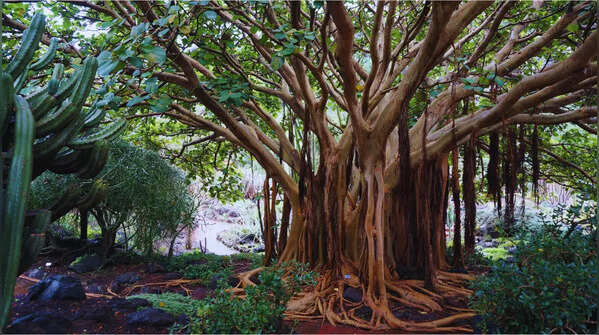
Some trees don’t just survive centuries, they survive civilisations. And for that reason and more, they are rightfully called iconic and historic. These ancient beings have stood through geological periods, witnessed empires rise and fall, and observed entire cycles of human history. Yet each one tells a different story: some are single, non-clonal individuals that have lived uninterrupted for millennia, while others survive through root systems that continuously regenerate new trunks. Together, they represent the longest-living organisms on Earth.

Methuselah in California, USA
Methuselah is estimated to be more than 4,800 years old, making it one of the oldest known non-clonal trees in the world. This remarkable Great Basin bristlecone pine stands within the Ancient Bristlecone Pine Forest in California’s White Mountains, part of the Inyo National Forest. Owing to its immense scientific and historical value, the tree’s precise location has never been publicly revealed, a measure taken to safeguard it from damage or vandalism.
Over nearly five millennia, Methuselah has endured extreme cold, prolonged droughts and fierce storms, surviving conditions that would be fatal to most other species. Researchers established its extraordinary age using dendrochronology, a meticulous technique that involves analysing and counting the tree’s growth rings. The continued secrecy surrounding its location underscores the importance of conservation efforts aimed at protecting one of Earth’s most ancient living organisms.

Old Tjikko in Dalarna, Sweden
The tree’s approximate age is around 9,550 years. This clonal tree is located in Fulufjället National Park. Old Tjikko may not be the world’s oldest single trunk, but it is one of the oldest genetic individuals. This Norway spruce lives through a clonal system where the visible trunk is relatively young, but the root structure has survived for nearly 10,000 years. Radiocarbon dating of the root system revealed its astonishing age. Over thousands of years, the tree repeatedly regenerated new trunks as older ones died off.

Jōmon Sugi in Yakushima, Japan
This tree’s approximate age is believed to be around 2,170–7,200 years. Located on Yakushima Island in Kagoshima Prefecture, Jōmon Sugi is the most famous and oldest cryptomeria (Japanese cedar) on Yakushima. It's a UNESCO World Heritage Site known for its ancient forests and almost mystical atmosphere. Do note that reaching the tree requires a long and physically demanding trek

Alerce Milenario (Gran Abuelo) in Chile
Gran Abuelo, or “Great Grandfather,” is believed to be approximately 5,484 years old. Located in Alerce Costero National Park in Chilean Patagonia, the sight of it is indeed incredible. The tree belongs to the Patagonian cypress species known as Alerce, often compared to American redwoods for their massive size and longevity. In 2022, researchers suggested the tree may be more than 5,000 years old based on partial ring sampling.

Sarv-e Abarqu in Abarkuh, Iran
Sarv-e Abarqu’s approximate age is around 4,000 years. It is located in the Yazd Province in central Iran. Sarv-e Abarqu is a monumental Persian cypress and one of Iran’s most treasured natural landmarks. Its massive trunk, expansive crown, and distinctive form hint at a very long life.

Olive Tree of Vouves in Crete, Greece
This ancient olive tree is believed to be at least 2,000–3,000 years old, maybe even older. This tree is located inside the village of Ano Vouves, on the island of Crete, and is known as one of the oldest olive trees that are still fruiting. Research has proved the tree to have a minimum age of 2,000 years, although some believe it may be much older, due to archaeological findings. Its gnarled, hollow trunk is a sight to behold.

Llangernyw Yew in Conwy, Wales
The Llangernyw Yew is estimated to be between 4,000 and 5,000 years old. It grows in the churchyard of St. Digain’s Church in North Wales. This ancient tree had been living since the Bronze Age and is among the oldest living trees in Europe. The yew tree's age was estimated through growth modeling and historical records rather than full coring, as yew trees often hollow with age.

Chestnut Tree of One Hundred Horses in Sicily, Italy
This legend, one believed to be anywhere between 2,000 and 4,000 years old, grows sweet chestnuts on the slopes of Mount Etna. It is among the largest trees in the world by the circumference of its trunk. The bark has split into multiple sections over time, but through genetic studies, the hypothesis holds that it emanated as a single tree. The chestnut has survived volcanic eruptions, earthquakes, and centuries of human history.

The Patriarca da Floresta (Forest Patriarch) in Brazil
Estimated to be around 3,000 years old, this massive jequitibá-rosa tree is located in Brazil’s Atlantic Forest. It is one of the oldest and tallest trees in South America. Although exact information on dendrochronology is not available owing to conservation regulations, ecological and rate information confirms its antiquity.

Abarqu-style Baobab of Makgadikgadi, Botswana
Some ancient African baobabs are estimated to be between 2,000 and 3,000 years old. These are found near the Makgadikgadi region, and are non-clonal but grow in hollow, multi-stemmed forms that make traditional ring counting difficult. Radiocarbon dating of internal wood samples has confirmed their great age.
Featured In lifestyle

MORE FROM ETIMES
life & style