
- News
- The anatomy of a riot
This story is from November 26, 2016
The anatomy of a riot
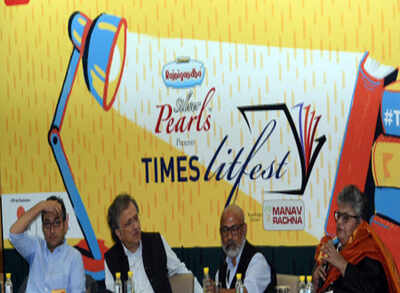
“I don’t like the word secularism,” declared historian and author Ramachandra Guha on Day 1 of the Times Lit Fest Delhi on Saturday.
<p>The anatomy of a riot<br></p><p><br></p>
Sharing the stage with him were journalists Rahul Pandita and Akshaya Mukul and academic Ayesha Kidwai. The four spoke about the books they have written, while highlighting what it means to be secular in an India that pulls in so many directions. While Pandita has written a memoir of leaving Kashmir when Pandits were expelled in 1990, Mukul’s book traces the history of the Geeta Press, which not only disseminated cheap, high-quality editions of the epics to Hindu households but also played a role in trying to shape a right-wing discourse of what being Indian means. Kidwai’s book, In Freedom’s Shade, is a translation of her grandmother’s book on Partition. “After 2002, I wanted to understand the anatomy of a riot,” said Kidwai, explaining how she decided to translate the book, which chronicles the memories of an upper-class Muslim woman whose husband was killed during Partition and who went, on Gandhi’s advice, to work in the refugee camps in Delhi. “Whether it is 1984 or 2002 or even 19747, riots have always been organized pogroms with the complicity of the state,” she said. She pointed out that being secular in India is a question of maintaining one’s religious identity while understanding the plurality of society.
Pandita’s take was that the secular language in India is often “a language of scared quotes”, where people say things that do not offend, “but you cannot fight for secularism, which is essentially what is good, if you are scared,” he said, pointing out that there have been angry essays and protests about the 1984 anti-Sikh riots, the Babri Masjid demolition, the 2002 Gujarat riots, but “it is as if 1990 and the killing of Pandits never happened because the BJP and the right appropriated our struggle. So anything we said, was right-wing,” he said.
End of Article
FOLLOW US ON SOCIAL MEDIA
Photostories

Hot Picks
TOP TRENDING
Popular Categories
Hot on the Web
Top Trends
Israel Hezbollah WarMost Runs in International CricketVirat KohliIND vs BAN Live ScoreRohit SharmaIndian Team Fastest Test FiftyMohammed SirajUGC NET Result 2024TS DSC Results 2024Women T20 World Cup Points TableWomen T20 World Cup ScheduleShane McMahon Net WorthHezbollah ChiefTourists Not AllowedDiddyTop Management Colleges of IndiaLive Cricket Score
Trending Topics
Devara CollectionMithun ChakrabortyKangana RanautNavratri WishesGandhi Jayanti WishesAnant AmbaniDevara CollectionGandhi Jayanti 2024Masala OmeletteEmergencyDevaraTaaza Khabar 2 Twitter ReviewDevara Movie ReviewHealthy RaitasSwatantrya Veer SavarkarColdplay India tour 2025Smartphone DealsApple Macbook Air M1Amazon SaleWordle Answer
Living and entertainment
Latest News
iVoomi S1 Lite e-scooter launched at Rs 84,999: 180 km range, three-year warranty!Tata Nexon turbo CNG: Variant-wise features with price explainedPMI in India intensifies efforts against Illicit Tobacco Trade to Safeguard Economic Interests and Consumer ProtectionBarbra Streisand pays tribute to late 'A Star Is Born' co-star Kris Kristofferson: 'He was something special'Sasikumar and Simran join hands for a feel-good, city-based entertainerMumbai vs Rest Of India: Irani Cup tie offers chance for hopefuls and rejects to impress selectorsOlivia Culpo and Christian McCaffrey buy George Clooney's mansion for $14.5 millionRG Kar case: Kolkata court extends judicial custody of ex-principal, suspended cop till October 4When Dikembe's shoe size astonished the Mumbai Temple guardPaul Heyman opens up on declining TNA offer after leaving WWEHow can Ben Stokes and other overseas players avoid a two-year IPL ban?"Nothing he was doing was believable", Darby Allin picks names wrestler who benefited most from AEW All In 2023 backstage incidentColleagues remember braveheart Delhi Police constable Sandeep: 'Would rush to crime scene alone'Header: Kolkata metro conducts public awareness campaign at Dum Dum metro stationBengaluru resident exposes fake Flipkart agent attempting to deliver bogus iPhone 15; read online reactionsBihar and Jharkhand among top two states enrolling for contributory pension scheme for farmers"Tyler Huntley’s 'Snoop' Nickname: The Rapper Connection Explained”BTS star V crowned 'Most Handsome Man in the World 2024'
Copyright © 2024 Bennett, Coleman & Co. Ltd. All rights reserved. For reprint rights: Times Syndication Service