
- News
- Sports News
- Cricket News
- India's walk down the nightmare lane in Adelaide
Trending
This story is from December 20, 2020
India's walk down the nightmare lane in Adelaide
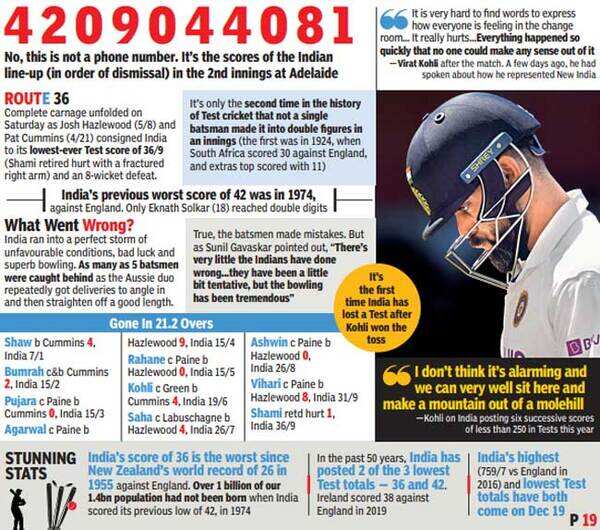
A day that began with a 62-run lead for Virat Kohli’s men, and promised much by way of consolidation, turned instead into a horror sequence of dismissals unlike any seen before in India’s Test history. India were dismissed for 36 - their lowest ever total in 88 years of playing Test cricket -- and Australia went on to win by eight wickets with more than two days to spare.
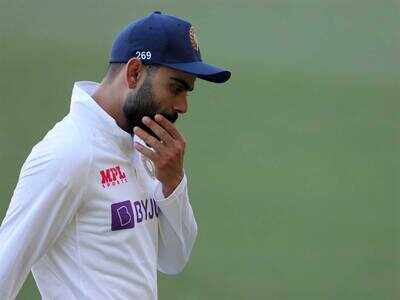
Virat Kohli (Getty Images)
In the end, it wasn’t during the expected ‘twilight hour’ of the pink-ball Test, but in broad mid-afternoon daylight, that India’s batsmen were felled by their own demons and some excellent pace bowling.
FIRST TEST: FULL SCORECARD
A day that began with a 62-run lead for Virat Kohli’s men, and promised much by way of consolidation, turned instead into a horror sequence of dismissals unlike any seen before in India’s Test history.
A batting line-up, including the likes of Pujara, Kohli and Rahane, seemed frozen in fright, and eventually reduced to blind panic, as India were snuffed out for an unbelievable 36, their lowest-ever score in 88 years of playing Test cricket.

It is the lowest total seen on the Test circuit in 65 years. Nine wickets fell for 21 runs on the third morning in 15.2 overs. The first six wickets fell for 19, another record low for India.
The total, 36, is so poor it is hard to comprehend that this Indian team, so habituated to courting success, is capable of such an abysmal performance. Just before the start of the game, captain Kohli had said he was a “representation of the new India”. He must be eating those words now.
Nothing in the match had been leading up to such an inexplicable end, even accounting for the superb spells by Josh Hazlewood (5/8 in 5 overs) and Pat Cummins (4/21).
To top off India’s nightmarish day, Mohammed Shami was struck on the arm, resulting in an injury which may see him out of action for a while.
Australia, after having struggled to stay in the game, found themselves home and dry by the second session on the third day. They won by 8 wickets after merrily chasing down 90 against a deflated three-bowler attack which was weighed down by the ignominy of an all-time low.
Hazlewood and Cummins brought in occult charm to the proceedings, targeting the stumps and exploiting to perfection both India’s batting frailties and a new-found freshness in the pitch. India didn’t throw away their wickets, but they also couldn’t avert the total disaster.
It was Pujara’s dismissal, off the second ball of Cummins’ third over, that roused the snake in the grass. Cummins simply did what he does best, pitching it up, getting it to angle in and then straighten away.
Pujara played the wrong line, his bat face towards mid-on and his feet going nowhere. The alarm bells started ringing.
In came Hazlewood, bowling a little bit fuller and a little bit straighter on a wicket which had metamorphosed from its sluggish first-day avatar into a livelier, bouncier surface. With movement on offer off the pitch, Hazlewood was a handful with his extra pace.
Out went Agarwal and Rahane in the same over. Disbelief set in. A rattled Kohli chased a widish one from Cummins, the flailing drive flying to gully where Green fumbled but held on.
There were to be no further comebacks. Hazlewood went on to become only the seventh bowler in Test history to take 5 wickets while yielding 8 or lesser runs. But it wasn’t that he and Cummins were completely unplayable, as Kohli admitted later.
They bowled smartly, with 48% of Australia’s deliveries on a good length.
The average swing was 0.58 degrees, and the average seam 0.66, meaning while there was movement, it was not extravagant and there was nothing bewitching in the conditions. With a little bit of fortitude, like they exhibited in the first innings, there may have been less shame for India.
It’s just that the edges flew and the catches were taken as India’s despair and anxiety mounted.
There will be much hand wringing and remorse but there is no going back to remove this indelible blot. This generation of Indian cricketer takes much pride in standing up to the opposition and travelling well, but in the blink of an eye, history has been made of the most unwanted kind.
The stench of this humiliation is likely to hover over the Indian batting lineup for a long time.
FIRST TEST: FULL SCORECARD
A day that began with a 62-run lead for Virat Kohli’s men, and promised much by way of consolidation, turned instead into a horror sequence of dismissals unlike any seen before in India’s Test history.
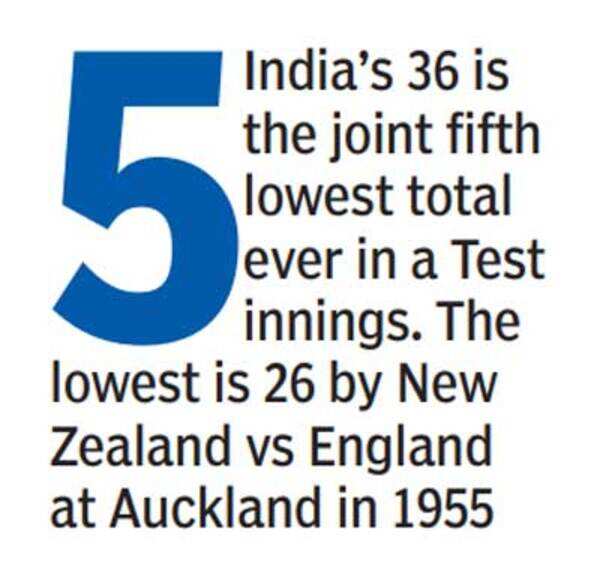
A batting line-up, including the likes of Pujara, Kohli and Rahane, seemed frozen in fright, and eventually reduced to blind panic, as India were snuffed out for an unbelievable 36, their lowest-ever score in 88 years of playing Test cricket.
It is the lowest total seen on the Test circuit in 65 years. Nine wickets fell for 21 runs on the third morning in 15.2 overs. The first six wickets fell for 19, another record low for India.
The total, 36, is so poor it is hard to comprehend that this Indian team, so habituated to courting success, is capable of such an abysmal performance. Just before the start of the game, captain Kohli had said he was a “representation of the new India”. He must be eating those words now.

Nothing in the match had been leading up to such an inexplicable end, even accounting for the superb spells by Josh Hazlewood (5/8 in 5 overs) and Pat Cummins (4/21).
To top off India’s nightmarish day, Mohammed Shami was struck on the arm, resulting in an injury which may see him out of action for a while.

Australia, after having struggled to stay in the game, found themselves home and dry by the second session on the third day. They won by 8 wickets after merrily chasing down 90 against a deflated three-bowler attack which was weighed down by the ignominy of an all-time low.
Hazlewood and Cummins brought in occult charm to the proceedings, targeting the stumps and exploiting to perfection both India’s batting frailties and a new-found freshness in the pitch. India didn’t throw away their wickets, but they also couldn’t avert the total disaster.
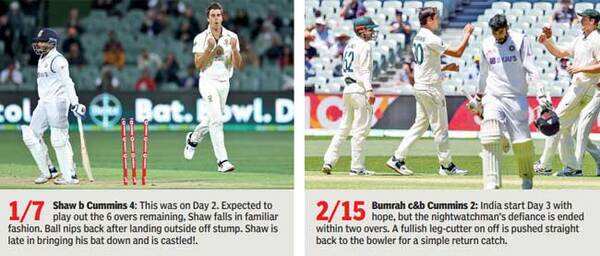
It was Pujara’s dismissal, off the second ball of Cummins’ third over, that roused the snake in the grass. Cummins simply did what he does best, pitching it up, getting it to angle in and then straighten away.
Pujara played the wrong line, his bat face towards mid-on and his feet going nowhere. The alarm bells started ringing.
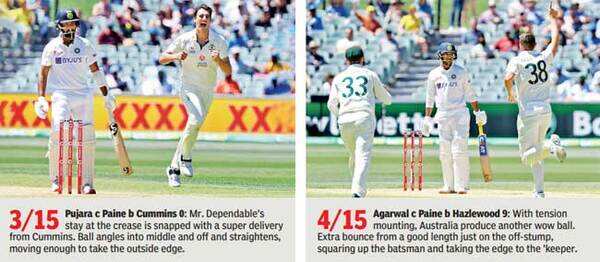
In came Hazlewood, bowling a little bit fuller and a little bit straighter on a wicket which had metamorphosed from its sluggish first-day avatar into a livelier, bouncier surface. With movement on offer off the pitch, Hazlewood was a handful with his extra pace.
Out went Agarwal and Rahane in the same over. Disbelief set in. A rattled Kohli chased a widish one from Cummins, the flailing drive flying to gully where Green fumbled but held on.
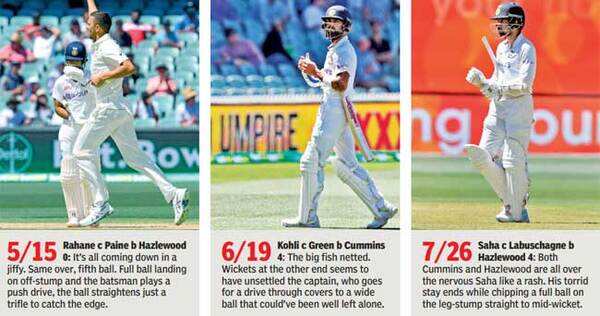
There were to be no further comebacks. Hazlewood went on to become only the seventh bowler in Test history to take 5 wickets while yielding 8 or lesser runs. But it wasn’t that he and Cummins were completely unplayable, as Kohli admitted later.
They bowled smartly, with 48% of Australia’s deliveries on a good length.
The average swing was 0.58 degrees, and the average seam 0.66, meaning while there was movement, it was not extravagant and there was nothing bewitching in the conditions. With a little bit of fortitude, like they exhibited in the first innings, there may have been less shame for India.
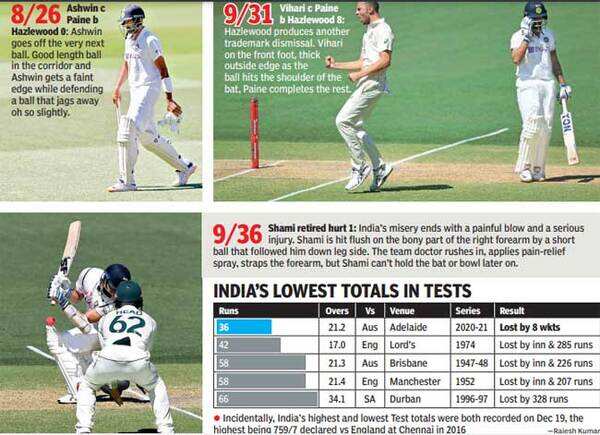
It’s just that the edges flew and the catches were taken as India’s despair and anxiety mounted.
There will be much hand wringing and remorse but there is no going back to remove this indelible blot. This generation of Indian cricketer takes much pride in standing up to the opposition and travelling well, but in the blink of an eye, history has been made of the most unwanted kind.
The stench of this humiliation is likely to hover over the Indian batting lineup for a long time.
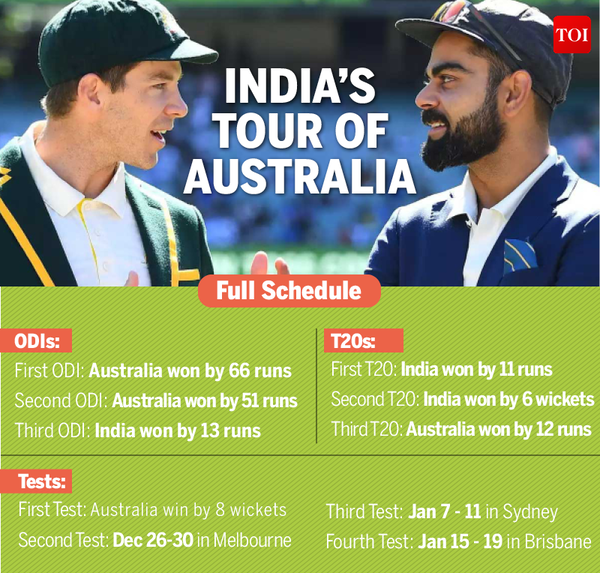
End of Article
FOLLOW US ON SOCIAL MEDIA








Top Sports News
TOP TRENDING
Trending Stories
In Sports
Entire Website
- Drew Mcintyre vs CM Punk Hell In A Cell Match To End in A Shocking Twist: Former World Champion to interfere?
- 5 Most Legendary Wrestling Families in the History of Wrestling
- WWE Hall of Famer reveals what NXT star Giulia needs to improve
- Rumor Has It: Former WWE stars Set to Join AEW
- "The girl has all the qualifications," - Tommy Dreamer gives verdict on NXT star Giulia's debut
- WWE NXT Champion offers his services to "The Original Tribal Chief" Roman Reigns
- WWE NXT News: Two new matches announced for next week's episode
- "I would certainly not turn down the opportunity" - TNA star reveals desire for NXT crossover
- Virat Kohli close to breaking another record set by Sachin Tendulkar
- Batista Reveals Reasons Behind His WWE Exit to Pursue Hollywood Career
- On Mamata's 'ready to resign' offer, protesting doctors say 'want solution to RG Kar stalemate'
- Putin invites 'great friend' PM Modi for talks on sidelines of BRICS summit
- Why are Bangladeshi Hindus in India for 50 yrs still not Indians?
- 'Leading light of the Left': Sitaram Yechury passes away; PM Modi, Rahul condole demise
- 'Deal with it': Oppn vs BJP over PM Modi attending Ganpati Puja at CJI's house
- Trump aide says 'White House will smell like curry' if Kamala wins
- Actor dies in his sleep. Why sudden heart attacks are killing Indians
- What Airtel CEO Gopal Vittal wrote in letter to Jio, Vi, Tata Tele and BSNL CEOs
- 4.7 magnitude earthquake hits Los Angeles in United States
- US Presidential Election Top 10: Is Donald Trump done as an orator?

Popular Categories
Hot on the Web
Top Trends
Trending Topics
Alia BhattMalaika Arora Father DeathArbaaz KhanNatasa StankovicMr Bachchan OTT ReleaseNational Parks In IndiaSelena GomezGOAT CollectionVikas Sethi DeathMalayalam ProducersIndia's Best Dancer 4Simi GarewalDilli BabuIndian National ParksLaung BenefitsVikas SethiiPhone 16Dubai Princess Sheikha MahraMG Windsor EvWordle Answer
Living and entertainment
Latest News
Epilepsy medication shows promise of treating sleep apnoea symptoms: StudyDigest this: Unhealthy gut may be linked to Parkinson’s disease'Played a big role in turning the cricket around': Ricky Ponting applauds Virat Kohli’s brilliance as India’s former captainAadhaar card update: Do you have to compulsorily update details on your Aadhaar every 10 years?Single Indians are now choosing slow, meaningful dates over-elaborate outings, reveals an online dating platform’s surveyExclusive- Saurabh Gumber reveals joining a new show during Ganeshotsav says, "I consider it as Bappa's small gift and believe he has great plans for me ahead"Pakistan: Bilawal cautions Shehbaz govt against political victimisation, points to Imran Khan's caseVijay Varma reveals he was DROPPED from 'Sacred Games' at the last minuteMahindra Thar Roxx with VIN 0001 to be auctiond for charity: How to registerVijay Sathya-starrer 'Dhil Raja' to release in SeptemberHarvard University Sees Drop in Black Freshman Enrollment Post-Supreme Court Ruling on Affirmative ActionArbaaz Khan spotted outside Malaika Arora's house along with police after the tragic news of her father's demise by alleged suicide - WATCH VIDEOHarvey Weinstein charged with additional crimes during hearing on rape chargesMitchell Schwartz's Cryptic Tweet Stirs Debate About Mahomes' ContractEcoR unloads 100 million tons of goods in just 160 daysTovino Thomas praises Prithviraj Sukumaran as director: "One of the brilliant directors I have ever worked with"Border Gavaskar Trophy: When Sourav Ganguly's Brisbane heroics set the tone for an enlivening seriesBritain’s one of the largest mobile services providers BT Group raises cybersecurity alarm: “...every 90 seconds hackers are checking…”
Copyright © 2024 Bennett, Coleman & Co. Ltd. All rights reserved. For reprint rights: Times Syndication Service