Large Household Appliances
Major appliances used for routine household tasks: Refrigerators, Air conditioners, Washing Machine, Ovens.
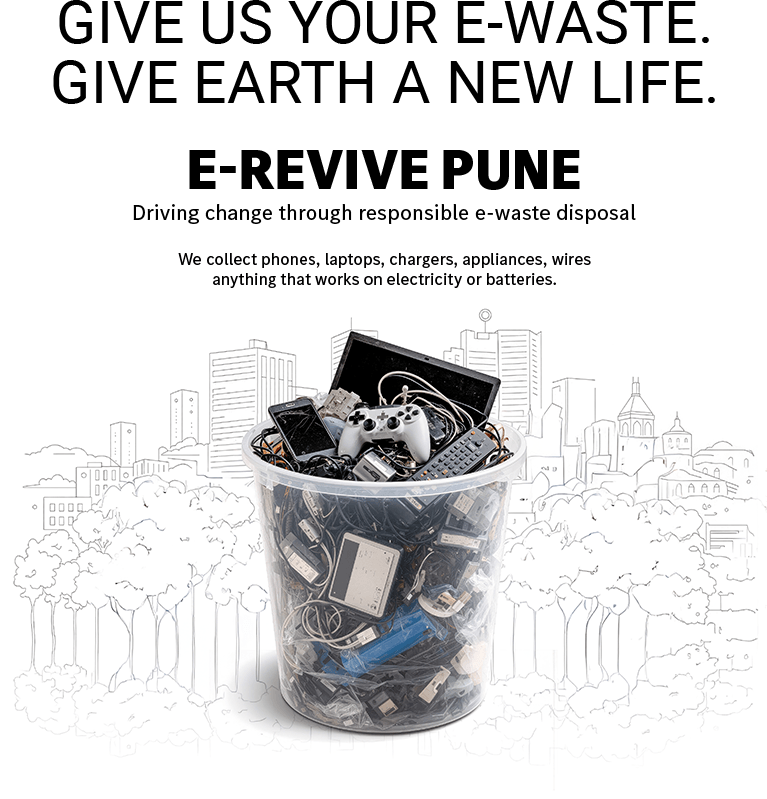
“E-Revive Pune: Driving Change Through Responsible E-Waste Disposal” is a CSR initiative focused on promoting responsible e-waste management through awareness, organised collection, and certified recycling systems within the city.
Pune is widely known as one of India’s prominent centres for education, technology, and industry. With a large student population, expanding residential neighbourhoods, growing corporate workplaces, and active commercial markets, the city represents a dynamic urban ecosystem where the use of electronic devices is deeply integrated into everyday life. From educational institutions and professional workplaces to households and retail markets, technology plays a central role in how the city functions. As a result, managing electronic waste responsibly has become an important aspect of sustainable urban living.
Through E-Revive Pune, the initiative engages key communities across the city, including schools and colleges, residential housing societies, corporate offices, and marketplaces, helping people understand the nature of e-waste, the importance of safe handling, and the need for responsible recycling.
The campaign begins with structured awareness sessions that encourage informed disposal practices and responsible technology use. These engagements are followed by organised e-waste collection drives, enabling participants to safely dispose of unused or end-of-life electronic devices.
All collected e-waste is transferred through authorised channels to certified recycling facilities, where it is processed in accordance with established environmental standards.
By combining awareness, accessible collection mechanisms, and responsible recycling processes, E-Revive Pune aims to support more sustainable e-waste management practices across the city.

Major appliances used for routine household tasks: Refrigerators, Air conditioners, Washing Machine, Ovens.

Smaller electrical devices used at home: Toasters, Vacuum Cleaners, Coffee Machine, Hair dryer.
Devices used for computing and data processing: Computers, Laptops, printers, Routers, Keyboards.

Gadgets and devices used for entertainment and communication: Television, Smartphones, Tablets, audio systems.

Electrically powered toys and entertainment devices: Electronic toys, Remote controlled cars, video game consoles.
Lighting devices & fixtures: LED Bulbs, fluorescent tubes, Desk lamps, chandeliers.

Machines that automatically dispense products or services: Vending machines, ticket dispensers, hand sanitizer dispensers.

Lighting devices & fixtures: LED Bulbs, fluorescent tubes, Desk lamps, chandeliers.
Devices for monitoring and controlling various systems: Smoke detectors, thermostats, security systems, pressure gauges.
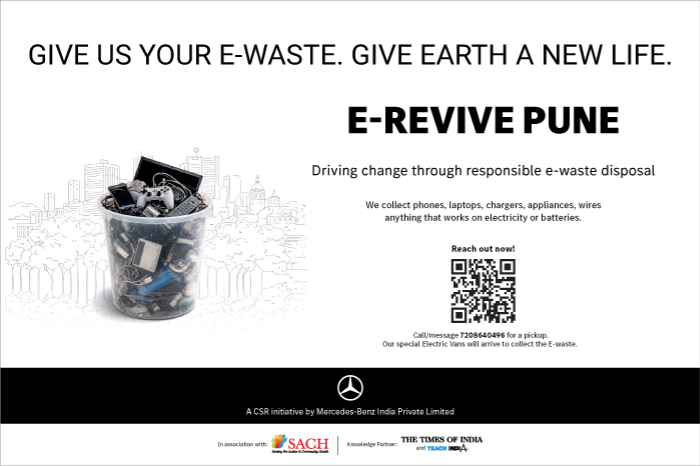
E-Revive Pune aims to engage institutions and communities across the city by creating a structured pathway for responsible e-waste disposal. Through certified e-waste collection points planned across residential complexes, school and college campuses, corporate offices, and local marketplaces, the initiative will make it easier for citizens to dispose of electronic devices safely and responsibly.
Know More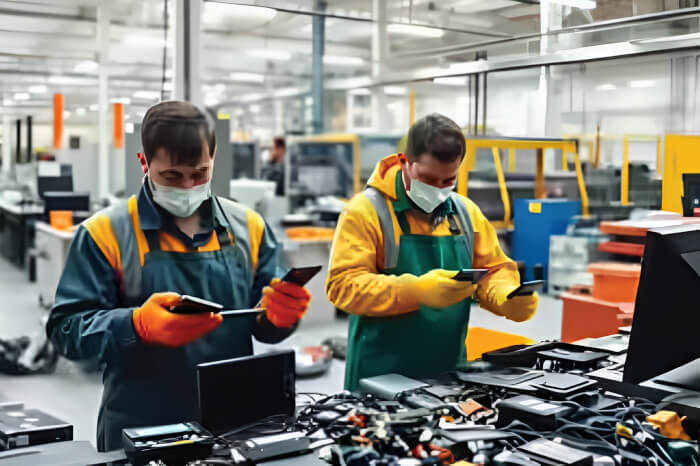
Delhi has launched an "E-waste Initiative" to combat the growing threat of electronic waste, which generates 152,000 metric tonnes annually. The initiative aims to mobilize communities, promote formal recycling, and address environmental degradation and public health risks. The Delhi government plans to develop India’s first integrated E-Waste Eco Park, generating green jobs and improving livelihoods.
Know More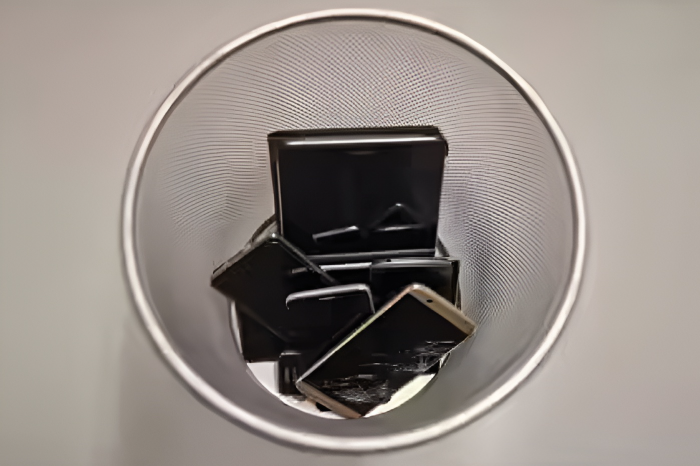
Our world is awash with electronics. From smartphones and laptops to refrigerators and televisions, these devices have become an essential part of modern life. But what happens when they reach the end of their lifespan? This is where e-waste comes in.
Know More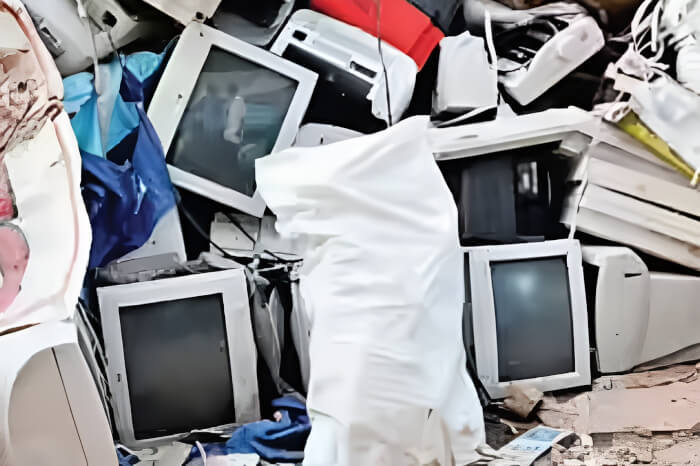
UN agencies have warned that waste from electronics is piling up worldwide while recycling rates remain low and are likely to fall even further.
Know More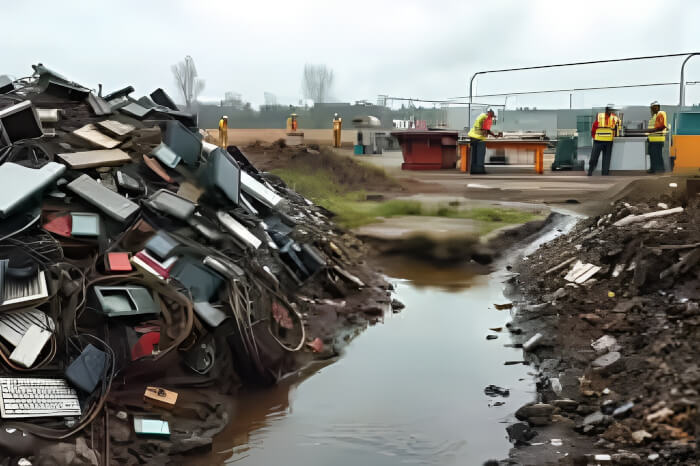
Hyderabad is actively tackling the growing challenge of electronic waste through various initiatives led by both government and private organizations. These efforts emphasize raising awareness about the hazards of improper disposal, establishing effective collection systems, and encouraging safe recycling practices through certified facilities, in accordance with the E-waste Management Rules.
Know MoreE-waste’ means electrical and electronic equipment, whole or in part discarded as waste by the consumer or bulk consumer as well as rejects from manufacturing, refurbishment and repair processes.
Our goal is to educate and mobilize different sectors of society viz Residential Welfare Associations (RWA), offices, retail markets, and educational institutions on E-waste.
E-waste is growing in India at the rate of 10%. Major recycling of E-waste is conducted in the non-formal sector using primitive and hazardous methods. Our aim is to educate, manage and collect E-waste efficiently to help India better manage the problem.
The city that is in focus is Pune. Within the city, we would be reaching out to Residential Welfare Associations (RWA), offices, retail markets, and educational institutions.
You can call the Teach India E-waste National Solutions Centre on +91-7208640496 to be a part of the program/ join through by filling in the details through the form as provided in the Join Us section of the website. SACH & Teach India aims to increase awareness regarding the significance of e-waste disposal and educate callers on proper e-waste handling practices. Additionally, the E-waste gathered will be collected in Mobile Vans by Teach India from each cohort. These vans will deposit the E-waste collected in centralized collection facilities.
The initiative focuses on: 1. Educating the public at large through awareness sessions/ digital and print mediums about E-waste, its proper management and disposal, and the significance of E-waste management. 2. Collection and responsible disposal of the e-waste at the authorized recycling centers.
Over the total duration of the project, we aim to collect at least 90 metric tonnes of E-waste from the city we plan to conduct the drive.
After E-waste is collected, it's first segregated by material type. Devices that can be repaired are refurbished for reuse. Non-reusable items are disassembled to recover valuable materials, while hazardous components are treated separately. Finally, remaining parts are shredded and recycled, minimizing environmental impact.

@2026 All rights reserved.
Follow us on


