Mughal Fort
Mughal Fort
You're Reading


Synopsis
Realising the importance of Allahabad’s strategic location in the fertile and centrally situated Doab region, and the navigational potential of the Ganges and Yamuna rivers, Akbar made this city a major centre of power in central … Read more
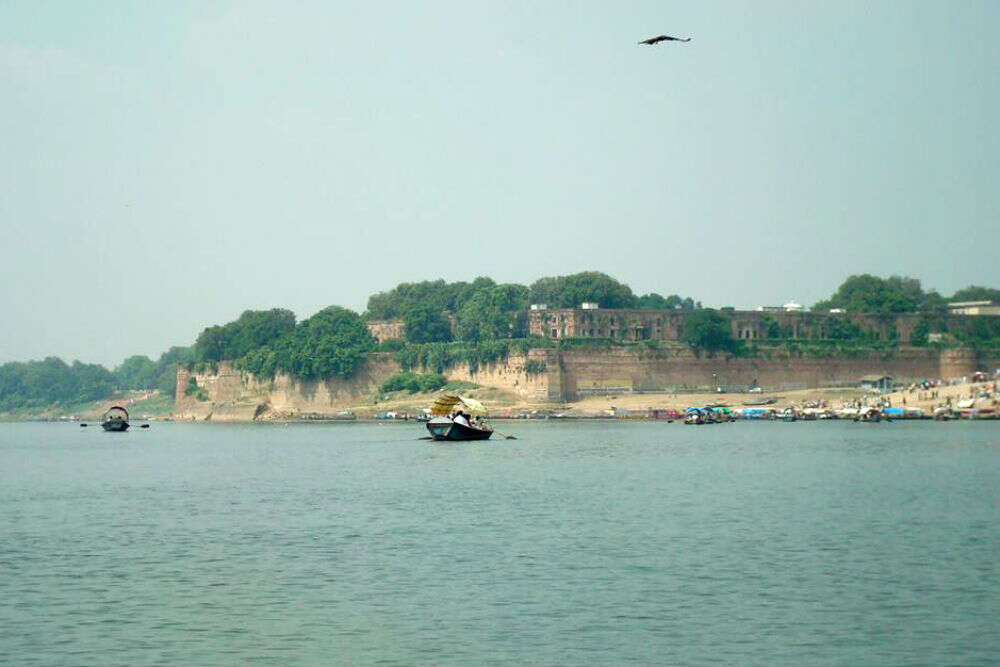 Realising the importance of Allahabad’s strategic location in the fertile and centrally situated Doab region, and the navigational potential of the Ganges and Yamuna rivers, Akbar made this city a major centre of power in central India and called it Illahabad, a divine city. At the Sangam or Prayag, the confluence of rivers, he built one of his largest forts. The fort was built in 1583 with high walls and three massive gateways, with the additional protection of the rivers along which it is set. The fort encloses a tree, revered as the sacred banyan tree called Akshayavat, set in the Patalpuri Temple. When Prince Salim led a revolt against his father Akbar in 1602, he held a parallel imperial court in Allahabad fort. The fort was captured by the Marathas who built a couple of temples in Allahabad. The Pathans too held the fort for a brief time. After the 1765 Treaty of Allahabad, the British built their garrison at the fort which became their military headquarters after they took over the city in 1801.
The fort makes an impressive sight when seen from the river banks or from a boat on the Sangam. While most of the fort is under army control, you can enter from the eastern side facing the river to see the Patalpuri Temple with an underground shrine full of idols. This temple is an important place for pilgrimage because the banyan tree in its precincts is believed to be the undying fig tree called Akshayavat. At the main gates to the fort stands a poorly restored polished stone Ashoka Pillar, inscribed with the emperor’s 242 BC edicts.

closecomments

Be the first one to review.
We have sent you a verification email. To verify, just follow the link in the message
end of article
Next story
Khusrau Bagh
Visual Stories
10 pretty Indian villages to visit this year-end

8 castles in Germany straight out of a fairy-tale

8 tiger reserves every wildlife enthusiast should visit in India

10 animals that are easily spotted in Ranthambore National Park
How to prepare for a night safari in India?

9 rare animals to spot in the Western Ghats and where to find them



Trending Stories
What is a red-eye flight? Don’t commit these 5 mistakes after taking one
From Kerala rains to Rajasthan heatwave: IMD issues major weather warning for travellers as monsoon nears India
Not just travel: 10 cheapest countries to retire in — 9 and 10 will surprise you
Polish woman shocked by what she says after living in Bengaluru for 10 months
Inside the “Snake Village of India”; a traveller’s guide to this mysterious place of venomous cobras




Comments (0)