Tashichoo Dzong
Tashichoo Dzong
You're Reading


Synopsis
Tashichoo Dzong which translates to fortress of auspicious religious conviction conventionally was the seat of monastic body, and summer capital of the country. The dzong is serving as the government seat since 1952, and presently … Read more
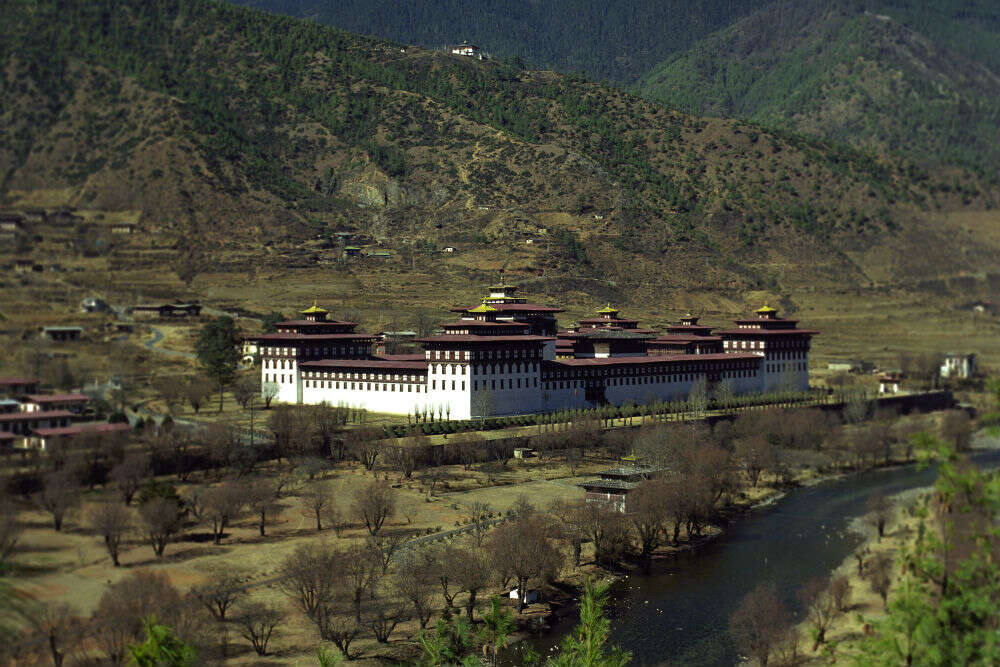
Tashichoo Dzong which translates to fortress of auspicious religious conviction conventionally was the seat of monastic body, and summer capital of the country. The dzong is serving as the government seat since 1952, and presently it houses the king office, secretariat, and other government organisations located nearby. It is also the headquarters for central monastic body of Bhutan, which opens up for general public after 5:30 pm. Unlike other dzongs, Tashichoo has two main entrances. One heads towards the south of the administrative section, and another leads towards the north to the monastic section, where annual tsechu festival is celebrated. The foundation of Thimphu dzong was first laid by Lama Gyalwa Lhanangpa in 1216. The dzong is located next to the banks of Wangchhu River, which is surrounded by a beautiful lawn. Visit this dzong for its authentic and stunning architecture. Don’t forget to spot the parliament building of Bhutan, which is quite visible from here.

closecomments

Be the first one to review.
We have sent you a verification email. To verify, just follow the link in the message
end of article
Next story
Authentic Bhutanese Crafts Bazaar
Visual Stories
10 pretty Indian villages to visit this year-end
8 castles in Germany straight out of a fairy-tale

8 tiger reserves every wildlife enthusiast should visit in India

10 animals that are easily spotted in Ranthambore National Park

How to prepare for a night safari in India?

9 rare animals to spot in the Western Ghats and where to find them


Trending Stories
Last chance! 5 tiger safaris to experience in India before the wildlife season ends in June
Travelling in India this week? IMD issues heavy rain and heatwave warnings across major tourist regions
Why travellers are paying more to feel fear, freedom and adrenaline; the rise of adventure tourism in India
Karnataka’s Dubare Elephant Camp tragedy: 5 rules to follow in the presence of wildlife
World's most culturally important rivers, and what they have in store for travellers




Comments (0)