The giant Anaconda
The giant Anaconda
You're Reading


Synopsis
The anaconda, as accepted by science, is a group of aquatic snakes, very similar to boas. They lie in wait for their prey underwater, their well-camouflaged green-grey skin concealing the tops of their heads that remain above the … Read more
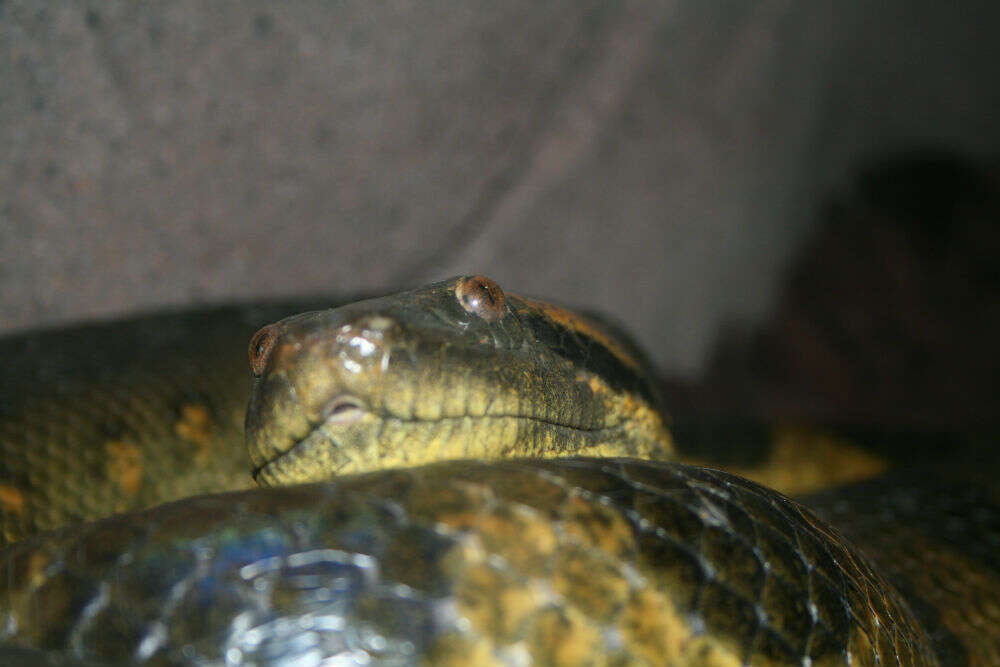
The anaconda, as accepted by science, is a group of aquatic snakes, very similar to boas. They lie in wait for their prey underwater, their well-camouflaged green-grey skin concealing the tops of their heads that remain above the water. They strike when animals come near to drink water, and suffocate them by crushing their bodies with muscular coils, before eating their head first. The largest recorded specimens were between 15 and 20 ft long, though precise size is difficult to determine as their skin stretch a great deal once they have been removed, and photographs of live specimens often lack examples of scale. However, deep in the tropical forests and swamps of South America, a different story can be heard. The etymology of the name is doubtful, but the Spanish speakers in the region call it the ‘matatoro’ or ‘bull killer’. The anacondas of a far greater size than a mere twenty feet are said to take livestock and sometimes people on a regular basis. In 1907, an explorer named Major Percy Fawcett travelled in the area and heard many accounts from local and native people of anacondas of over fifty feet in length. His own scepticism evaporated, however, when he shot a massive anaconda swimming in the Rio Negro close to his boat. He measured it as 62 feet. In 1933, a ninety-foot one was said to have been killed by Rio Oiapoc, a claim backed up by the Brazil-Columbia Boundary Commission. A three-foot snake’s rib was also said to have been found on the banks of the Rio Purus, which would suggest that a snake as long as 150 feet could exist, though the rib was never analysed. More recent sightings have been made by scientists working in the area as well as local people, but until one of these monster snakes is captured, they will always be regarded as cryptids.

closecomments

Be the first one to review.
We have sent you a verification email. To verify, just follow the link in the message
end of article
Next story
Mokele mbembe
Visual Stories

10 pretty Indian villages to visit this year-end

8 castles in Germany straight out of a fairy-tale
8 tiger reserves every wildlife enthusiast should visit in India
10 animals that are easily spotted in Ranthambore National Park
How to prepare for a night safari in India?

9 rare animals to spot in the Western Ghats and where to find them


Trending Stories
Vande Bharat train journeys across Kerala, Tamil Nadu, Karnataka And Andhra Pradesh every traveller should experience
Rakul Preet Singh's controversy at Gir National Park: 5 things travellers should know about rules for visiting national parks and wildlife sanctuaries
Travelling abroad for summer vacation? Here’s what PM Narenda Modi appeals to travellers and why this is important
IMD issues weather warning across these states as rain and heat sweep across India: What travellers need to know
US turns 250: Where to witness best celebrations across South America in 2026




Comments (0)