
- News
- World News
- Pakistan News
- Exerting influence: Where has China been most successful? Pakistan, says study
Trending
This story is from December 12, 2022
Exerting influence: Where has China been most successful? Pakistan, says study
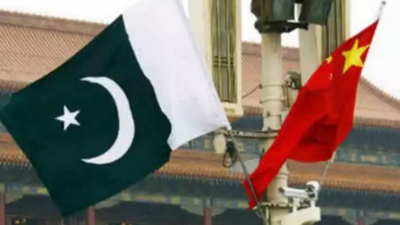
As Beijing with its lofty global ambitions seeks clout and leverage around the world, a study has quantified its influence in 82 countries, based on various parameters.
Any guess which country tops the heap for successful Chinese influence? Well, as one would expect ... it is Pakistan.
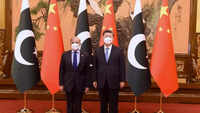
Radio Free Europe/Radio Liberty, a US government funded organization, has cited a report that ranks Pakistan at No.1 on a list of 82 other countries for Chinese influence It says Islamabad's links to and dependency on Beijing in terms of foreign and domestic policy, technology and economy make it particularly susceptible to Chinese influence.
The "China Index" has been compiled and prepared by DoubleThink Labs, a Taiwan-based research organization.
It is not just the multi-billion dollar China-Pakistan Economic Corridor that has put Pakistan as the top country for Chinese influence. Successive regimes in Islamabad have increasingly aligned Pakistan to the Chinese worldview. The report cites Islamabad's deep ties and dependence on Beijing for military, technology, and foreign policy matters.
It estimated China's influence in a country on these three prominent indicators:
Exposure: Assessing the conditions that make a country vulnerable to China's influence, e.g. in terms of economic dependence, or the receiving of some form of benefit.
Pressure: A measure of the actions that China directly or indirectly exerts over the country in order to change the behavior of people e.g. in terms of threatening economic punishment to provoke/prevent a political decision.
Effect: Evaluating the degree of accommodations a country makes to China, and the actual effects and impacts on the country.
In Pakistan's case, the DoubleThink Labs report has given it the following scores:
Exposure: 70%, Pressure: 10% and Effect: 75%
Beijing's oversized influence in Pakistan has seen a popular pushback, specially in the Balochistan province.
Contrary to the general perception, economic links are not always the most dominant factor in determining influence, according to the report. "You can be economically independent but be tied in other ways, like with the military or a large Chinese diaspora that can be more influential," says Min Hsuan-Wu, the co-founder and CEO of Doublethink Labs.
The research team at Doublethink Labs focused on nine parameters to track Chinese influence around the world- higher education, domestic politics, economic ties, foreign policy, law enforcement, media, military cooperation, cultural links, and technology.
It found that Southeast Asia features prominently in the rankings; Germany is the highest-ranked European country at 19th while the United States is in 21st position. Paraguay, North Macedonia, and Albania are ranked as least influenced, while India is at the 55th spot.
An interesting observation from the above graphic- The 'pressure' Beijing tries to exert in a country shows a clear correlation with the Rank and "Effect."
For example, in Pakistan, it needs to exert very little "Pressure"- Islamabad is perceived as "compliant," and more than willing to accommodate China- reflective in a high "Effect" score.
Thailand too is not much different, as the graphic shows.
But Beijing has to invest a lot more effort (Pressure) for far lesser "Effect" in India, US, Germany or UK.
Low exposure, and hence Beijing's limited interest, is seen in countries like Paraguay, which is at the bottom of the list.
"A major goal of [of this database] is to raise awareness around the world about the different aspects of Chinese influence and what that can actually look like," Min Hsuan-Wu said. "We've taken a much broader and nuanced look at what influence can be, which can tell us more about what Beijing is actually doing and the different ways it can apply pressure."
Wu adds that it's hard to discern exactly how one country gets influenced more than another and that there's no definitive "playbook" for Chinese influence. Rather, he says the recent research shows that Chinese policymakers tend to target certain countries within a region that have a lower barrier to entry and then branch outwards to neighbors based on the opportunities available.
End of Article
FOLLOW US ON SOCIAL MEDIA







Photostories

Hot Picks
TOP TRENDING
Popular Categories
Hot on the Web
Top Trends
Stock Market TodayBasit AliBrittany MahomesRavichandran AshwinBabar AzamKanpur Test Match RecordsUGC NET Result 2024Tirupati LadduIndia T20 WC SchedulePPF CalculatorBryonna Burrows Net WorthWomen T20 World Cup Points TableWomen T20 World Cup ScheduleIND vs PAK T20 WC MatchDiddyTop Management Colleges of IndiaLive Cricket Score
Trending Topics
GovindaNavratri Colours 2024Solar Eclipse 2024 TimesNavratri WishesGandhi Jayanti WishesDevara CollectionGOAT OTT ReleaseGandhi Jayanti 2024Rajinikanth Health UpdateNavratri HistoryDevaraGovinda NewsDevara Movie ReviewHealthy RaitasSwatantrya Veer SavarkarColdplay India tour 2025Upcoming Smartphones In OctoberAmazon SaleSony Bravia 55 inch 4k Ultra HD TVWordle Answer
Living and entertainment
Latest News
Zodiac Signs as Romantic Movie CouplesJapanese artist’s tribute to Indian classical dance formWomen's T20 World Cup 2024: Teams, format, venues, defending champions and more FAQs answeredTriptii Dimri denies skipping the Jaipur event after allegations of charging an appearance feeFormer WWE Champion Jeff Hardy talks about “addiction struggles”Qualifier Yash upsets second seed Manish at Fenesta Open'Scam marathon' under JMM-Congress-RJD rule 'biggest obstacle' to Jharkhand's development: PM ModiPopulation of Hindus & tribals declining in Jharkhand, says PM ModiWHO chief praises PM Modi on 10th anivarsary of Swachh Bharat missionNasa switches off instrument on Voyager 2 spacecraft to save powerKTR reason for Naga-Samantha divorce, says Telangana minister; sparks rowIndian cinema has a rich legacy of storytelling: Rana DaggubatiAre 3 senior Karnataka mantris jockeying for chief minister's chair?Best Leather Wallets for Men in 2024: Timeless EleganceCongress leader Jairam Ramesh says 'fierce urgency for peace' in West AsiaCSS Profile: 5 steps for US students to fill up this financial aid form successfullyNavratri colours 2024: Know the colour for each day of the Shardiya NavratriShatrughan Sinha reacts to conspiracy theories around Govinda's bullet injury and says, 'There are no ifs and buts.'
Copyright © 2024 Bennett, Coleman & Co. Ltd. All rights reserved. For reprint rights: Times Syndication Service