





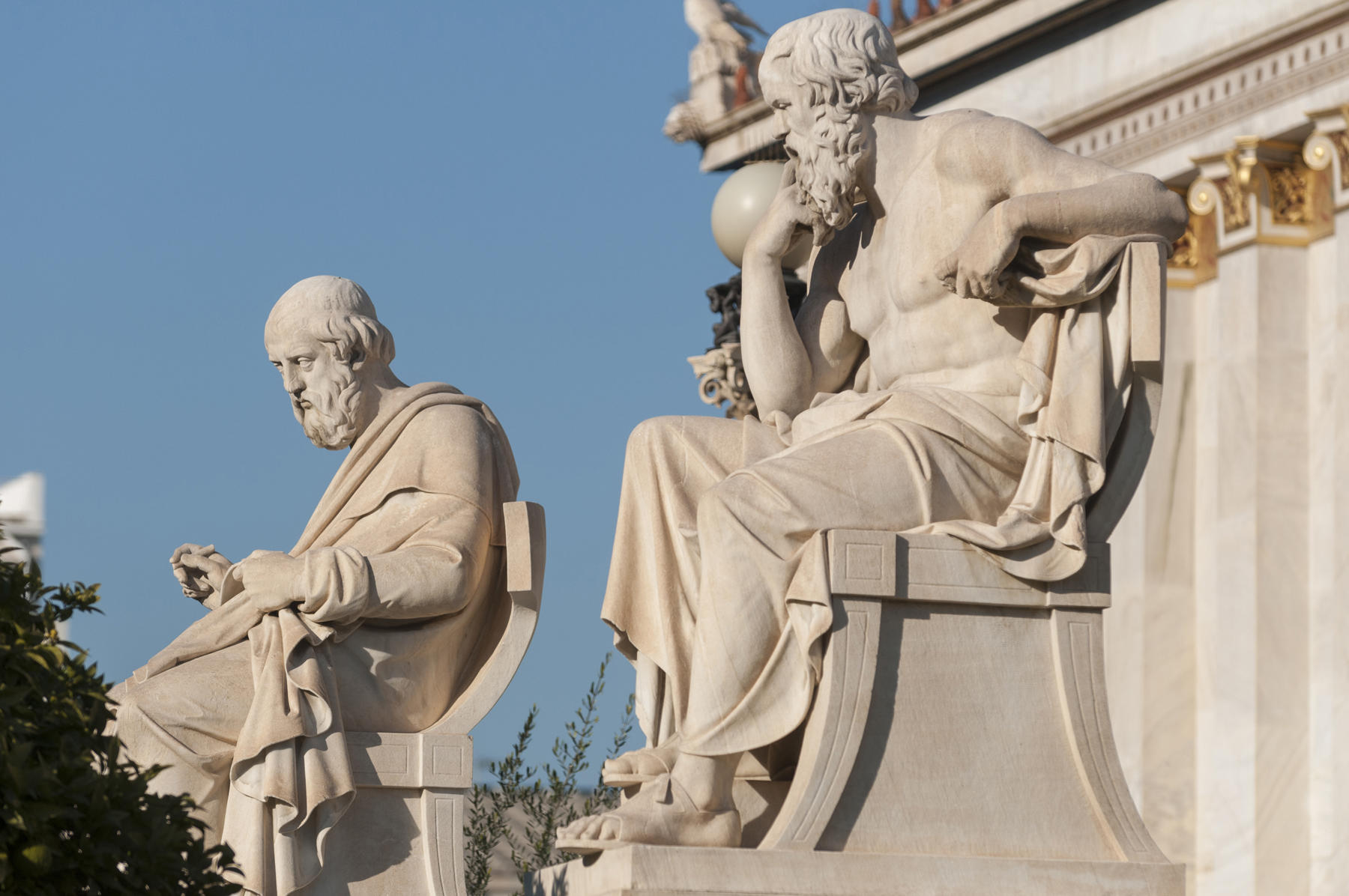
Socrates, who was called for questioning after sustained accusations on social media of corrupting youth, is reportedly frustrating investigators with oblique answers.
A source who was part of the interrogation team said that Socrates would often break his churlish silence to brightly say: “I know that I don’t know that!” The source said that Socrates annoyed questioners even more by criticising their acts of compassion.
“After an hour of interrogation, we served him some tea,” the source said. “Instead of showing gratitude, he shouted that the tea was so bad that he needed to be given hemlock straightaway. We thought he was talking of an antacid.”
According to the source, subsequent Googling revealed that hemlock was an exotic poison. “We have put him on suicide watch,” the source said.

Trouble began for Socrates after he allegedly began posting a series of cryptic questions on Facebook. “What is justice?”; “What is virtue?”; and “What do you really know?” are a few examples.
The source said multiple reports suggest that Socrates also confronted people with such questions in marketplaces. “People usually ignored him and walked past,” the source said. “However, there seems to be at least one police complaint against him about disturbing diners at an expensive restaurant.”
In the complaint, the restaurant manager has said that Socrates lurked behind a guest ordering wine and then began harassing him to explain the meaning of the French name of the wine. “Would you pay so much if the wine was simply called Red Intoxicant?” Socrates is purported to have asked.
Socrates is likely to go on trial next month. He seems eager to hasten the start of hearings. According to another official present during the interrogation, Socrates said: “I have always said ‘unexamined life is not worth living’; but now I say ‘un-cross-examined life is not worth living’!”
When Socrates was asked by interrogators to clarify what he meant, he is said to have affirmed that he was a big fan of a method called “elenchus”. Interrogators have determined that elenchus means a dialogue, an argument, or cross-examination.
“When I told Socrates that he was speaking Greek and Latin, he seemed impressed and told me ‘you are wiser than you know’. Baffling fellow,” the investigator said.
“Socrates seems to have been trained to mislead interrogators,” the investigator said. “When we showed him the Facebook posts and asked him if he was the author, he said: ‘The words could be mine. But everybody knows I don’t write anything down. Plato does that for me’.”
The investigator said the informer network was activated and information began trickling in that Plato was a shadowy figure. “Plato seems to be working on some political manifesto. Again, we don’t know whether those are his own views or of Socrates,” the investigator said.
“Anyway, we examined Plato’s blog which promotes the idea of the ‘philosopher ruler’. That is dangerous. In a democracy, we can have rulers, but philosophers will be pretty unelectable.”
The investigator explained his psephological reasoning: “Their slogans will be too long and nobody will understand their speeches. Frankly, philosophers could be used to trick voters into thinking.”
The investigator said that only one cult of philosophers seemed to be harmless in countries such as India. “They are called the Stoics,” he said. “Apparently, they accept what they get. They don’t complain or protest or harbour expectations. They are the ideal electorate.”
Disclaimer
This article is intended to bring a smile to your face. Any connection to events and characters in real life is coincidental.






Top Comment
{{A_D_N}}
{{C_D}}
{{{short}}} {{#more}} {{{long}}}... Read More {{/more}}
{{/totalcount}} {{^totalcount}}Start a Conversation