- News
- entertainment
- hindi
- bollywood
- Love stories: Directors prefer tragic endings, audiences tilt towards happily-ever-afters
Trending
This story is from February 14, 2024
Love stories: Directors prefer tragic endings, audiences tilt towards happily-ever-afters
DDLJ’s ‘Ja Simran jaa, jee le apni zindagi’ ending still evokes tears of joy, 26 years since the film’s release, but moviegoers also celebrate Mughal-e-Azam, one of the most tragic love stories ever told in Indian cinema
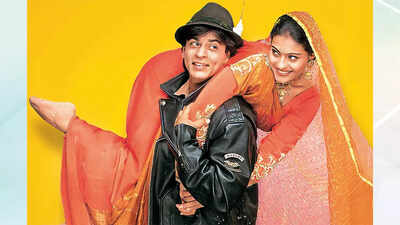
Audience prefers happy-ending
Harshvardhan Kulkarni
Shivendra Singh Dungarpur
Saurav Dey
The train starts to leave the platform. Raj stretches his hand out, Simran keeps pleading to bauji to let her go, And then, Amrish Puri’s character leaves her hand – “Ja Simran jaa, jee le apni zindagi.” Whether the audience watched this scene 26 years ago when DDLJ was released or are watching the re-released version, currently running in cinemas, the happily-ever-after ending of still evokes tears.

The same audience also celebrates
Mughal-e-Azam, hailed as one of the most tragic love stories ever depicted in Indian cinema. Not every director can pull off a tragedy like Mughal-e-Azam, which is another reason why most contemporary love stories end on a positive note. Directors say that while unrequited love might be relatable to many, audiences indeed root for a happy ending – the lack of which often results in shock. This Valentine’s Day, we delve into the endings of some timeless love stories.
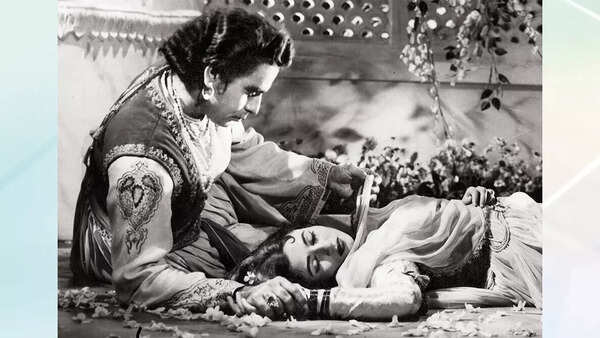
Mughal-e-Azam is hailed as one of the most tragic love stories ever depicted in Indian cinema
‘AUDIENCES EXPECT A HAPPYENDING, TRAGIC END COMES AS A SHOCK TO THEM’
Filmmakers say that a happy ending is something that is expected in a film. But making a happy ending work for the audience is also a huge task. How do you make a happy-ending work?
Filmmaker Harshvardhan Kulkarni says, “The hardships the couple goes through, make it seemingly impossible for them to unite, but they ultimately do, which is the winning formula for the film. Tragedy works wonders because the audience is always rooting for the lead characters to be together, but the director shocks them. If that shock works, then it’s even better than a happy ending. I feel unrequited love, is something which everyone relates to. If you look at the audience – sab toh Devdas hi hain na! Sab ka dil kabhi na kabhi toota hai. Toh woh relate aur rejoice karte hai. Rona apne aap mein bahut bada emotion hai ki woh (moviegoers) roro kar nikal rahe hain. Par aap rulao toh sahi.” He adds, “I feel if tragedy is done well they become big, humongous hits.”
‘BOBBY WAS A TURNING POINT’
Shivendra Singh Dungarpur, director and film historian says, “When you have a happy ending (in a film) then it is only about the present, but when the end is tragic, then the love story becomes eternal. When the director has a tragic angle in a love story, then he is catering to a mature audience. Dilip Kumar is called tragedy king because of these eternal romances. The intensity with which he used to look at his opposite lead character, or the way he used to make the audience weep, still remains unmatched.”
He adds, “Bobby was a turning point in Indian cinema. Before Bobby most of the films were tragic tales. But Bobby started the trend of that cute hero and young romance. Young romances like DDLJ, Maine Pyaar Kiya, Jab We Met etc which have happy endings – are all contemporary love stories that capture the mood and romance of that period. But these can’t be called eternal love stories. It is the tragic end that makes romantic films a classic. Bimal Roy’s Devdas or K Balachander’s Ek Duje Ke Liye’s treatment of tragic tales is very powerful, and because of the intensity of the tragic love story, it is timeless.”
FILMS ALSO HAD BOTH HAPPY AND SAD ENDINGS BECAUSE OF THE PRESSURE FROM DISTRIBUTORS
Several filmmakers and writers consider Qayamat Se Qayamat Tak and Ek Duje Ke Liye landmark films when it comes to tragic endings. However, whether to go with a happy ending or tragic end in a romantic film is a big decision. In fact, a happy ending was also shot for Qayamat Se Qayamat Tak. It was the famous writer Rahi Masoom Raza who advised that the film would only be a classic if it had a sad ending.
Writer Saurav Dey says, “There was a time when distributors had power and insisted on a happy ending. Often, a filmmaker desires a tragic end while the audience prefers a happy love story. Qayamat Se Qayamat Tak is a prime example where they were ready to change the end but people loved the tragic end.There are three key elements in a love story – compelling and believable characters, well-performed and organic truth, and the construction of the film itself. Films like DDLJ, Jab We Met, Veer Zara, and Maine Pyaar Kiya are examples where the audience loved the positive endings and rooted for them. Broadly, the desire is to witness people coming together.”
Harshvardhan Kulkarni
‘TRAGEDIES REQUIRE SCALE AND RISK’
Film experts say tragic love stories need a scale where you have to be able to pull it off. “Titanic is one such example when a film was a major success globally but was a tragic tale,” says Saurav Dey. Harshvardhan Kulkarni adds, “In recent years, we have not seen as many tragic romances. Sanjay Leela Bhansali’s films, in particular, have tragic ends. He is an old-school director who realises the potential of a tragedy. However, tragedy must be celebrated on another level. It needs to be larger than life. In Devdas, the character drinks, and moviegoers cry for his lost love. While the recipe for success is similar for both tragic and happy endings, we (the industry) are taking fewer risks these days.”
End of Article
FOLLOW US ON SOCIAL MEDIA
Visual Stories





Photostories
entertainment videos
Featured In Movies

Popular Categories
Entertainment NewsBollywood NewsTollywood NewsKollywood NewsMollywood NewsMovie ReviewsLatest Hindi MoviesLatest Tamil MoviesMX PlayerParenting TipsHome RemediesWeight LossBeauty TipsParenting TipsHindi VideosHindi Video SongsBhojpuri Music VideosLatest Telugu MoviesBhojpuri Music VideoHindi TV News
Trending in Entertainment
Latest MoviesBollywood MoviesHollywood MoviesTamil Movies 2024Telugu Movies 2024Malayalam Movies 2024Kannada Movies 2024Marathi Movies 2024Bengali Movies 2024Top Rated Movies 2024Best Hindi MoviesBest English MoviesBest Telugu MoviesBest Tamil MoviesBest Malayalam MoviesBest Kannada MoviesBest Bengali MoviesUpcoming Hindi MoviesBest Movies Of All TimeBest Hindi Movies of All Time
Trending in Etimes
Horoscope TodayNumerology Predictions TodayAustria ElectionJoe BidenKamala HarrisPopulated Indian CitiesAlcohol Cancer RiskIsrael Beirut WarSunita WilliamsIsrael Hezbollah WarNepal FloodBarbra StreisandSnoring Prevention TipsDonald TrumpMagnesium DeficiencyRelationship TipsLake Michigan DiscoveryElon MuskEkadashi in October 2024
Trending in TV
Trending in Lifestyle
Trending in Regional
Movie Reviews
Binny And Family ReviewLove, Sitara ReviewWill & Harper ReviewWolfs ReviewYudhra ReviewJo Tera Hai Woh Mera Hai ReviewKahan Shuru Kahan Khatam ReviewHis Three Daughters ReviewNever Let Go ReviewDancing Village: The Curse Begins ReviewTransformers One ReviewFirst Love ReviewBerlin ReviewThe Buckingham Murders Review
Upcoming Hindi Movies
Upcoming Regional Movies
Latest News
Gunther finally accepts Sami Zayn’s challenge for the World Championship on WWE RAWCGPSC SSE Mains 2023 result declared: Check direct link hereMan orders iPhone with CoD option on Flipkart, kills delivery agentWhen Rishi Kapoor slammed Deepika Padukone and Sonam Kapoor for making immature remarks about Ranbir KapoorShark Tank India 4: Sharks begin shooting for the new season; Sahiba Bali and Ashish Solanki join as new hostsFestivals in October 2024: From Navratri, Dussehra to Diwali, check complete list hereShannon Sharpe compares Patrick Mahomes' current situation to Tom Brady's past as Chiefs adjust to roster changesIndia's factory growth cooled to eight-month low in September, PMI showsUCEED 2025 registration begins at uceed.iitb.ac.in, direct link to apply here: Check detailed admission scheduleReport: By 2035, EVs Expected to Use 6% to 8.7% of India's ElectricityKolkata hospital rape-murder: West Bengal junior doctors resume 'total cease work'Vijay's 'GOAT' gets an OTT release; official date announced!Haryana polls: Brick thrown at car in Dushyant Chautala's convoy in Jind; case filedMumbai vs Rest Of India: Irani Cup tie offers chance for hopefuls and rejects to impress selectorsCSK to connect with MS Dhoni in 'coming week', undecided on using IPL uncapped player ruleHow to use charcoal powder to whiten teethOlivia Culpo and Christian McCaffrey buy George Clooney's mansion for $14.5 millionStree 2 Box Office Collection day 47: Shraddha Kapoor starrer falls below Rs 1 crore for the first time
Other Group Sites -
ETimes is an Entertainment, TV & Lifestyle industrys promotional website and carries advertorials and native advertising.