
- News
- etimes
- animals-pets
- 7 Fascinating facts about the honey badger
7 Fascinating facts about the honey badger
7 Fascinating facts about the honey badger
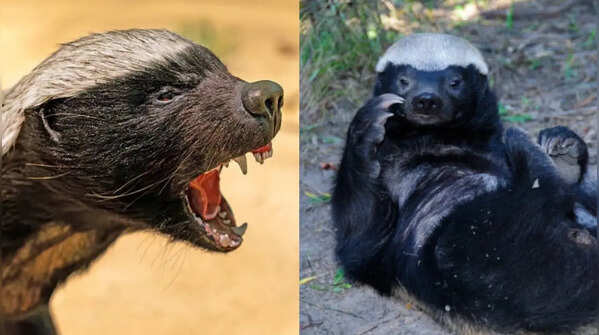
Considered one of the most tenacious creatures in the wild, the honey badger has a reputation beyond its physical stature. Found mainly in Africa, the Middle East, and Asia, it is known for its fearless nature and unusual characteristics that make survival in the wild very easy. Weighing only about 9 - 16 kg on average, it constantly attacks predators who are much bigger than itself. Scientists continue to study it because of its high level of resilience and adaptability.

Small body, extreme attitude
The honey badger is a fairly small-sized animal but possesses perhaps the most aggressive nature among others. On average, it measures about 60 - 75 cm in length and is not afraid to attack animals that are much bigger, such as lions and hyenas. It is a fearless creature and not due to recklessness, but as part of its defence strategy. With its loose and thick skin, it manages to twist and fight off predators who try to catch or kill it.

Nearly immune to venom
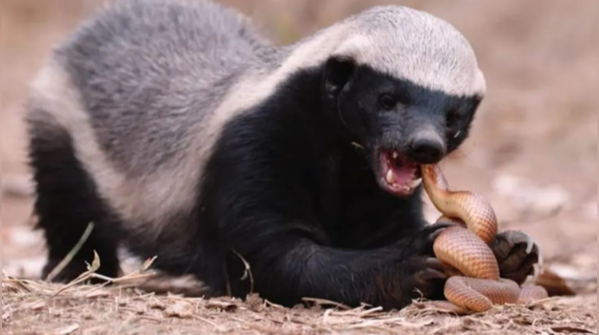
As a matter of fact, the honey badger is known for its resistance to venom. It survives after being bitten by highly venomous snakes, such as cobras or vipers. Although the venom may disable it temporarily, the honey badger usually regains its consciousness and proceeds with hunting. Scientists believe that this feature of the animal is explained by the unique genetic adaptation of its nervous system. Due to this reason, it hunts potentially deadly prey.
Smart problem solver
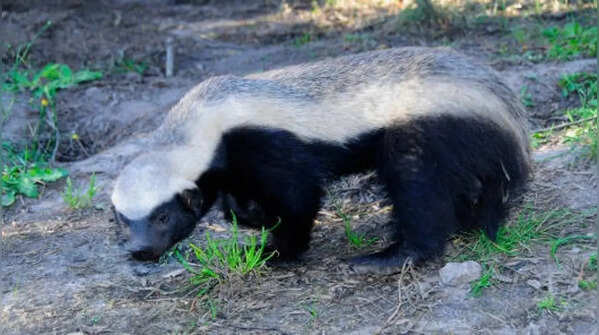
In addition to its aggressive nature, the honey badger is also considered to be very smart. It can solve many complex tasks in order to feed. For example, it can escape from enclosures, raid bee colonies, and dig holes in order to extract larvae. Moreover, studies showed that the animal remembers places where there are food sources and adapts to difficulties encountered when searching for food.
Masters of digging
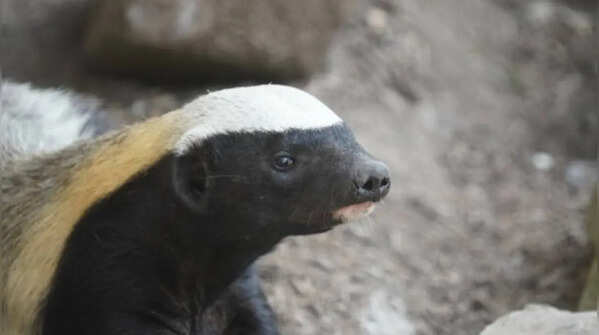
The honey badger is an excellent digger. Being able to dig through the hard ground at a remarkable speed, it uses its claws to dig in order to find potential prey, such as rodents, larvae, and insects. Besides, it digs holes in which it can hide as well as invade old dens of other animals. In case of an emergency, it creates escape holes.
Fearless hunters of the wild
Regarding hunting, the honey badger is a courageous creature that fights off other animals instead of hiding. Its diet includes various types of prey, such as snakes, different kinds of birds, insects, small mammals, larvae, and even scorpions. Besides, it raids beehives, and, due to its thick skin, it can stay safe despite being stung by bees while eating honey.
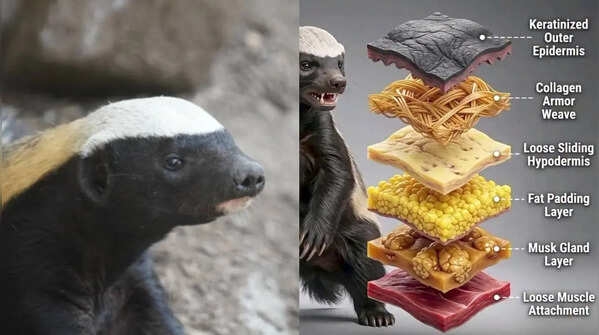
Thick skin and defence mechanisms
The main distinguishing characteristic of the honey badger is the extremely thick and loose skin, which allows it to twist and bite predators while being attacked. Moreover, the skin is almost impossible to pierce by a bite or sting from an enemy. Along with its powerful jaw muscles and sharp teeth, it has a reliable defence mechanism.
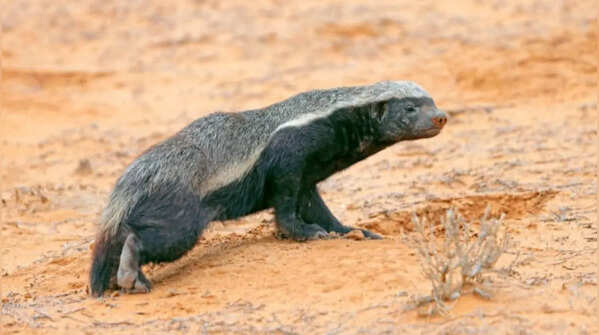
A symbol of fearlessness in nature
Over time, the honey badger has become a symbol of fearlessness due to its relentless behaviour and survival skills. In reality, it avoids unnecessary fights but will fiercely defend itself when threatened. Its ability to survive in deserts, grasslands, and forests shows remarkable adaptability. Scientists continue to study it to understand its unique biology and behaviour. The honey badger remains one of nature’s most extraordinary examples of toughness and resilience.
Featured In etimes

