
Did Mahatma Gandhi save India’s first skincare brand? The story behind this forgotten legacy
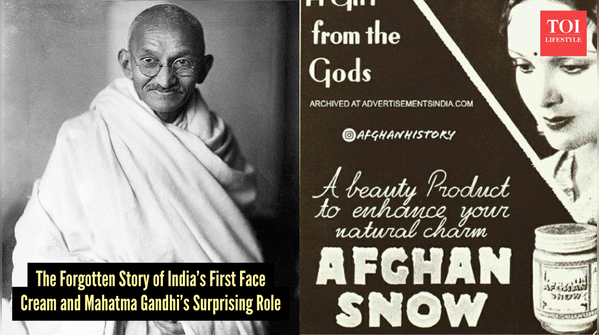
When Gandhi backed a beauty brand
If you look inside any modern vanity bag today, you’ll probably find a dizzying array of serums, sunscreens, and primers. But rewind the clock a little over a century, and the Indian skincare routine looked radically different. Long before multinational beauty giants set up shop here, Indian women relied on a single, homegrown marvel: Afghan Snow. Launched in 1919, it holds the proud, yet rarely discussed, title of India’s first-ever cosmetic cream.
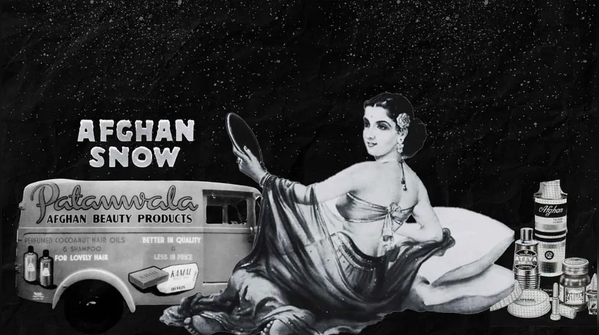
From Kutch to a Mumbai Perfumery
The brains behind the brand belonged to Ebrahim Sultanalley Patanwala. Originally from a quiet village in Kutch, Gujarat, Patanwala arrived in Mumbai looking for a better life. He didn't have much money to his name, but what he did have was an incredibly sharp understanding of herbs and perfumes. He eventually set up a modest little shop in Mumbai's busy Pydhonie neighborhood. By blending his own creams and fragrances from scratch, he slowly but surely won over a fiercely loyal clientele.
(Image Credits: Pinterest)

A Royal Stamp of Approval
Given its purely Indian roots, the name "Afghan Snow" sounds like a bit of a geographical mix-up. The backstory, however, is purely accidental. In 1919, King Amanullah Khan of Afghanistan was visiting India. While touring the country, the royal met up with a few local business owners. Naturally, Patanwala jumped at the chance to give him a beautifully packed hamper of his own creations. As the king explored the gifts, he was fascinated by a stark white cream, casually noting that its light, fluffy consistency was a dead ringer for the snow back in his homeland. Seizing the moment, Patanwala asked if he could borrow the observation for a brand name. The king agreed, and Afghan Snow was officially born.
(Image Credits: Pinterest)

The Swadeshi Crisis and Bapu’s Intervention
That very name, however, nearly killed the business a few years down the line. When the Swadeshi movement kicked into high gear, Indians began heavily boycotting foreign goods. Seeing the word "Afghan" on the label and noticing the cream was sold in imported glass bottles, the public naturally assumed it was a British or foreign commodity. Sales tanked. Refusing to watch his life's work disappear, Patanwala took a massive gamble and went straight to Mahatma Gandhi. Desperate to save his business, Patanwala took his concerns directly to Mahatma Gandhi. This prompted Bapu to look into the factory's methods himself. The moment he confirmed that the cream was 100% vegetarian and genuinely crafted in India, he openly voiced his support. Just like that, the public backlash faded away, and Afghan Snow was reborn as a celebrated champion of the Swadeshi cause.
(Image Credits: Pinterest)

Bollywood’s Go-To Beauty Fix
Through the mid-20th century, the cream was virtually unstoppable. Marketed as an all-rounder—functioning as a moisturizer, makeup primer, and sunblock—it found a permanent spot on dressing tables across the country. To keep up with the soaring demand, Patanwala opened massive manufacturing units in Byculla and other parts of Maharashtra. Sticking to his patriotic roots, he deliberately chose local technology over foreign machinery, generating thousands of jobs. The glamour industry quickly caught on. Heavyweights of the silver screen like Nutan, Nargis, and Raj Kapoor were proudly linked to the cream. It even stepped up to sponsor India’s inaugural Miss India pageant in 1952.
(Image Credits: Pinterest)
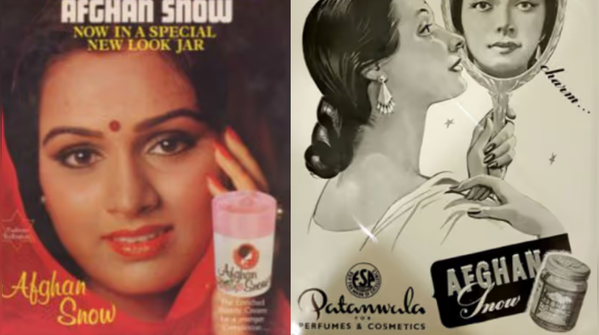
Quietly Holding On
So, why don't we see it everywhere today? The cultural shift happened in the 1980s and 90s. Heavy-hitting brands like Lakmé, Pond's, and Fair & Lovely flooded the market, armed with modern formulas and relentless television advertising. Afghan Snow simply didn't update its marketing playbook to match the aggression of the new era, causing it to quietly slip from the public consciousness. But it hasn't vanished completely. Believe it or not, E.S. Patanwala Pvt Ltd is still churning out batches of the historic cream. You won't find it dominating supermarket aisles, but if you look closely at select local stores or browse online, you can still grab a jar of the moisturizer that once earned the approval of an Afghan King, a generation of Bollywood royalty, and Mahatma Gandhi himself.
(Image Credits: Pinterest)
Featured In lifestyle

