
- News
- entertainment
- english
- hollywood
- Actors who publicly criticized their own movies: Brad Pitt, Hugh Jackman, Halle Berry, and more
Actors who publicly criticized their own movies: Brad Pitt, Hugh Jackman, Halle Berry, and more
Actors who publicly criticized their own movies: Brad Pitt, Hugh Jackman, Halle Berry, and more
Hollywood is full of actors who will smile through a press tour and say nothing but kind things about a film they know, deep down, was a disaster. And then there are the rare few who will look you in the eye, take a breath, and tell you exactly what went wrong. Here are the actors who had the courage, or perhaps just the self-awareness, to admit when their own films did not quite work out.
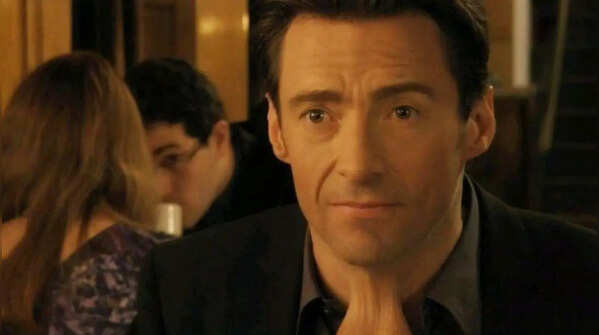
Hugh Jackman
Jackman has been refreshingly honest about 'Movie 43', widely considered one of the most catastrophically misjudged ensemble comedies ever made. In a Yahoo interview promoting 'X-Men: Days of Future Past', he recalled being sold on the idea of working with some of the funniest people in the industry, only to end up deeply regretting the decision. "When they come to you with an idea of putting testicles around your neck and being part of this hilarious ensemble of some of the funniest movies of all time, don't believe them," he said. "You can take the testicles because you use them quite a lot at parties, and it actually gets a good laugh, but the movie you could do without."
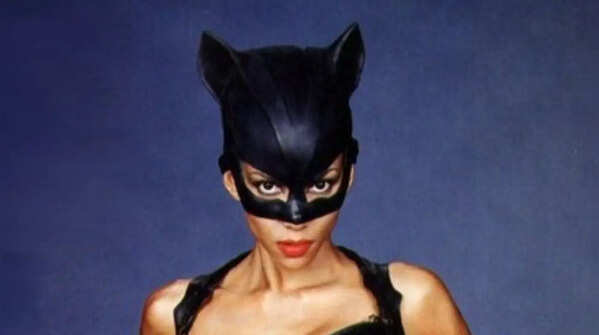
Halle Berry
Berry won an Oscar one year and a Razzie the next for 'Catwoman', and she handled both with a kind of grace that very few people could manage. She famously attended the Razzie ceremony in person, accepting her trophy for Worst Actress while holding her Oscar, and the image became one of Hollywood's most memorable moments of self-deprecation. Speaking to Variety, she said the story "didn't feel quite right" from the start, recalling the argument she had tried to make on set. "Why can't Catwoman save the world like Batman and Superman do? Why is she just saving women from a face cream that cracks their face off?" But she added, "I was just the actor for hire. I wasn't the director. I had very little say over that." In a separate interview with Entertainment Weekly in 2024, she addressed the lasting sting of the backlash. "I felt like it was Halle Berry's failure, but I didn't make it alone," she said. "All these years, I've absolutely carried it."
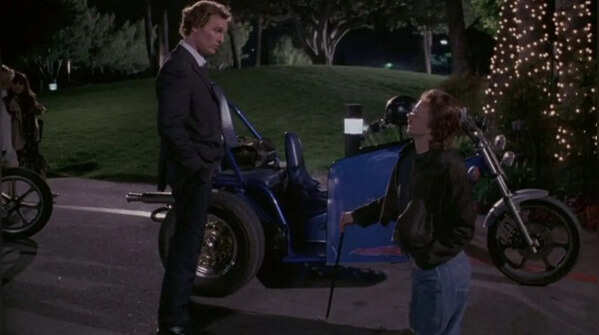
Gary Oldman
Oldman has been candid about not one but two of his own films. On 'Tiptoes', he spoke to journalist Josh Horowitz and admitted plainly that he has never actually watched it, recalling that he needed money at the time and was drawn in by what seemed like an unusual idea. He joked that "I helped greenlight the film, so it's my fault," but on the film itself, he was clear. "It's a misfire to be sure. Would I do it now? No." On 'Lost in Space', speaking to Variety's 'Know Their Lines', he acknowledged the cast was strong, and his character was fun to play, but felt the film tried to cram far too much into its runtime. "It was a lot of movie in two hours," he said, adding that years of villain roles had left him feeling typecast. "I became kind of like the poster boy for the rent-a-villain. It was fun for a while, but eventually I just put a stop to it. It got a little old."
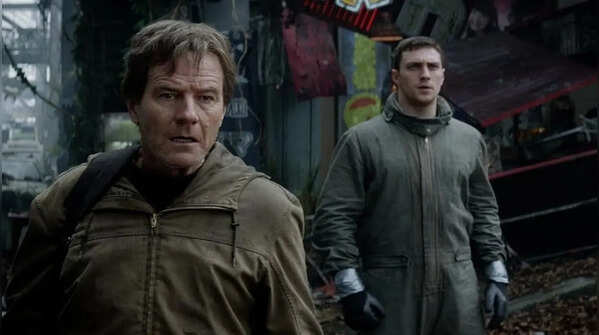
Bryan Cranston
Cranston was marketed as the emotional centre of 'Godzilla' and then killed off barely thirty minutes in, and speaking on the Nerdist Podcast in 2015, he made clear he had seen it coming from the moment he read the script. "That character dying at that time was a mistake. I knew it when I read it," he said. "What a waste." He suggested the father and son should have been given more time to reconnect before the sacrifice. "Just when they're bonding, and it looks like they could have a relationship, the father sacrifices himself to save his son. And that's the way he should have died," he said, adding that the film itself was fun and successful, but "they dealt with it poorly."
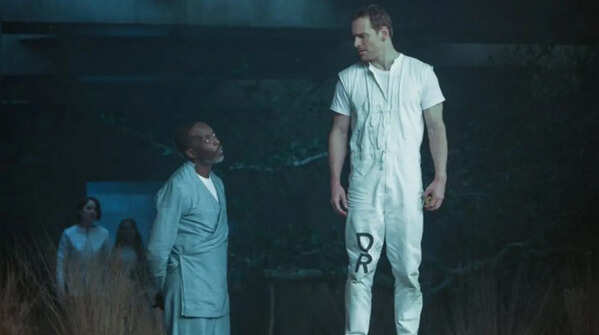
Michael Fassbender
Fassbender has spoken with quiet diplomacy about 'Assassin's Creed', acknowledging that the opportunity was there and that it was not fully taken. Speaking in the same Yahoo roundtable alongside Hugh Jackman and James McAvoy, he reflected on where it went wrong. "It wasn't ideal. I think we missed an opportunity there a little bit," he said, adding that his main note would have been to make it simply "more entertaining." The tone was far too heavy for what the material called for, and the film had essentially three separate beginnings before it found its footing. "It took itself too seriously, and I would get to the action a lot quicker," he said.
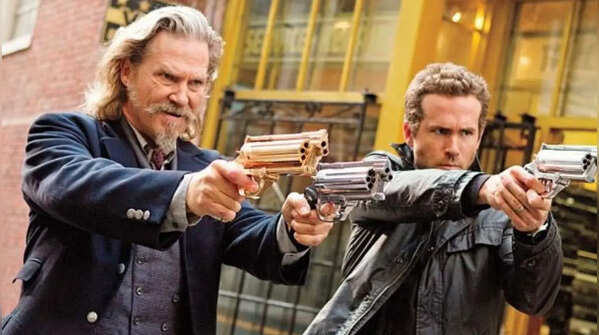
Jeff Bridges
Bridges genuinely enjoyed making 'R.I.P.D.' and thought, while they were shooting it, that it had the makings of something entertaining. In an interview with GQ, he recalled his optimism on set. "I had such a great time working on that movie. I thought, this could be fun to see," he said. Watching it back, though, he was underwhelmed. "When I saw it, I was a little underwhelmed. The studio made some, uh, choices that I wouldn't have made," he said. He also admitted that even when the film was first pitched to him, he struggled to fully grasp the concept, which perhaps explains why audiences, who gave it thirteen percent on Rotten Tomatoes, felt exactly the same way.
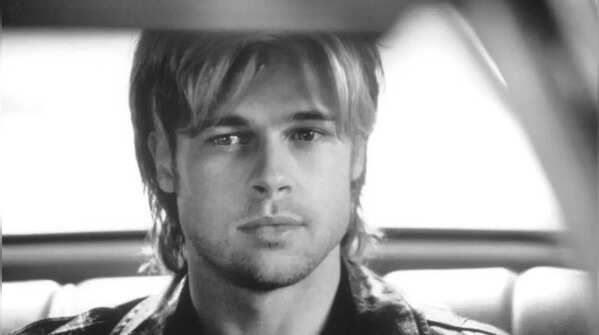
Brad Pitt
Speaking to Newsweek in February 1997, Pitt described the chaotic, script-free shoot of 'The Devil's Own' as "the most irresponsible bit of filmmaking, if you can even call it that, that I've ever seen," a comment so explosive that he was reportedly pressured to retract it, and refused. The backlash was significant enough that when Empire magazine asked him the same year what his worst film was, he simply replied, "I have just got myself into a load of trouble over remarks I made about 'The Devil's Own'. I am not going to make the same mistake again." He later clarified to Rolling Stone that his issues were with the production process rather than the finished film, but the damage and the honesty were already on record.
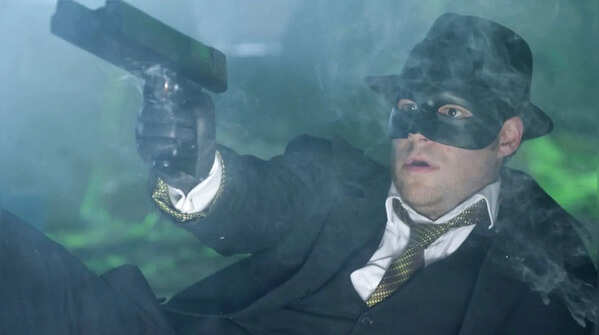
Seth Rogen
Few people have been quite as brutally self-aware about a film's failure as Rogen, who co-wrote 'The Green Hornet' and still walked away feeling like the whole thing had been a mistake. Speaking on Doug Benson's 'Doug Loves Movies' podcast, he described it as "a perfect storm of bad shit happening," adding with characteristic bluntness, "We shouldn't make expensive movies where we can't just do a million dick jokes. That's what we've learned over the years." On Mark Maron's 'WTF' podcast, he called the production "a dark time" and "a f—ing nightmare," blaming studio interference, a director who had never worked at that scale, and a budget that clashed entirely with the kind of film he actually wanted to make. The reviews were the final blow. "People just kind of hated it," he told the AV Club. "It seemed like a thing people were taking joy in disliking a lot."
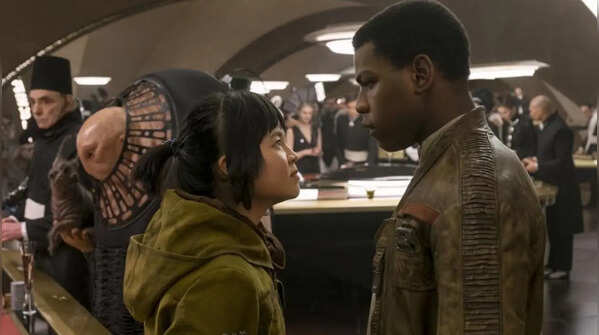
John Boyega
Boyega, who played Finn across the Star Wars sequel trilogy, had one of the more pointed and personal criticisms on this list, not just about the quality of 'The Last Jedi' and 'The Rise of Skywalker', but about what he felt was a deliberate sidelining of actors of color after 'The Force Awakens'. Speaking to GQ, he was direct about it. "You get yourself involved in projects, and you're not necessarily going to like everything," he said. "What I would say to Disney is, do not bring out a Black character, market them to be much more important in the franchise than they are, and then have them pushed to the side. It's not good. I'll say it straight up." He was not alone in feeling this way, as Oscar Isaac, Kelly Marie Tran, and Naomi Ackie had all been similarly prominent in marketing before their screen time told a different story.
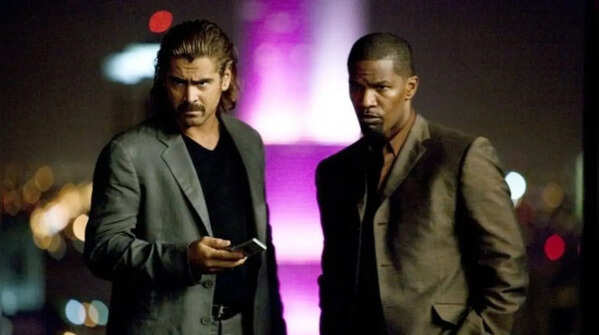
Colin Farrell
Farrell did not hide behind diplomacy when it came to 'Miami Vice', speaking to Total Film and being straightforward about where it went wrong. "I didn't like it so much. I thought it was style over substance, and I accept a good bit of the responsibility," he said. He felt the film missed a real opportunity to build something more human between the two leads, adding that "it was never going to be Lethal Weapon, but I think we missed an opportunity to have a friendship that also had some elements of fun."
Featured In entertainment

