
- News
- Health News
- You’re walking, not running, so why are you breathless? Doctor explains what your body may be trying to tell you
You’re walking, not running, so why are you breathless? Doctor explains what your body may be trying to tell you

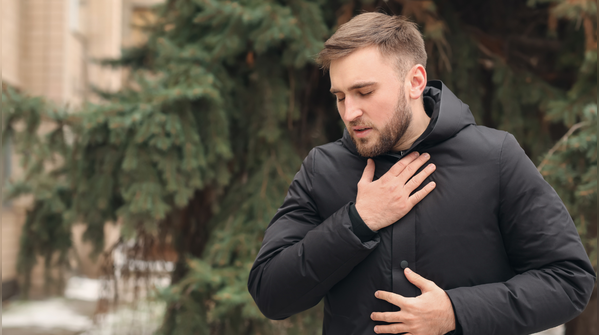
Getting breathless while walking?
Walking up a flight of stairs, crossing a busy road, or even taking a brisk evening walk should not leave someone gasping for air. But for many people, breathlessness during simple physical activity has quietly become a part of everyday life. Most assume it is because of age, low fitness, stress, or in some cases, a heart problem. What often goes unnoticed is that the lungs may be struggling long before they begin sending louder warning signals.
Breathing is something people rarely think about until it becomes difficult. That is why persistent breathlessness deserves attention. It is not always dramatic. Sometimes it arrives subtly, a little more effort while walking, a pause midway through climbing stairs, or a feeling that the lungs are not filling up completely. These small changes can reveal much more about a person's health than they realize.

Why breathlessness during walking should never be ignored
Many people immediately connect shortness of breath with heart disease. While heart-related conditions can certainly cause breathing difficulties, doctors say lung diseases are frequently overlooked despite being equally important.
According to Dr Loveleen Mangla, Senior Consultant and HOD, Respiratory, Critical Care and Sleep Medicine at Metro Hospital Faridabad NCR, “Whenever you feel breathlessness during walking or during any physical activity, your first thought is often a heart problem or heart attack. But surprisingly, breathlessness can also be caused by lung diseases such as asthma, Chronic Obstructive Pulmonary Disease (COPD), and chest infections.”
The problem is that lung conditions often develop gradually. A person may continue with daily activities while unknowingly adjusting their routine around symptoms. They walk slower. They avoid stairs. They stop exercising. Over time, these adjustments become normal, delaying diagnosis even further.
Research published in NIH has highlighted the growing burden of chronic respiratory diseases in India, particularly asthma and COPD, which continue to affect millions across the country.

The early signs many people mistake for “normal tiredness”
One reason respiratory diseases frequently go undetected is because the earliest symptoms can feel ordinary.
A person may blame pollution, poor sleep, a hectic work schedule, or lack of exercise. But persistent breathlessness is rarely something the body creates without a reason.
Dr Mangla explains, “It usually starts with mild breathing difficulty, which many people tend to ignore in the early stages. While many patients undergo ECGs and routine cardiac check-ups, lung-related causes are often overlooked.”
Certain symptoms can offer clues that the lungs may be involved:
Ongoing cough
Frequent sputum or mucus production
Wheezing sounds while breathing
Reduced oxygen levels
Chest tightness
Repeated respiratory infections
“If your breathing difficulty is associated with cough, sputum production, wheezing, or low oxygen levels, then there is a significant possibility that the symptoms are arising from a lung condition rather than the heart alone,” says Dr. Mangla.
In cities where pollution levels remain high for large parts of the year, respiratory symptoms often become normalized. That normalization can be dangerous because it delays medical attention until symptoms become severe.

What actually happens inside the lungs when you feel breathless?
To understand breathlessness, it helps to understand what healthy lungs do.
Every breath brings oxygen into tiny air sacs inside the lungs. Oxygen then enters the bloodstream and travels throughout the body. During physical activity, the body demands more oxygen, so breathing naturally becomes faster.
However, when the airways become narrowed due to asthma, inflamed because of infection, or damaged because of COPD, oxygen exchange becomes less efficient. The body responds by making a person breathe harder and faster.
Imagine trying to breathe through a narrow straw while walking uphill. That is similar to what many patients with chronic respiratory diseases experience.
COPD, one of the most common chronic lung diseases, remains underdiagnosed in India despite its growing burden. Experts note that limited access to spirometry testing and delayed recognition of symptoms contribute significantly to missed diagnoses.
This is why doctors often recommend simple tests rather than relying only on cardiac evaluations.
“Simple investigations like a Chest X-ray and Pulmonary Function Tests (PFTs) can help diagnose underlying lung disease early,” says Dr Mangla.

What to do if breathlessness starts suddenly during a walk
Many people panic when they suddenly struggle to catch their breath. Panic itself can worsen symptoms, creating a cycle that makes breathing feel even more difficult.
Dr Mangla recommends stopping activity immediately, “You must stop immediately and take some rest. To keep you stabilized, sit upright and try to stay calm. Refrain from continuing strenuous activity,” she advises.
She also recommends controlled breathing.
“Concentrate on slow breathing. Breathe in gently through the nose and out slowly through pursed lips. This is quite helpful in conditions such as asthma or Chronic Obstructive Pulmonary Disease.”
Other immediate steps include:
Loosening tight clothing around the neck and chest
Moving to a well-ventilated area
Using prescribed inhalers if advised by a doctor
Avoiding further physical exertion until symptoms improve
Certain warning signs require emergency medical attention without delay.
“Seek urgent medical help if you develop symptoms like chest pain, bluish lips or face, severe wheezing, confusion or fainting,” says Dr Mangla.
These symptoms can indicate severe oxygen deprivation or a serious underlying medical emergency.

Protecting lung health before symptoms become serious
The healthiest lungs are often protected long before disease develops.
Experts recommend regular physical activity, avoiding tobacco exposure, managing allergies, reducing indoor smoke exposure, maintaining a healthy weight, and seeking medical advice when respiratory symptoms persist beyond a few weeks.
Many people pay attention to blood pressure, cholesterol, and heart health as they grow older. Lung health deserves the same level of awareness.
The National Health Portal under the Ministry of Health and Family Welfare also emphasizes the importance of early diagnosis, preventive care, and awareness of chronic respiratory conditions to reduce long-term complications.
Most importantly, breathlessness should never become something people simply "learn to live with."
As Dr Mangla stresses, “Don’t ignore persistent breathlessness. Early diagnosis with chest X-ray, pulmonary function test and a visit to a pulmonologist can help in preventing long-term complications.”
Sometimes the body's warnings arrive quietly. A little breathlessness during a walk may seem small today, but listening early could prevent a much bigger health problem tomorrow.
Medical experts consulted
This article includes expert inputs shared with TOI Health by:
Dr Loveleen Mangla, Senior Consultant and HOD-Respiratory, Critical Care and Sleep Medicine, Metro Hospital Faridabad NCR.
Inputs were used to explain why breathlessness during walking should not always be assumed to be a heart problem, how underlying lung conditions such as asthma, COPD, and respiratory infections can contribute to breathing difficulties, and why early evaluation through chest imaging, pulmonary function tests, and consultation with a pulmonologist is important for timely diagnosis and treatment.
Featured In Health

