
Mukaish to Rabari: Underrated embroidery techniques in India that deserve more attention
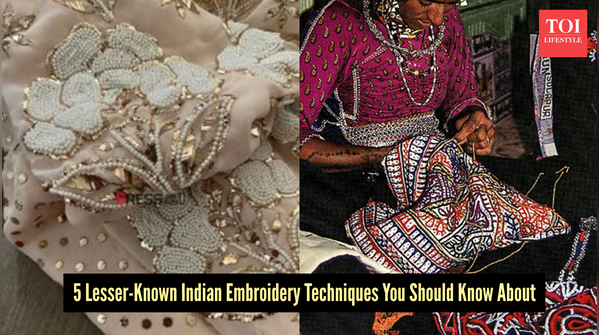
Explore the hidden threads of India
The story of Indian textiles is not limited to just one book, but it requires a whole volume, as each state, culture, and region brings its own uniqueness and charm, which stands out from the crowd and has been practised for generations. Yet, many forms of traditional Indian embroidery are slowly disappearing because they are not well-known. Due to the popularity of fast fashion and machine-made replicas, people are not fully aware of these underrated embroidery techniques in India, which deserve more attention.
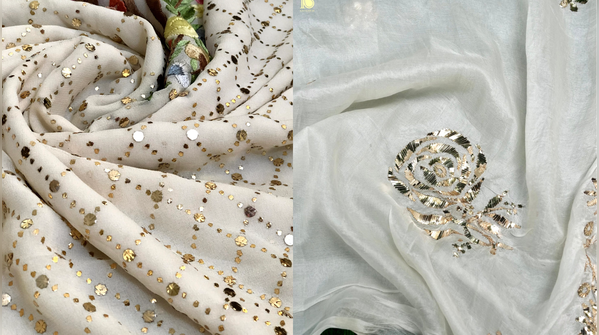
Mukaish embroidery
Mukaish embroidery is also known as kamdani or badla, in which tiny metallic threads are used to create delicate dotted patterns on refined fabrics like chiffon and muslin. It is practised in the suburbs of Uttar Pradesh and is traditionally linked with the Mughal royal attire. Mukaish lends a subtle shimmer charm without creating an overwhelming sparkle tone. Its tiny repetitive motif touch gives a soft yet ethereal glow. While zardozi is more popular, a handful of people are only familiar with mukaish embroidery.
(Image Credits: Pinterest)
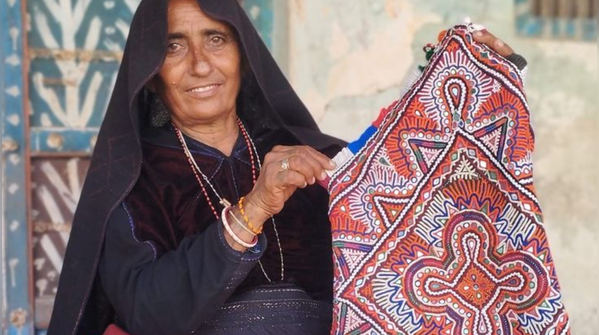
Rabari embroidery
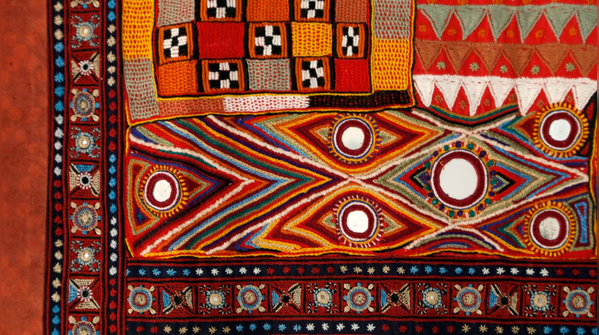
Rabari embroidery comes from the Rabari tribe residing in Gujarat. This embroidery features dense stitches in bold colours, which is then complemented with mirror work. Each piece tells a different story where they use birds, animals, and sacred motifs and create ensembles that are deeply personal and absolutely unique. The narrative richness of Rabari is what makes it unique from the others.
(Image Credits: Pinterest)
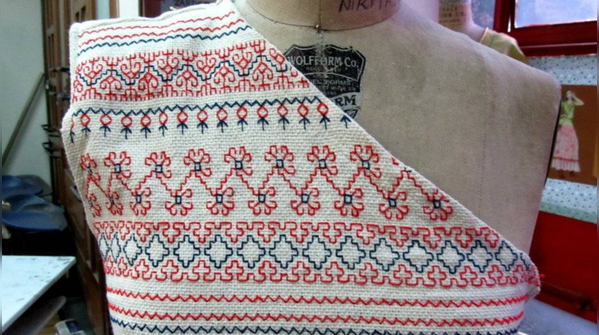
Kasuti embroidery
Kasuti is a century-old folk embroidery from dense regions of Karnataka and is known for its intricate geometric patterns. Worked entirely by hand, it comes from kai, i.e., hand, and suti, i.e., weave, emphasising pure handwork. Kasuti designs look highly identical on both sides of the silhouette, which showcases the exceptional craftsmanship of the weavers. The motifs and symbols are usually inspired by Karnataka’s folk traditions.
(Image Credits: Pinterest)
Lambadi embroidery
Originating from the Banjara community of Rajasthan, Lambadi is mainly a fusion of beadwork, patchwork, and coloured thread stitching, which is then decorated with small mirrors. From vibrant shades and geometric motifs, it captures the raw energy of the Banjara culture and is decorated with cowries, beads, and shells as well. This embroidery has also received the GI tag, since the government has understood its cultural importance.
(Image Credits: Pinterest)
Featured In lifestyle

MORE FROM ETIMES
life & style