
Hanuman Jayanti 2026: Why Laddoos are offered as bhog to Lord Hanuman and other traditional dishes prepared during the festival
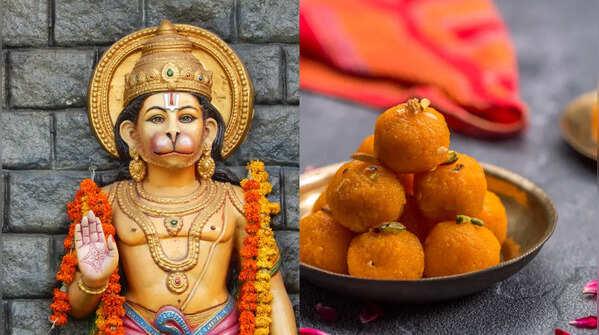
Importance of Laddoo on Hanuman Jayanti
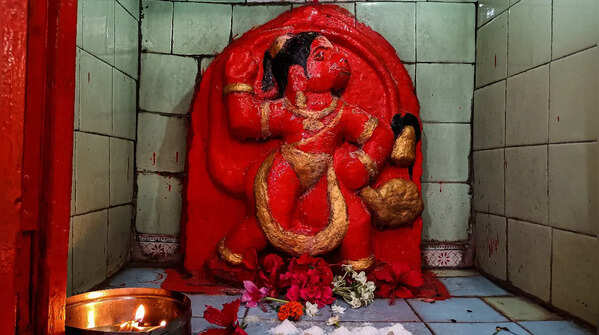
The festival of Hanuman Jayanti is here; it marks the birth of Lord Hanuman and is also known as Hanuman Janmotsav. Every year, Hanuman Jayanti is observed on the Purnima Tithi (full moon day) of the Hindu month of Chaitra. On this day, devotees perform puja rituals, recite the Hanuman Chalisa, and offer aarti and bhog at home or in temples to seek his blessings. Many also organise the recitation of the Sundarkand as part of the celebrations.
Date and time
Date: Thursday 2 April, Chaitra Purnima
Best puja time: Sunrise to afternoon
Abhijit Muhurat: 11:50 AM to 12:40 PM
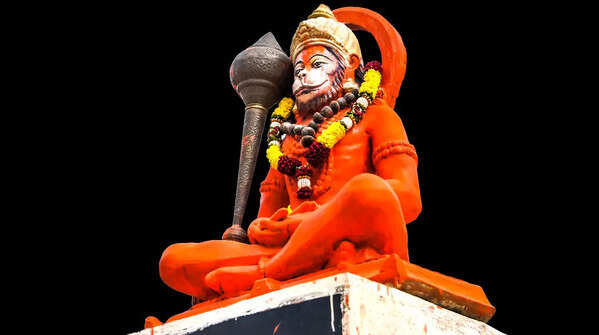
Lord Hanuman and Connection with Laddoo
When offering bhog to Lord Hanuman, Motichoor Ladoo or Besan Ladoo is mostly offered. Boondi is also considered an ideal bhog for him. Regarding the association between the two, folklore and mythology depict him as playful, curious, and fond of eating. And the most famous tale is when he mistook the sun for a fruit and leaped to eat it. This imagery of him as a joyful, food-loving child later extended to sweets like laddoos in folk traditions. In many Indian temples boondi and besan laddoos are the most commonly offered prasad. This ritual practice gradually reinforced the belief that laddoos are his favourite. Laddoos are also considered a symbol of strength and energy. While there isn't a strict scriptural line stating Hanuman loved laddoos, over the years through devotion, temple practices, and storytelling, laddoos have become a sweet way for devotees to connect with him.
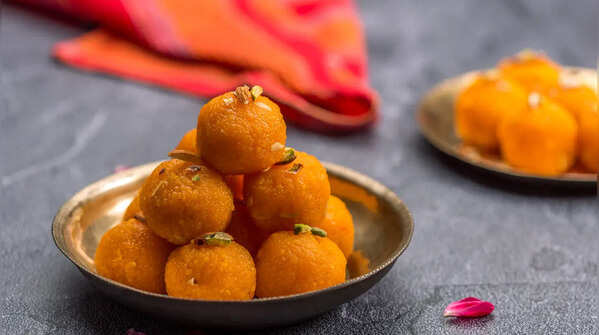
Foods offered to Lord Hanuman: Motichoor Laddoo
It refers to sweet bright balls made with besan boondi, sugar syrup, food colour, cardamom powder, cucumber seeds, and nuts, it is Lord Hanuman's favourite sweet.
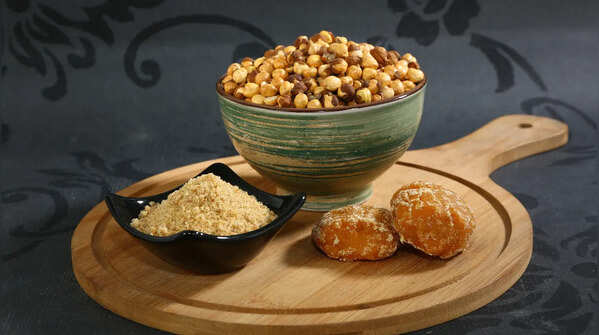
Chana Gud
Jaggery and roasted chana are also offered to Lord Hanuman on this day, as they help curb mangal dosha.
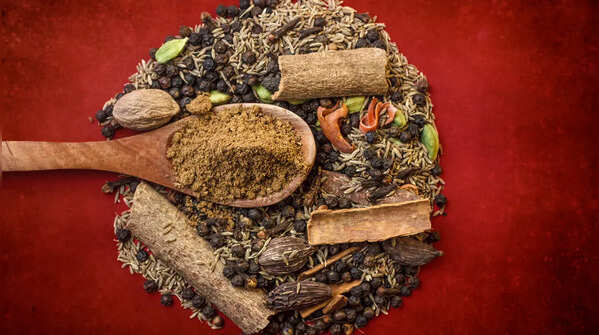
Whole Spices
Whole spices like clove, green cardamom, and betel nuts are also offered to Lord Hanuman on this day, and it is believed that these spices help reduce life issues.

Basil
Basil or tulsi leaves are also offered to Lord Hanuman on this day. It is believed that these holy leaves help protect against challenging situations in life.
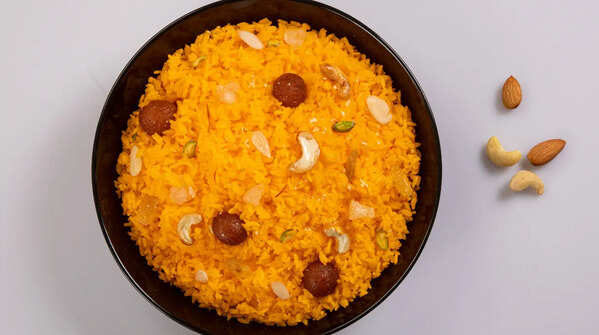
Kesari Bhaat
Made with rice, sugar, saffron, ghee, and nuts, this sweet dish is also offered to Lord Hanuman as it helps bring colors of happiness and prosperity in life.
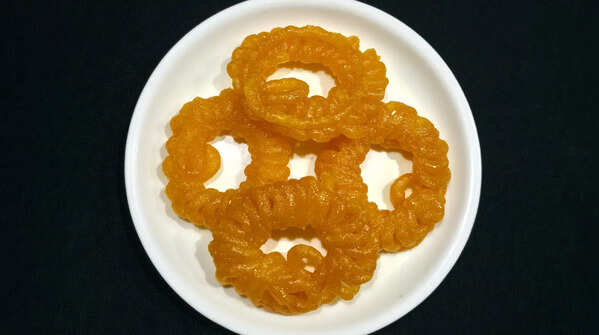
Imarti
This deep-fried dish is made with urad dal paste and is also considered Lord Hanuman's favourite.
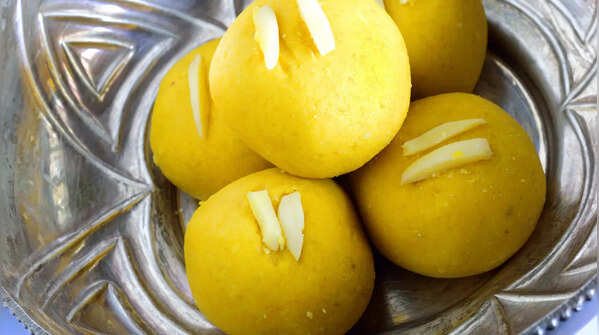
Besan Laddoo
Made with roasted gram flour, sugar, ghee, and cardamom powder, this sweet dish is also part of Lord Hanuman's bhog.
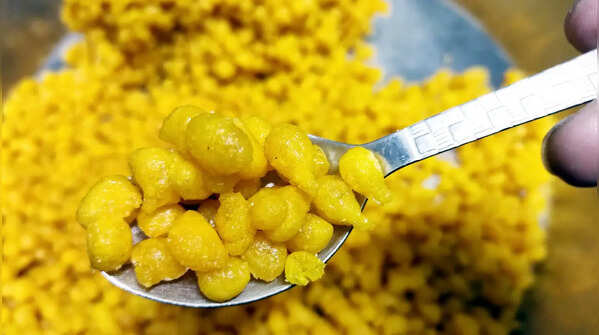
Boondi
Made with gram flour and edible colour, these sweet balls are soaked in sugar syrup and offered to Lord Hanuman as bhog.
Images Courtesy: istock
Featured In Food

