• News
  • lifestyle
  • food-news
  • How a village potter invented a refrigerator that works without electricity: What makes it so ‘cool’

How a village potter invented a refrigerator that works without electricity: What makes it so ‘cool’

How a village potter invented a refrigerator that works without electricity: What makes it so ‘cool’
On a hot day in rural India, the idea of keeping milk, vegetables, and drinking water cool can feel less like convenience and more like survival. That is the world in which Mansukhbhai Prajapati, a potter from Gujarat, built a clay refrigerator that runs without electricity and uses a simple principle older than modern appliances: evaporation. The story began after the 2001 Gujarat earthquake, when Prajapati saw the vulnerability of families who had lost homes, power, and the basic means to preserve food. Out of that disruption came a low-tech answer with surprisingly wide reach. Scroll down to read more.


The invention that changed the clay business

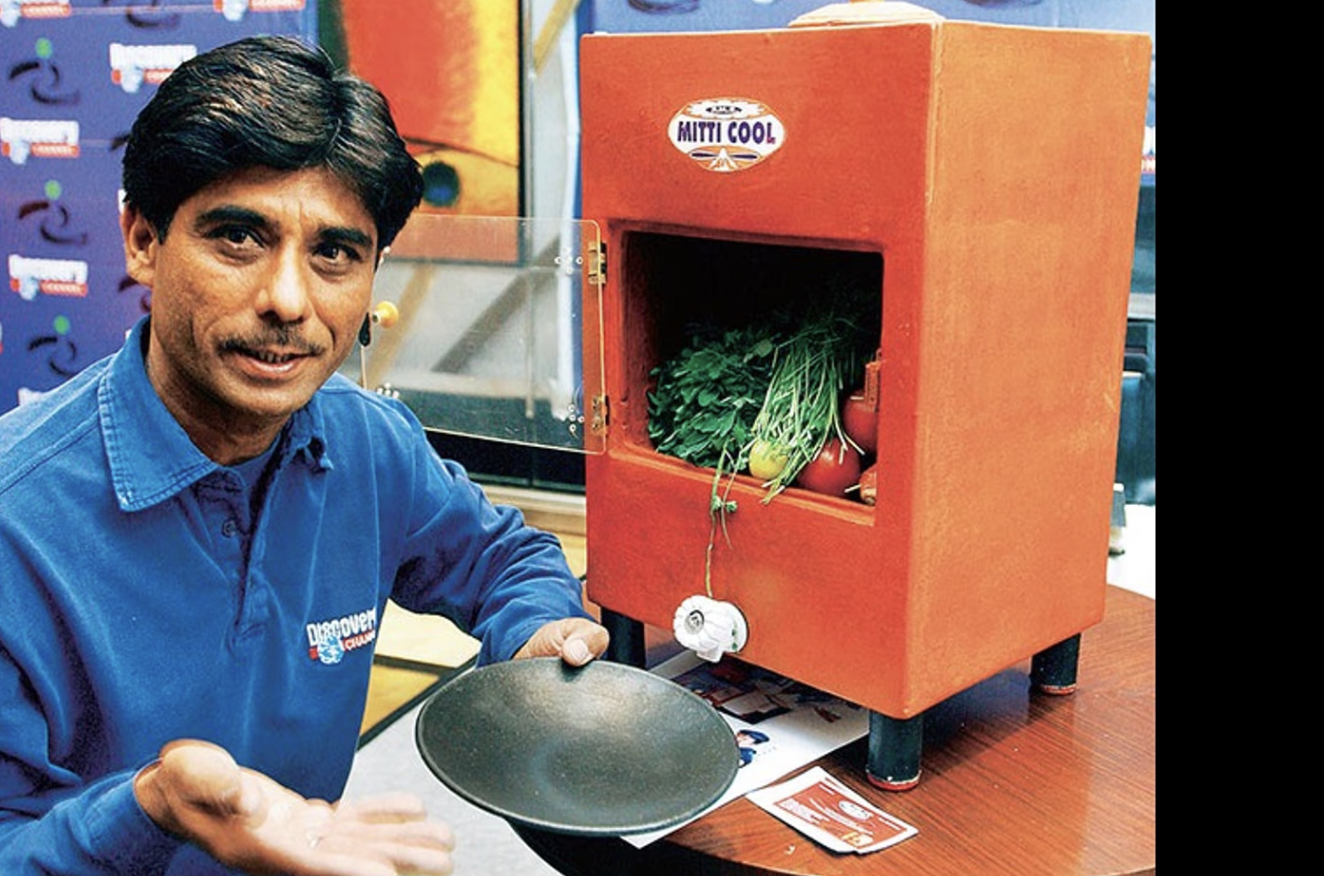
Prajapati’s refrigerator did not emerge overnight. Reported accounts suggest he spent nearly four to five years experimenting with different clay mixtures before arriving at the right formula. By adding materials such as sawdust and sand, he made the clay body porous, allowing water to slowly seep through the surface and evaporate. As the moisture evaporates from the outer walls, it pulls heat away from the inner chamber, creating a natural cooling effect—without compressors, coils, or any electrical input. The National Innovation Foundation describes the refrigerator as a natural refrigerator made entirely from clay, an idea refined through years of trial and experimentation.


How it actually works

2
The engineering behind this design is remarkably sophisticated in its straightforwardness. Water is initially poured into the upper chamber, and as it does, it begins to drip down the sides of the clay structure. As this moisture gradually evaporates, it effectively absorbs heat, resulting in a cooler interior relative to the surrounding air temperature. The essence of the clay allows it to maintain a slight porosity, which keeps the surface damp for extended periods, thereby facilitating a steady rate of evaporation throughout the day. This gentle, natural cooling mechanism does not rely on any electricity, mechanical compressors, or moving components; it operates solely through the simple duo of water and airflow to sustain its cooling effects.The National Innovation Foundation says the refrigerator works on evaporation and can keep fruits, vegetables, milk, and drinking water fresh for two to three days. It also notes that the device performs best in hot, dry climates, where evaporation is strongest. In practical terms, it offers a cooling gap of roughly 5–8°C below outside temperature.


Why it mattered to ordinary households

The refrigerator has never been promoted as a luxury item meant exclusively for the wealthy elite. On the contrary, it was remarkably crafted with the specific purpose of serving households that face challenges with the financial strain of acquiring a conventional refrigerator, along with the ongoing burden of electricity costs. The United Nations Conference on Trade and Development has pointed out this innovation as a quintessential illustration of what is termed "frugal innovation," emphasizing that it is available for purchase at a price point of less than $50 and possesses the remarkable ability to keep food fresh for durations ranging from two to three days. Initial evaluations of retail pricing indicated that it was approximately ₹2,500, further solidifying the concept that this product was conceptualized from its inception as an attainable alternative, rather than as a high-status kitchen appliance. The primary objective was never to impress consumers with groundbreaking technology or advanced features. Instead, the aim was to tackle a crucial and everyday challenge faced by families residing in regions with inconsistent electricity supplies and limited resources.


From a village workshop to national attention
3
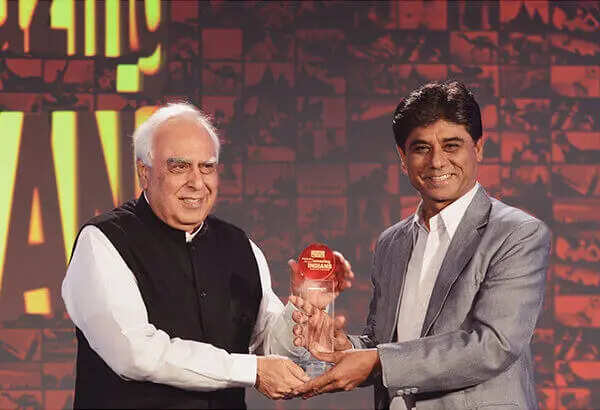
The enduring appeal of the refrigerator narrative lies in its unique position at the crossroads of craftsmanship, essential needs, and innovative thinking. Unlike a corporate engineer or a founder of a lab-supported startup, Prajapati was a skilled potter who drew upon his extensive knowledge of clay, creatively reinterpreting this traditional skill for a modern purpose. According to the National Innovation Foundation, Prajapati gained notable recognition in its 2009 competition dedicated to grassroots innovations, and subsequently, he earned a spot on Forbes' 2010 list featuring rural Indian entrepreneurs whose groundbreaking inventions were making significant impacts on people's lives. Additionally, reports from The Better India highlight that he expanded his entrepreneurial efforts by developing a wider array of clay-based products, which now includes water filters, pressure cookers, and tawas, thereby broadening the scope of his business. The profound appeal of this remarkable invention lies not just in the fact that it operates without the need for electricity. Instead, it is that the solution feels deeply rooted in the specific conditions for which it was designed and created. In a nation where relentless heat, frequent power cuts, and the challenge of affordability are everyday realities faced by countless families, a clay refrigerator transcends mere novelty; it serves as an important reminder that true innovation does not necessarily have to be encased in plastic or depend on complex software. Occasionally, it springs forth from individuals who possess a deep understanding of the materials they work with, who see pressing problems in their immediate environment, and who refuse to accept that the burdens of hardship must be countered with expensive technological solutions. This is precisely why the clay refrigerator has remained etched in the public's consciousness long after the initial media headlines have faded into memory.The narrative of Prajapati has transformed into an extraordinary case study that vividly illustrates how time-honored traditional skills can be adeptly converted into practical innovations that are not only feasible but also scalable. Furthermore, it acts as a subtle yet potent counterargument to the widely accepted notion that genuine progress and development are restricted exclusively to high-tech urban hubs and sophisticated laboratories.Stories like this also remind us that innovation often grows out of necessity rather than luxury. When daily problems demand solutions, creativity tends to emerge from the materials, knowledge and traditions already present within a community.In rural and small-town settings, such ingenuity often remains overlooked, quietly solving everyday problems without the attention typically given to formal research environments. Yet these grassroots ideas frequently prove more adaptable, affordable and relevant to the realities faced by millions of people.At first glance, the refrigerator itself may seem modest and unremarkable; however, the ingenious thinking that forms the foundation of its creation is anything but ordinary: it is marked by the clever utilization of available resources, a commitment to maintaining low costs, and the design of solutions that directly address the realities of everyday life. This is precisely what elevates the narrative surrounding the refrigerator to a realm of vibrancy and relevance even in contemporary times; it transcends the notion of being merely a clever novelty and instead stands as a concrete and pragmatic solution to an urgent and universal everyday challenge.

author
About the AuthorTOI Lifestyle Desk

The TOI Lifestyle Desk is a dynamic team of dedicated journalists who, with unwavering passion and commitment, sift through the pulse of the nation to curate a vibrant tapestry of lifestyle news for The Times of India readers. At the TOI Lifestyle Desk, we go beyond the obvious, delving into the extraordinary. Consider us your lifestyle companion, providing a daily dose of inspiration and information. Whether you're seeking the latest fashion trends, travel escapades, culinary delights, or wellness tips, the TOI Lifestyle Desk is your one-stop destination for an enriching lifestyle experience.

End of Article
Follow Us On Social Media