
Trending
Sliced by slammed door, fingertip rebuilt with same finger’s tissues
Novel reconstructive surgery to fix a problem that was deemed ‘unsolvable’
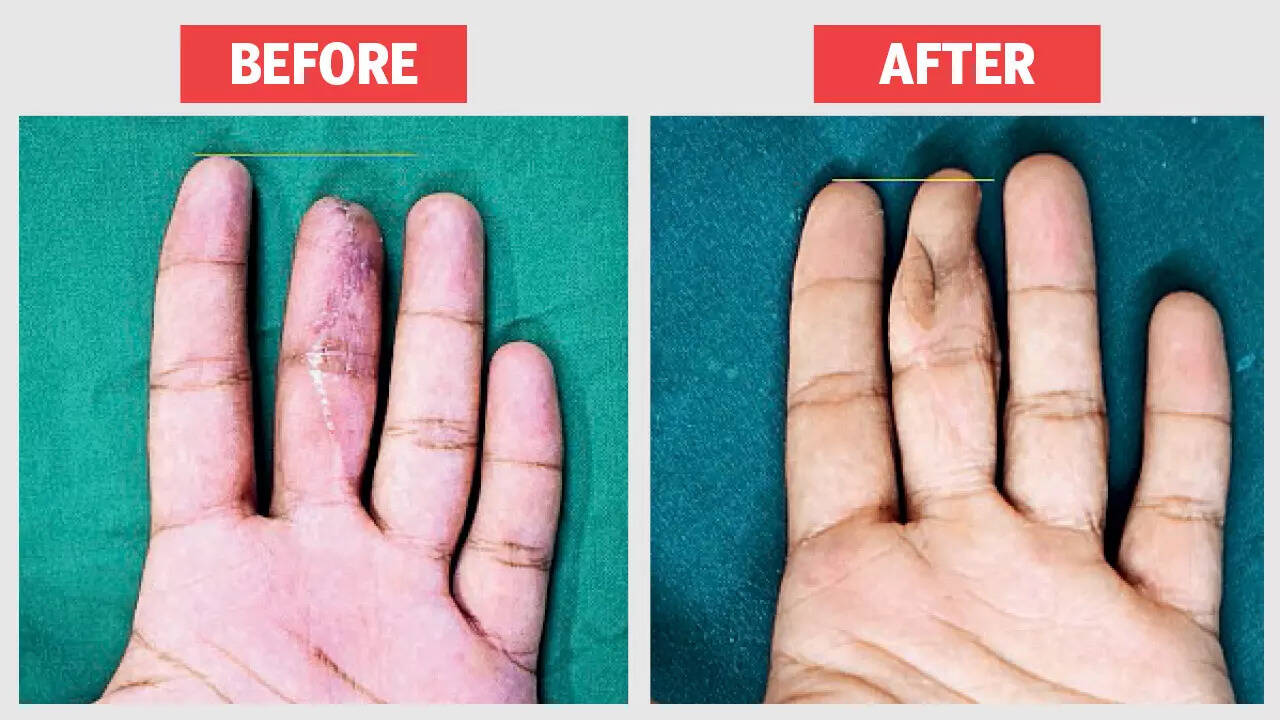
With the passage of time, the bone regained its original girth. One unexpected but noteworthy benefit was the appearance of the reconstructed fingertip on the back side, which developed a lighter tone resembling a nail. To an onlooker, the finger no longer appeared injured. The physical appearance was impressive and the functional restoration, remarkable. The icing on the cake was the visual transformation
Dr Pankaj Jindal

About the AuthorTOI Lifestyle Desk
End of Article
Follow Us On Social Media
Tired of too many ads?go ad free now
lifestyle videos
Featured In Lifestyle

Tired of too many ads?go ad free now



Hot on the Web
Govind NamdevKeanu Reeves QuoteRashmika MandannaArijit SinghAssi ReviewRanveer SinghVijay DeverakondaMayank Pawar Death NewsTamannaah BhatiaKatrina KaifVijay Deverakonda HouseDinesh Lal YadavHigh Blood Pressure SymptomsJohan SwedishKiku ShardaHouse Of The Dragon 3 TeaserSalman KhanBloody Romeo Teaser'O'Romeo' Box Office CollectionFyodor Dostoevsky QuoteRashmika Mandanna HouseLunar Eclipse City Wise TimingsBlood MoonVicky KaushalKuno National ParkHoroscope TodayThe Bluff Movie ReviewThe 50Border 2 Movie ReviewTu Yaa Main Movie ReviewToday Gold Rate in ChennaiDelhi Weather TodayDelhi AQI TodayMumbai AQI TodayMaharashtra Public Holidays 2026Apple iPhone 18 ProKing Cobra VS Honey BadgerBharat Taxi ServiceNambi NarayananiQoo 15RElon Musk
Trending Topics
Latest MoviesBollywood MoviesHollywood MoviesTamil Movies 2026Telugu Movies 2026Malayalam Movies 2026Kannada MoviesMarathi MoviesBengali Movies 2026Top Rated Movies 2026Best Hindi MoviesBest English MoviesBest Telugu MoviesBest Tamil MoviesBest Malayalam MoviesBest Kannada MoviesBest Bengali MoviesUpcoming Hindi MoviesBest Movies Of All TimeBest Hindi Movies of All TimeLatest English MoviesLatest Malayalam MoviesEnglish TV NewsTamil TV NewsTelugu TV NewsMalayalam TV NewsKannada TV NewsMovie ReviewsBhojpuri Cinema NewsGujarati Cinema News
Popular Categories
Viral NewsK Pop NewsWeb Series NewsAnime NewsUpcoming English MoviesUpcoming Tamil MoviesUpcoming Telugu MoviesUpcoming Malayalam MoviesUpcoming Kannada MoviesFashion TipsTravel NewsEntertainment NewsBollywood NewsTollywood NewsKollywood NewsMollywood NewsFood NewsLatest Hindi MoviesLatest Tamil MoviesParenting TipsHome RemediesWeight LossBeauty TipsParenting TipsHindi VideosHindi Video SongsBhojpuri Music VideosLatest Telugu MoviesBhojpuri Music VideoHindi TV News
Latest News
West Bengal BLO alleges assault, intimidation by BJP supporters led by Suvendu Adhikari; FIR filedAfter making fun of Sam Altman’s company, Anthropic goes after OpenAI’s biggest investor MicrosoftJudge dismisses Elon Musk’s lawsuit against OpenAI which the company claims is part of his “ongoing campaign of harassment”FIH Pro League: Spain deny India season’s first winAnand Mahindra called this Meghalaya waterfall ‘Poetry in Motion,’ and it might inspire your next trip'Bad policy, but nice guy': Donald Trump on NYC mayor Zohran MamdaniWatch: Barron Trump greets mother, the internet says he looks like his fatherRashmika Mandanna and Vijay Deverakonda wedding: Couple's sangeet venue turns into photo gallery of their love story - VideoSBI CBO registration window 2026 closing today: Check direct link to apply hereReply on lack of equipment at T dialysis centres: HC3 hacked to death as family attacked with axe while sleeping in Chhattisgarh; 2 criticalSliced by slammed door, fingertip rebuilt with same finger’s tissuesAsian stocks today: Markets trade in green after Wall Steet's strong rally; Nikkei jumps over 2% to record highs'Welcome, Modi': Jerusalem Post front page features PM as he embarks on 2-day Israel visitAsian Boxing finalists to be main entries for CWG, Asian GamesFormer Apple engineers launch new Acme Weather app: 6 features that make it different from othersWoman orders food at work, then stops the delivery boy with an unusual requestMinistry forms ad-hoc panels for handball, karate