• News
  • lifestyle
  • At 65, why this woman started driving an auto rickshaw: “I used to stay at home, but I realized ..."
At 65, why this woman started driving an auto rickshaw: “I used to stay at home, but I realized ..."

At 65, why this woman started driving an auto rickshaw: “I used to stay at home, but I realized ..."
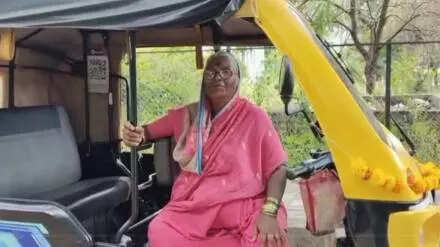
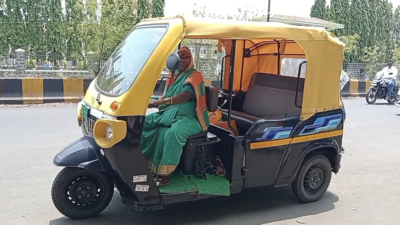
In conversations about ageing in India, life after sixty is often imagined as a time of withdrawal, slower routines, dependence on family, and a quiet step away from public life. But on the busy roads connecting Karad and Undale in Maharashtra, Mangala Awale is gently rewriting that narrative every single day. At 65, fondly known as Mangala Aaji, she takes the driver’s seat of her auto-rickshaw each morning, choosing movement over limitation and independence over expectation.Her decision is not simply about earning a livelihood; it reflects a deeper commitment to dignity and self-respect. Widowed early and shaped by years of hard work raising her children, Mangala refused to let age define the boundaries of her life. Instead, she embraced a role rarely associated with elderly women in rural India, turning an ordinary auto-rickshaw into a symbol of resilience, purpose and quiet courage. Scroll down to read more.


Choosing independence after a lifetime of responsibility

Mangala Awale’s life has been shaped by resilience long before she ever sat behind the wheel. Widowed while her children were still young, she raised four children single-handedly, working as a labourer to ensure they received education and stability.
Years of physical work helped her build a family that could stand on its own feet; her son now works as a Maharashtra State Road Transport Corporation (MSRTC) driver, while her daughters are married.
For many, this stage of life would signal a well-earned pause. But Mangala saw things differently.As reported by BBC, she did not want to depend financially on her children despite advancing age and health challenges, including diabetes. Instead, she searched for a way to continue contributing, both to her own medical expenses and to her son’s household. The answer came unexpectedly: driving an auto-rickshaw.


Learning to drive at 65

With the support and encouragement of her son, Mangala successfully learned the intricacies of operating a rickshaw in an impressive span of just fifteen days. What might normally seem like a formidable challenge, especially for individuals who are younger, transformed for her into a significant and empowering opportunity that paved the way for her independence. Shortly thereafter, she embarked on her new career as a rickshaw driver, diligently transporting passengers on a daily basis from 9 a.m. to 6 p.m. along the popular Karad–Undale route.Her earnings, typically between ₹500 and ₹700 a day, may appear modest in economic terms. Yet for Mangala, the value lies elsewhere, in self-respect.
2
As mentioned in coverage by Punepulse, she explained her motivation in simple but powerful words:“I used to stay at home, but I realized sitting idle wasn’t helping anyone. So, I learned to drive a rickshaw, with my son’s guidance. It turned out to be a wonderful decision. Everyone should try to show this kind of courage… I drive the rickshaw to help with my son’s household and my own medical needs… Driving doesn’t scare me at all, and the other drivers are very understanding, they even say, ‘Let the Aaji go first.’”Her statement captures something deeper than financial need, the emotional satisfaction of earning through one’s own effort.


Challenging stereotypes on the road

In many rural and semi-urban parts of India, elderly women are rarely seen in public professions, especially in roles traditionally dominated by men such as commercial driving. Mangala’s presence on the road quietly disrupts these assumptions.Passengers immediately recognize her, and they show no reluctance in openly voicing their deep admiration for her. The fellow drivers who share the road alongside her consistently demonstrate unwavering support, which not only reflects their encouragement but also signifies a profound respect for her remarkable and influential presence. What initially began as a distinctive and personal choice has, over time, gradually transformed into a significant and powerful emblem of empowerment. This evolution serves to illustrate the extraordinary possibilities that can be achieved for women and older individuals who may feel unsure or hesitant about stepping beyond the constraints that society's norms have imposed upon them.Her story also reflects a broader shift: ageing no longer necessarily means withdrawal from public life. Instead, it can become a phase of renewed agency.


Following the rules, setting an example

Mangala's journey has been marked by numerous hurdles and significant obstacles that she has had to overcome. When the transport authorities became aware of her operating a vehicle without the necessary permissions, they imposed a requirement for her to comply fully with the established licensing regulations. Rather than allowing this setback to discourage her, she took a proactive approach and chose to navigate through the official process to successfully obtain her government-issued driving licence in a correct and legitimate manner. This accomplishment held particular importance for her, as she had to confront additional challenges stemming from her limited formal education, as well as the various constraints associated with her rural upbringing.This step reinforced her belief that independence must go hand in hand with responsibility. By respecting regulations, she demonstrated that empowerment also means accountability.


A story larger than one individual

The narrative encapsulated in the story of Mangala Awale resonates deeply, as it grapples with themes that are, in fact, profoundly universal in nature. It sheds light on the dignity that can be found in engaging in meaningful work, emphasizes the critical importance of support that flows seamlessly between generations, and speaks to the innate desire people have to uphold a sense of purpose, regardless of their age. Her daily journeys as a driver transcend the simple act of providing transportation for her passengers; instead, they serve as vibrant reminders that acts of courage and bravery often reveal themselves in the most unassuming and ordinary circumstances.At the remarkable age of 65, this truly extraordinary individual, who has charted her own exceptional path through life, has never actively sought out the role of becoming a major figurehead or a dazzling symbol of inspiration for those around her. Nevertheless, through her steadfast dedication and quiet determination, she has unintentionally evolved into such a significant presence; she now stands as a living testament to the powerful idea that genuine independence and self-reliance are not solely dictated by the vigor and energy commonly associated with the exuberance of youth. Her unique journey serves as an enduring reminder that sometimes, the most profound revolutions can be sparked by a decision that might initially seem simple yet carries immense power: the choice to persist, moving forward with unwavering resolve and determination, despite the numerous challenges and obstacles that may arise along her path.

author
About the AuthorTOI Lifestyle Desk

The TOI Lifestyle Desk is a dynamic team of dedicated journalists who, with unwavering passion and commitment, sift through the pulse of the nation to curate a vibrant tapestry of lifestyle news for The Times of India readers. At the TOI Lifestyle Desk, we go beyond the obvious, delving into the extraordinary. Consider us your lifestyle companion, providing a daily dose of inspiration and information. Whether you're seeking the latest fashion trends, travel escapades, culinary delights, or wellness tips, the TOI Lifestyle Desk is your one-stop destination for an enriching lifestyle experience.

End of Article
Follow Us On Social Media