
- News
- lifestyle
- soul-search
- Thought of the day inspired by the Bhagavad Gita: "True strength is staying calm during storms"
Thought of the day inspired by the Bhagavad Gita: "True strength is staying calm during storms"
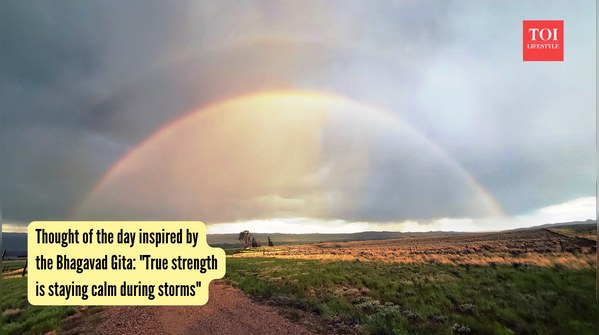
Thought of the day inspired by the Bhagavad Gita: "True strength is staying calm during storms"
The profound wisdom of the Bhagavad Gita has guided millions through life’s toughest moments. And one of its central teachings is to stay calm during turbulent moments.
During testing times, we often lose our cool, get angry, and blame either people or the situation for all the trouble, instead of keeping calm and trying to look for solutions. In haste, we tend to forget that keeping our mind in control and being patient is what is required to sail through troubled waters, as an unpeaceful mind renders no result and only confusion.
Many people also measure strength with loud confidence, aggression, or never showing weakness, but the Gita shows that real power lies in quiet steadiness.

Thought of the day inspired by the Bhagavad Gita
“Be steadfast in the performance of your duty, O Arjun, abandoning attachment to success and failure. Such equanimity is called Yog”
- Chapter 2, verse 48

What the quote really means ?
Lord Krishna explains to Arjuna on the Kurukshetra battlefield that staying calm doesn’t mean you’re numb or indifferent. It means you don’t let panic, anger, or fear hijack your decisions. The Gita teaches that emotions are temporary, but it is true wisdom that shows the way and helps us understand what is right and wrong and what decision is to be made.
When you remain steady, you see clearly, think rationally, and choose responses that align with your values instead of reacting impulsively. This kind of calmness is active, not passive. It takes courage to stay calm and composed when everything feels like it’s falling apart.
Why calmness is the highest form of strength
Most people think being powerful means being loud, aggressive, or never showing vulnerability. But the Gita has a different perspective on things. Lord Krishna tells Arjuna that true yoga is maintaining inner stability regardless of external circumstances.
Calmness during ‘storms’ shows self-control, emotional maturity, and mental clarity. It is this peace of mind that helps a person face uncertainty without losing themselves.
When people stay calm, they don’t waste energy on panic or blame. They focus on what they can control and accept what they can’t. This is far more powerful than letting emotions run wild. People respect those who remain steady in crisis because they become a source of stability for others.
Featured In lifestyle

MORE FROM ETIMES
life & style