
6 animals that have mastered cave life and are rarely seen by humans
6 animals that have mastered cave life and are rarely seen by humans
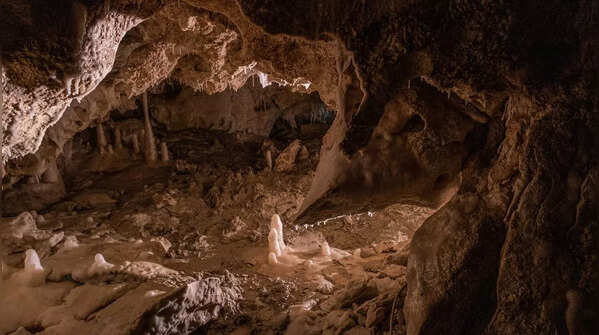
Caves are one of the most mysterious habitats on earth, a habitat that is dark, lacks sunlight, has a constant temperature, and food is limited. However, after millions of years, some animals have adapted to survive in such dark and hidden habitats. These animals live in a habitat that is completely dark, and they rely on other senses rather than sight to locate food, move from place to place, and give birth. This mysterious lifestyle means that humans rarely interact with these animals, except through scientific research or deep exploration.
The habitat of caves is very unique and sensitive. Most of the animals that live in such habitats, especially the true cave dwellers known as troglobites, are not able to survive in any other habitat. They normally have some special adaptation like the lack of pigment and eyes, enlarged sensory organs, or some special physiological traits that help them survive in the underground habitat. Below are six examples of such unique animals that live in caves and are hardly seen by humans.
Image Credit: Canva
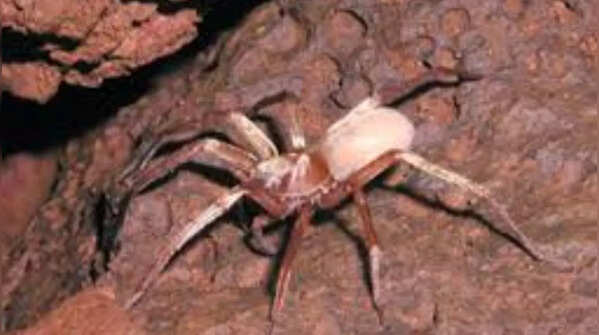
Kauaʻi Cave Wolf Spider
The Kauaʻi cave wolf spider (Adelocosa anops) is a very small but highly specialised predator that is found only in lava tube caves on the island of Kauaʻi in the Hawaiian chain. The Kauaʻi cave wolf spider is blind, having no eyes, and preys on other animals by sensing their vibrations and chemical signals rather than by sight. Unlike most other spiders, the Kauaʻi cave wolf spider does not weave webs to catch prey but instead freezes in place on the floor of the cave, ambushing unsuspecting prey that wanders into the darkness.
Image Credit: Wikipedia
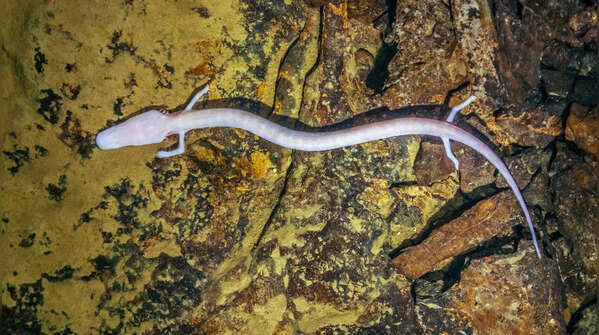
Olm (Proteus anguinus)
The olm is a light-coloured, eel-shaped salamander that inhabits the deep limestone caves of the Dinaric Alps in Europe. It is also known as the “human fish” because of its ability to live in low oxygen conditions, but it is actually blind and has very thin, translucent skin. Although it appears to be a fragile creature, the olm can live for 100 years and survive for extended periods without eating. It relies on its highly developed sense of smell and lateral line detection to locate tiny invertebrates in the dark, cave-dwelling environment.
Image Credit: Canva
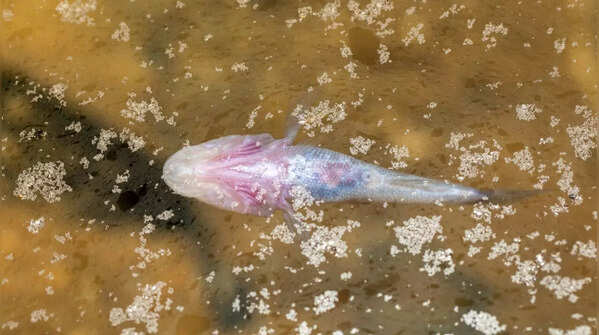
Blind Cavefish (Garra andruzzii)
This unique cavefish from Somalia is adapted entirely to life without light. It has no pigmentation and lacks functional eyes, instead using mechanisms unrelated to vision to sense its environment. Its has been found that their internal biological clock runs on an unusually long cycle, which may reflect evolutionary adaptation to environments without day-night cues. These cavefish have spent millions of years evolving in total darkness.
Image Credit: Canva
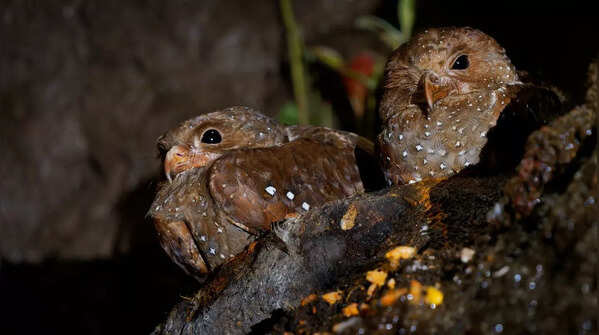
Oilbird (Steatornis caripensis)
The oilbird is one of nature’s most fascinating cave dwellers. Found in parts of South America and Trinidad, this nocturnal bird nests deep inside caves and uniquely navigates by echolocation, a trait more commonly associated with bats. Unlike most birds, oilbirds feed on fruit at night and use sharp clicking sounds to map cave walls and avoid obstacles in total darkness. Their secretive roosting habits make them seldom seen by humans.
Image Credit: Canva
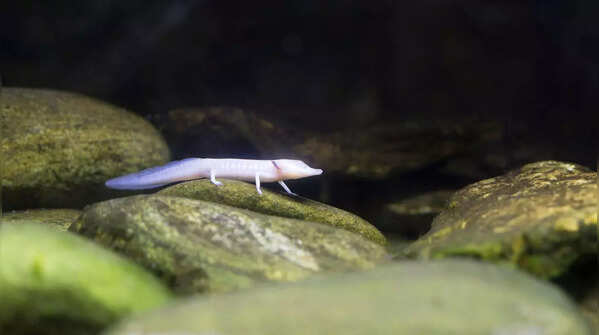
Texas Blind Salamander
The Texas blind salamander (Eurycea rathbuni) is a species of salamander found in the Edwards Aquifer caves of central Texas. It has developed unique adaptations for living in the dark. It is blind and translucent, with skin and external gills that allow it to breathe in water. Due to its unique environment, this salamander is very rarely seen and is recognized as a unique case of evolution for life in underground aquatic environments.
Image Credit: Canva
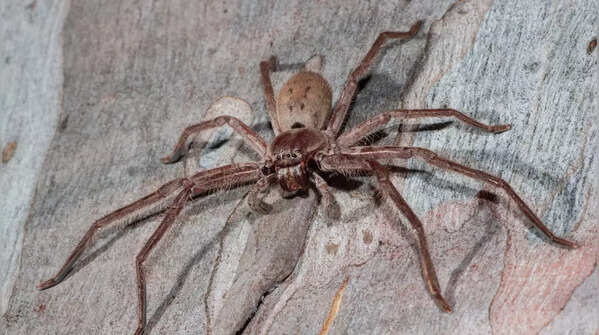
Blind Huntsman Spider
Found in caves in Laos, this huntsman spider has no eyes at all, a trait that is not unusual in troglobitic organisms. It has developed other senses to detect vibrations and chemical signals in order to move and hunt in the dark. Its unique adaptation illustrates how life can exist independently of light, with highly specialised behaviour that keeps it well hidden in the depths of caves.
The underground realm is also where some of the most incredible yet unknown creatures in nature can be found. From blind salamanders and cave fish to echolocating birds and eyeless spiders, these animals have developed incredible ways of living in a world where sunlight has never penetrated and food is scarce. Their adaptations are a reminder of the incredible diversity of life on Earth and the ways in which evolution is shaped by the environment. Due to their isolated habitats and ways of life, most of these cave dwellers have never been seen by humans, who are indeed the masters of darkness beneath their feet.
Image Credit: Canva
Featured In lifestyle

MORE FROM ETIMES
life & style