
A tiny mistake in a laboratory in 1957 created the world’s most feared honey bees and changed the fate of two continents forever
It started with a genuine problem and a genuinely good intention
And then, on one unremarkable afternoon in 1957, somebody removed a screen from a beehive — and accidentally changed the ecology of two continents.
The story of the Africanised honey bee is one of the most extraordinary cautionary tales in the history of science. Not because anyone did something evil. But because a well-designed experiment, run by a brilliant geneticist, was undone by a single act of innocent ignorance. The consequences are still unfolding today.
"Immigration of Africanized honey bees results in a greater density of highly defensive bee colonies. Africanized honey bees respond to activity near their colonies with increased numbers of stinging bees over much greater distances. This can make them life-threatening, especially to people allergic to stings or with limited capacity to escape (the young, old and handicapped), and to confined livestock or pets. In each country into which they have migrated, they have killed humans and animals. Beekeeping is also disrupted by Africanized honey bees, which are more difficult to manage and transport. Maintaining colonies of European bees in areas with Africanized honey bees is the best defense, but to do so beekeepers face greater expense, more difficulty finding sites for bees because of public fear, and greater liability concerns," says Center for Invasive Species Research.
The problem scientists were trying to solve
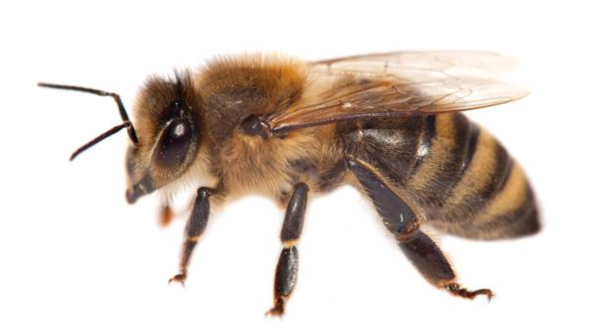
In 1956, a Brazilian geneticist imported queens of the East African lowland honey bee, Apis mellifera scutellata, from South Africa and Tanzania, and crossbreed them with the European bees already present in Brazil. The African bee was a powerhouse in tropical conditions. It produced more honey, foraged more efficiently in heat, and was genuinely well-suited to the environment. The goal was to develop a bee that combined the docile nature of the European honeybee with the high honey production of the African honeybee. On paper, it was elegant genetics. Take the best of two worlds and breed something better than either.
Inside the laboratory
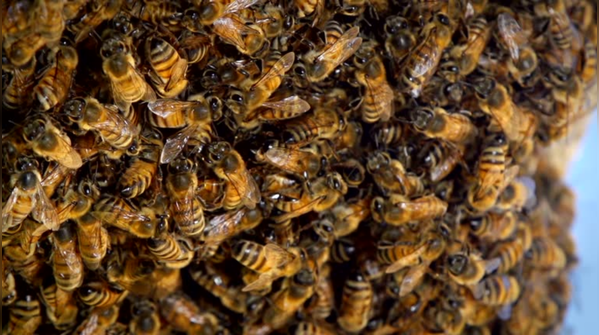
The scientists acquired 63 live queens from South African beekeepers. These were taken to a quarantine area at an agricultural research station near Rio Claro, where 48 queens survived into the following year. The facility was carefully controlled. Through selective breeding with European drones, a number of first-generation hybrids were formed. After several months, natural attrition had reduced their stock to 29 colonies, which were maintained in hive boxes equipped with queen excluders.
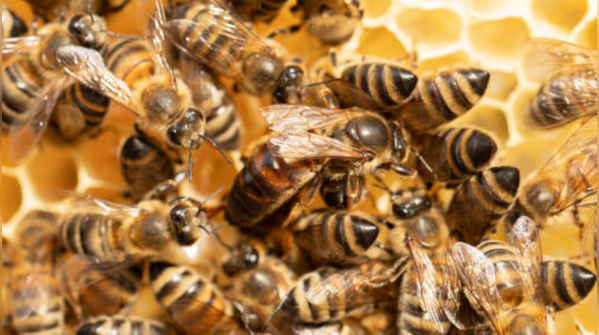
Queen excluders are exactly what they sound like: mesh screens fitted over hive entrances with gaps just wide enough for worker bees to pass through, but too small for the larger queens. They're a standard containment device. Without them, a queen can leave with a swarm and establish a new colony wherever she lands.
The afternoon that changed everything
In 1957, twenty-six Africanised honey bee queens with small swarms escaped into the nearby forest. By the time the scientists discovered what had happened, the bees were gone. There was no tracking them, no retrieving them, no way to put the experiment back into its container. The scientists hoped the escaped bees would die or mate with European drones and lose their African characteristics. They did not die. They did not lose their characteristics.
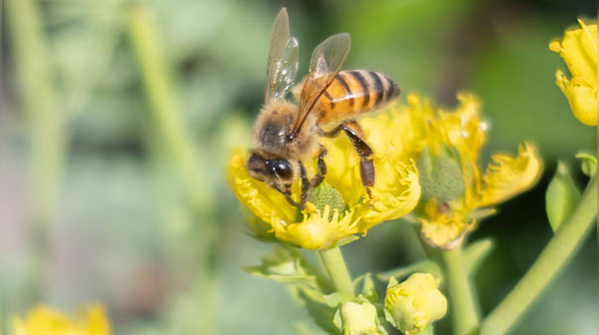
What the escaped bees did next
What followed was slow at first, and then very fast. Within a few years, reports began arriving from surrounding rural areas of wild bees relentlessly attacking farm animals and even humans. Many poor Brazilian farmers suffered livestock losses, and eventually, there were human fatalities. The hybrid bees had inherited the African bee's extraordinary defensiveness — its willingness to mobilise enormous numbers of workers at the slightest perceived threat, and to pursue that threat far beyond what any European bee would bother with.
Africanised honey bees are typically much more defensive, react to disturbances faster, and chase people farther than other varieties of honey bees — up to 400 metres. They have killed some 1,000 humans, with victims receiving ten times more stings than from European honey bees.
The bees spread northward through South America, into Central America, and were first introduced to the United States in 1990, spreading to various southern and western states.
The man behind the experiment
As per reports, Dr. Warwick E Kerr, who supposedly led this research, passed away on September 15, 2018. The Africanised honey bee outlasted him by decades and will outlast all of us. It is, in its way, the most consequential accidental release in the history of genetics.
Reference: https://agriculture.okstate.edu/
Featured In lifestyle

