
Out of the shadows: The Women who made Madhubani art global
Out of the shadows: The Women who made Madhubani art global
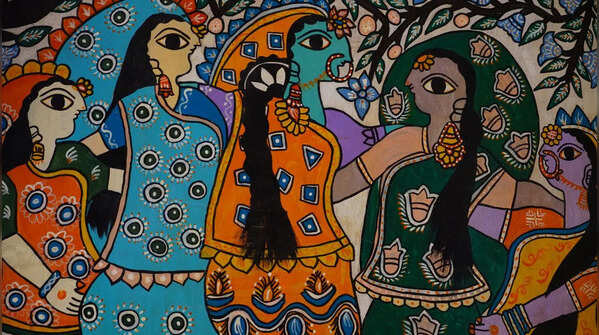
For the longest time, Madhubani art wasn't something you bought in a gallery; it was just something mothers taught daughters on the mud walls of Mithila, Bihar. It was a domestic ritual, meant for weddings and festivals, painted with crushed leaves and rice paste. But when a brutal drought hit Bihar in the 1960s, a handful of incredibly resilient women decided to move these paintings from crumbling walls onto paper to feed their families. What started as a survival tactic completely changed the trajectory of Indian folk art. Today, these five women are the reason Madhubani is celebrated from local villages to international museums.
Sita Devi
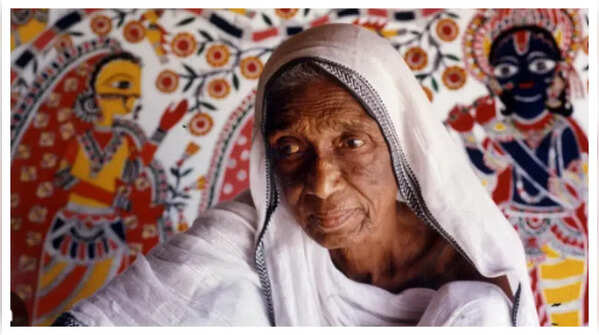
Sita Devi was among the very first women to pick up a brush and realize that her art could save her village. During the 1960s drought, she took a massive leap of faith by painting on handmade paper instead of mud. She had this incredible eye for color—using vibrant, filled-in blocks of blues, yellows, and reds that completely mesmerized anyone who saw them. Her work didn't just stay in Bihar; she ended up traveling to the US and Europe, even painting her own folk-art version of the New York City skyline. By the time she won the Padma Shri in 1981, she had proven that rural women could command the attention of the global art world.
Baua Devi
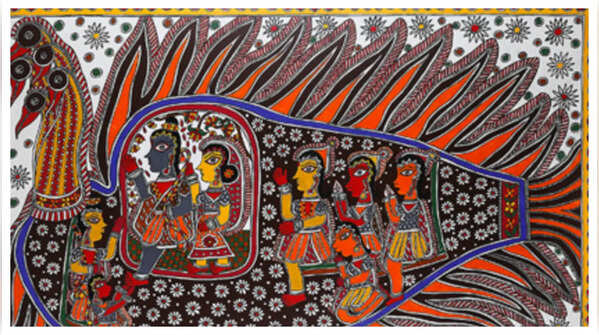
Baua Devi was just a teenager when the movement to commercialize Madhubani began, and today, she’s one of the last remaining pioneers of that original era. Growing up in Jitwarpur, she loved telling stories through her drawings, often mixing ancient myths with her own dreams and real-life experiences. There’s a raw, mystical quality to her work that instantly caught the attention of international curators. She actually spent months in France in the late 1980s, painting murals and showing Western audiences how intricate and deep Indian folk art really is. Decades later, her 2017 Padma Shri was a well-deserved nod to a lifetime spent keeping this tradition alive.
Manisha Jha
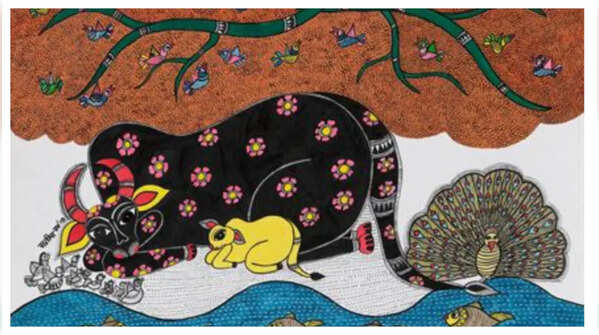
If the early pioneers created the foundation, Manisha Jha is the one building the modern skyscraper on top of it. She grew up watching her grandmother paint but chose to train as a professional architect. That background gives her art a fascinating edge—she blends traditional Madhubani techniques with modern geometry and contemporary themes like women's rights and environmental crisis. Manisha realized that for folk art to survive, it can't just be a relic of the past; it has to talk about the world we live in today. Through her countless exhibitions abroad and her dedicated art school, she’s teaching a whole new generation how to turn folk art into a viable, modern career.
Dulari Devi
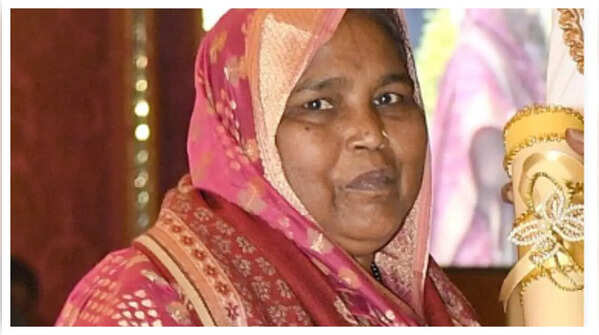
Dulari Devi’s story feels like something straight out of a movie. Born into a desperately poor fisherman's community, she never went to school and spent her early life working as a domestic helper, sweeping floors and washing dishes in the homes of upper-caste artists. But she kept watching them paint, and one day, she decided to try it herself. Under the wings of mentors like Mahasundari Devi, Dulari developed a stunning, ultra-fine line-drawn style. What makes her work so powerful is that she doesn't just paint gods and goddesses; she paints fields, fish, and the hard, beautiful realities of working-class women, completely breaking down old caste barriers in the process.
Hema Devi
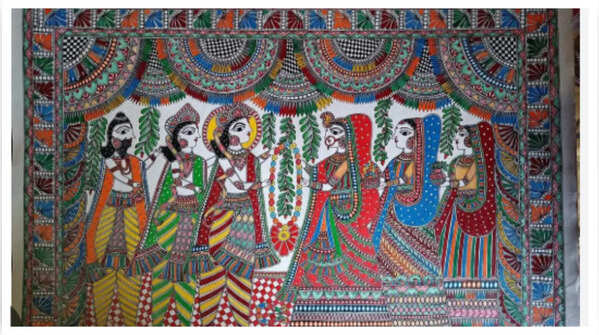
Hema Devi represents the beautiful continuity of this art form. She was surrounded by national award-winning painters from childhood, picking up the brush when she was just fifteen. Instead of just sticking to paper, Hema became famous for her experiments—fusing Madhubani paintings with papier-mâché and textiles to create stunning three-dimensional pieces. But her real superpower is her ability to connect with people. She regularly travels across India and Europe, holding packed workshops where she teaches foreigners and youngsters how to understand the rhythm of Madhubani lines. She has turned a static art form into a living, breathing cross-cultural conversation.
Featured In lifestyle

