- News
- lifestyle
- travel
- things-to-do
- Breaking US law can have serious impact on student visa: What exactly are these laws that should not be broken
Trending
Breaking US law can have serious impact on student visa: What exactly are these laws that should not be broken
US visa
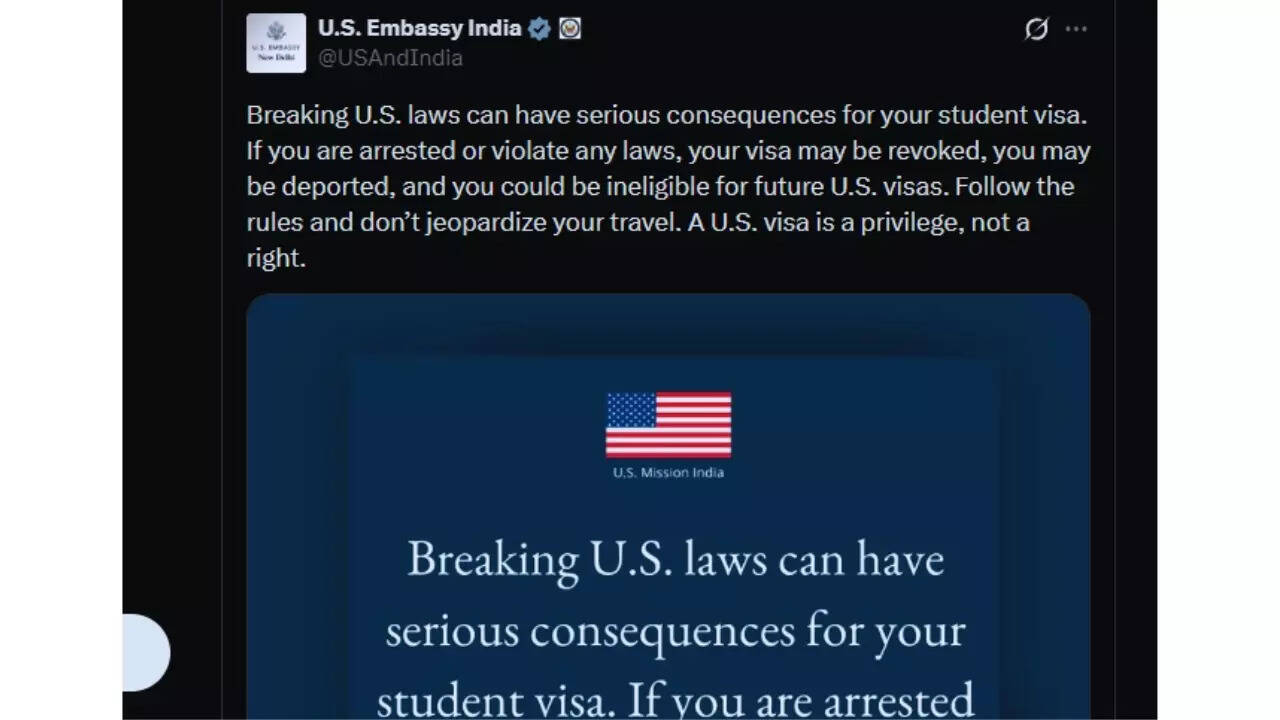
US Embassy in India on X

US student visa advisory
Key rules and warnings issued by the US Embassy for students
- A US student visa is a privilege, not a guaranteed right, and can be revoked at any time if rules are violated.
- Breaking US laws, even minor ones, can result in visa cancellation.
- If arrested or found violating laws, a student may face deportation.
- Legal violations can make students ineligible for future US visas.
- Students are to strictly abide by visa rules regarding work, stay duration, and academic commitments.
- Staying in the country beyond the authorized time, losing student status, or participating in unauthorized activities can cause grave immigration repercussions.
- Immigraton compliance also goes beyond academics and includes day-to-day activities.
- Increased enforcement means closer scrutiny of entry, exit, and stay records.
Mandatory biometric screening at US borders
Key points related to biometric screening include:
- Mandatory biometric checks for all non-US citizens at airports, land borders, and seaports.
- Photographs are taken at every entry and exit point by US Customs and Border Protection officers.
- It applies to Green Card holders, for Children under the age of 14 years, and for Individuals aged 79 years or over.
- The collected data is used for identity verification and tracking departures.
- This is a strategy to respond to visa overstays as well as border security issues.
What does this advisory mean for Indian students?
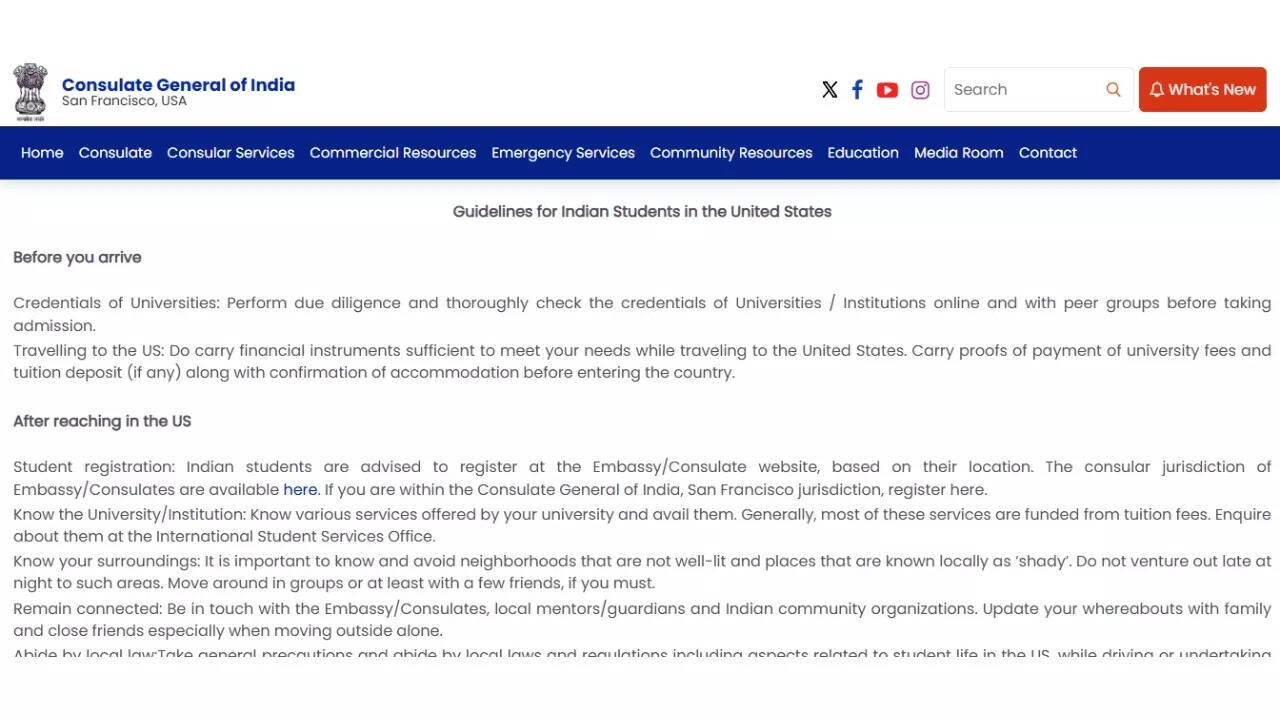
Guidelines for Indian Students in the United States
Before you arrive
- Validate the credentials of the university: One should conduct proper due diligence about the university or institution before accepting admission.
- Carry sufficient funds: It is important to have sufficient financial instruments for meeting your costs when traveling to the US.
- Have documents in hand: It is essential to have paid university fees, university deposit funds, and finally confirmed accommodation information when entering the US.
After reaching the US
- Student registration: Register on the Indian Embassy or Consulate website based on your location in the US.
- Know your university: You should familiarise yourself with the services being offered by your university, in particular by the International Students Services Office.
- Understand your surroundings: Try not to live in or visit low-light or unsafe areas. Never go out late at night or go out in groups.
- Remain connected: Keep in touch with the Indian Embassy or Consulates, mentors, guardians, and Indian organizations. Keep your families updated on your whereabouts.
- Avoid substance abuse: There is no room for illegal drug abuse or alcohol-related crimes.
- Mental health support: Seek help if feeling anxious or depressed. Reach out to family, friends, university services, or professional counsellors when needed.
- Medical insurance: It is important that you have valid and sufficient medical insurance cover throughout your stay. This can preferably be obtained as suggested by your university.
- Data protection: Personal passports, visas, immigration papers, and financial information are to be safeguarded against abuse.
- Avoid money mules: Beware of offers requesting money transfer services or banking details.
Working in the US
- Obey work authorisation regulations: Only engage in those aspects of employment that are specifically authorized by your visa status.
- Obtain prior permissions: Secure required approvals before starting internships or jobs.
- Avoid unsafe work environments: Ensure your workplace complies with legal and safety standards.

About the AuthorTOI Lifestyle Desk
End of Article
Follow Us On Social Media
Health +
Tired of too many ads?go ad free now
lifestyle videos
Featured In Lifestyle

Tired of too many ads?go ad free now



MORE FROM ETIMES
life & styleHot on the Web
Foreign Language SyndromeJana NayaganBaby Girl NamesMakar Sankranti 2026The Raja Saab Twitter ReviewThe Raja Saab ReviewJana NayaganDhanashree VermaBaby NamesLargest City Of IndiaPrince NarulaWilliam ShakespeareSanjeev KapoorIkkis Box Office CollectionThalapathy VijayJana Nayagan MovieInherited CancersThe Raja Saab Box Office CollectionRailway Stations FoodsOptical illusionOscars 2025Stranger ThingsTu Meri Main Tera Main Tera Tu MeriEpicurusDhurandhar Movie CollectionPersonality TestEgg Boiling TipsDhurandhar Movie ReviewThe Raja Saab First ReviewMarine DriveWilliam ShakespeareBirds Sleep With One Eye OpenDon't Throw Away Aquarium Water8th January In HistoryTiny Ancient CreatureFlying SnakesWPL TeamsWorld Will Fall Into Darkness For 6 MinutesOrgans That Develop CancerNever Store Tomatoes In The FridgeBlack Holes Are Twisting The Universe
Trending Topics
Latest MoviesBollywood MoviesHollywood MoviesTamil Movies 2025Telugu Movies 2025Malayalam Movies 2025Kannada Movies 2025Marathi Movies 2025Bengali Movies 2025Top Rated Movies 2025Best Hindi MoviesBest English MoviesBest Telugu MoviesBest Tamil MoviesBest Malayalam MoviesBest Kannada MoviesBest Bengali MoviesUpcoming Hindi MoviesBest Movies Of All TimeBest Hindi Movies of All TimeLatest English MoviesLatest Malayalam MoviesEnglish TV NewsTamil TV NewsTelugu TV NewsMalayalam TV NewsKannada TV NewsMovie ReviewsBhojpuri Cinema NewsGujarati Cinema News
Popular Categories
Viral NewsK Pop NewsWeb Series NewsAnime NewsUpcoming English MoviesUpcoming Tamil MoviesUpcoming Telugu MoviesUpcoming Malayalam MoviesUpcoming Kannada MoviesFashion TipsTravel NewsEntertainment NewsBollywood NewsTollywood NewsKollywood NewsMollywood NewsFood NewsLatest Hindi MoviesLatest Tamil MoviesParenting TipsHome RemediesWeight LossBeauty TipsParenting TipsHindi VideosHindi Video SongsBhojpuri Music VideosLatest Telugu MoviesBhojpuri Music VideoHindi TV News
Latest News
Feeling exhausted minutes into a run? Doctors answer this, and moreFormula E renews Taittinger partnership as official champagne of the seasonMaxx Crosby’s knee surgery raises trade questions as Raiders weigh future of the star defenderThailand–Cambodia border truce: US announces $45 million aid package; aims to stabilise fragile ceasefire'The Raja Saab' OTT release date: When and where can we EXPECT the Prabhas starrer?Mamata on streets, FIR against ED, chaos in courtroom: What's happening in poll bound West BengalBreaking US law can have serious impact on student visa: What exactly are these laws that should not be brokenKhamenei’s greatest challenger? Iran at its lowest point in 50 years — enter Reza Pahlavi and the 1979 connection‘Past girlfriends’ as ‘adversaries’? Donna Kelce’s ‘Traitors’ line lit up Travis and Jason Kelce’s dating discourseWent hands on with Samsung's Galaxy Z TriFold, and it's impossible not to want oneHow Apple may be the 'only odd one out' in a market where all smartphone companies are increasing pricesNick Jonas vibes to Diljit Dosanjh and J Balvin's ‘Senorita’; spotlights Priyanka Chopra lyric in dance clip‘Laughter Chefs’ fame Arjun Bijlani reveals his fitness secret at 43, ‘I stay happy for all 30 days’Why a Nigerian doll outsold Barbie—and what it teaches us about Indian beauty standardsWoman quits alcohol for 30 days, shares her amazing skin transformation; 'Breaking a habit is hard....'Libra Horoscope Tomorrow, January 10, 2026: A rare moment of momentum is here, don’t slow it downRebound obesity: What happens when you stop using slimming jabs, alarming study warnsOnline dating might be the new norm, but study says such couples are 'less' happy in love than their more 'traditional' counterparts