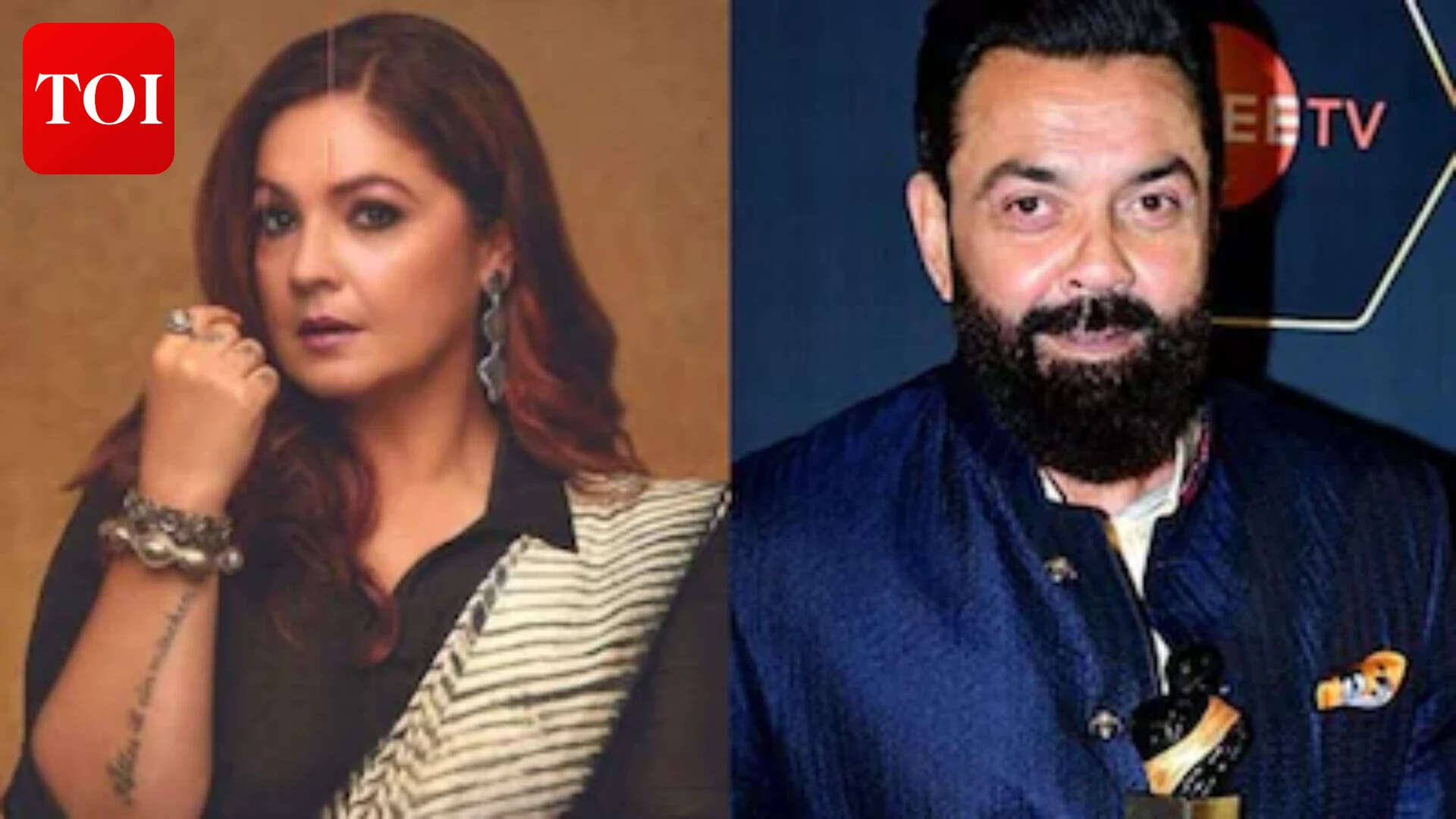
In a recent interview, actor
Pooja Bhatt spoke fondly of memories of her ex boyfriend, actor
Bobby Deol. She spoke warmly and respectfully. And the internet reacted with a kind of surprise that says more about our times than about the interview. Breakups today—in the age of social media—are often followed by “unfollowing” rituals, cryptic social media posts, public blame games, and carefully-curated narratives of victimhood or triumph. Basic dignity after separation was never easy. For any generation. But in an age where every emotion we feel is worth a post, has somehow made us all lose our social graces. At times, it's not even intentionally painful. It’s just that a generation that grew up sharing all their emotions strongly on social media, why should relationships, or breakups, be different?
Which is why a glimpse of simple grace shown by Bhatt was so unusual, it became news. Let’s dig a little deeper to find out why it did and why grace under fire is what builds character. Personally and professionally. In this article, we will discuss how and why we can achieve this after a breakup – when emotions are out of control and the hurt and anger within us push us to go public for a moment of instant gratification.

Modern culture often treats breakups like wars that require winners and losers. The language surrounding relationships has increasingly become combative. Former partners are “cut off,” “exposed,” “dragged,” or “cancelled.” Closure is confused with humiliation. Healing is confused with revenge. That's why Pooja Bhatt's grace while talking about her ex Bobby Deol stood out.
But in reality, not every relationship will last. But every relationship deserves respect. Yes, even after it has ended. The end of love does not erase the value of what once existed. That is what made Bhatt’s remarks resonate. There was no spectacle, no attempt to reopen old wounds for relevance or sympathy. Just recognition, empathy and grace. Here are a few reasons why this lesson is so important in our lives today…
We have normalised emotional destruction after breakups
Modern culture often treats breakups like wars that require winners and losers.
The language surrounding relationships has increasingly become combative. Former partners are “cut off,” “exposed,” “dragged,” or “cancelled.” Closure is confused with humiliation. Healing is confused with revenge. Part of this comes from the architecture of social media itself. Platforms reward emotional extremity. It’s not as if either nuance or empathy “trends.” Public bitterness, on the other hand, generates engagement. It certainly looks like an attractive option.
But it’s a bait. Best not to fall for it. Because this constant pressure to reduce former relationships into stories of betrayal oversimplifies the lived human experience. Relationships are far more complicated than the internet’s moral binaries. People can hurt each other without being monsters. They can fail each other without erasing years of affection, companionship, learning, and growth. Respecting an ex does not necessarily mean romanticising the relationship or denying pain. It’s just the act of understanding. And understanding that intimacy creates emotional history. And emotional history asks all of us to be responsible.
It’s a battle to live in a rage-bait age and not take the most easy way out. But absolutely nothing is worth losing our worth to ourselves. And later regretting it. Because research on the subject says that there’s always regret that follows the blame game that inevitably follows after the end of a relationship.
The role of pop culture in making the breakup narrative just resentful
Modern culture makes graceful breakups far more complicated than they once were because heartbreak today is not just emotional experience, it is also performance, branding, and content. Much of contemporary pop culture runs on transforming private pain into public narrative. Taylor Swift has built one of the most successful music careers of this century by turning heartbreak, longing, betrayal, and emotional memory into deeply relatable art.
There is absolutely nothing wrong with that. Great art has always emerged from love and loss, whether in the poetry of Gulzar or the music of Adele. The problem begins when audiences, especially younger people raised on social media, struggle to distinguish between artistic expression and everyday emotional conduct. Previous generations understood that songs, novels, and cinema were spaces where pain could be dramatised, romanticised, and magnified, while real life still required restraint, privacy, and dignity.
Today, however, people increasingly imitate the performative aspects of breakup culture itself. Emotional hurt is instantly externalised through Instagram stories, cryptic tweets, breakup reels, public call-outs, or podcasts dissecting former partners. Reality begins behaving like fandom culture. This creates a strange cognitive dissonance where people admire emotional vulnerability in art but reproduce bitterness in life without recognising that artists transform pain through craft, distance, editing, metaphor, and time. A heartbreak album is not the same thing as humiliating someone publicly in real time. Older generations consumed ghazals about longing, tragic cinema, or melancholic love songs without necessarily turning every breakup into public spectacle. Our generation increasingly lives heartbreak as though it must also become visible content.
A relationship ending does not mean it was meaningless
One of the most damaging modern ideas about relationships is the belief that if something ended, it must have failed entirely. That’s not true. But this feeling creates enormous emotional confusion. People begin to think that only permanent relationships are successful relationships. But life does not work that way. Some people enter our lives for a season and still change us in some ways. That is called life experience. Some relationships teach emotional courage, self-awareness, vulnerability, ambition, creativity, or resilience. Some help us survive difficult years. Some simply bring joy during a particular chapter of life. The fact that they ended does not erase their contribution.
There is a strange pressure today to rewrite the past after heartbreak. Happy memories are retroactively treated as fake. Entire relationships are dismissed as “wasted years.” Yet human growth is rarely so clean. A relationship can contain love and disappointment simultaneously. It can leave behind scars and gratitude together. The trick is to understand this contradiction. If we are capable of that, it’s a win. Because it says, we understand rough life experiences are all about our own emotional growth.
Today, emotional exposure has become performative currency. It’s our perpetually digital lives that has got us here. We increasingly narrate private heartbreak for audiences rather than processing it privately because we don’t even know that’s an option.
The older generation often understood this better
First, this isn’t a “this generation was better than that generation” point. It’s just that the previous generations were cocooned better because they had better support systems in physical friendships rather than digital ones. And there was no social media urging us to just hold on to our worst impulse. That’s why relationships were treated with more privacy and emotional restraint. Not because older generations were emotionally perfect, but because there was greater understanding that intimacy carries responsibility even after separation. Bhatt isn’t the only one. Many celebrities from earlier decades maintained cordial relationships with former partners despite difficult breakups. It was possible.
Today, however, emotional exposure has become performative currency. Again, it’s our perpetually digital lives that has got us here. We increasingly narrate private heartbreak for audiences rather than processing it privately because we don’t even know that’s an option. Another problem that makes grace almost a forgotten virtue, especially when it’s under fire, is the prevalent culture where public disrespect after separation appears normal, even desirable. Mocking an ex is often framed as confidence. Kindness is mistaken for weakness. Emotional detachment is celebrated more than emotional intelligence.
The funny part is, people privately still long for peace. Just a desire to be understood. That space belongs to your closest friend or family – depends on the person hurting. But do reach out to them. Leave the smartphone aside. It’s not that smart when it comes to EQ.
Respect after love is emotional integrity
The way people speak about former partners reveals a great deal about their emotional character. It shows whether they can separate disappointment from dehumanisation. It shows whether they can acknowledge shared history without weaponising it. And this matters. A lot. Because relationships are not transactions. Human beings are not disposable simply because intimacy no longer exists. The film that immediately comes to mind where all these emotions were dealt with beautifully was Anurag Kashyap's
Manmarziyaan. A truly exceptional exploration of love, breakup, marriage, divorce freinship, passion, all rolled into one.
Of course, there are exceptions. Some relationships involve betrayal, abuse, violence, manipulation, or deep trauma. Respect does not require silence about harm. Nobody owes politeness to cruelty. Boundaries are essential. Distance is often necessary. But in ordinary relationships that simply did not survive changing circumstances, ego clashes, timing, or emotional incompatibility, there is value in preserving dignity.
There is also something profoundly freeing about releasing resentment. Holding onto hatred often extends emotional dependence long after love has ended. It erodes us from within. This is perhaps the main reason why readers responded so strongly to Bhatt’s comments. Her words reflected emotional steadiness rather than performative nostalgia. She did not appear trapped in the past. She appeared at peace with it.
The internet rewards breakups. Real life rewards grace
Digital culture has transformed relationships into consumable narratives. Celebrity relationships, especially, are now treated like episodic entertainment. Fans demand details, villains, betrayals, timelines, and a strong emotional cocktail for vicarious pleasure. This public curiosity often leaves little room for dignified silence. The thing is we may not be celebrities, but courtesy our digital lives, our lives and emotions are also on public display on a regular basis. That’s why restraint is so important in our times.
Love leaves traces, even when it leaves
Every meaningful relationship changes us in some way. The people we once loved become part of our emotional architecture. They shape our memories, fears, humour, tastes, ambitions, and understanding of intimacy. Pretending otherwise is just being dishonest with ourselves. Respecting a former relationship is not about living in nostalgia. It is about recognising that human connection deserves more dignity than the culture currently allows it. There is something deeply civilised about speaking kindly of someone who once occupied an important place in your life. It suggests self-awareness. It suggests healing.