Pir Ghaib and Baoli
Pir Ghaib and Baoli
You're Reading


Synopsis
Behind the Bara Hindu Rao hospital premises is the Pir Ghaib structure and Baoli. The Pir Ghaib is a two-storeyed structure built in approximately 1630 AD by Firoz Shah Tuglaq presumably as a part of his hunting lodge since this a … Read more
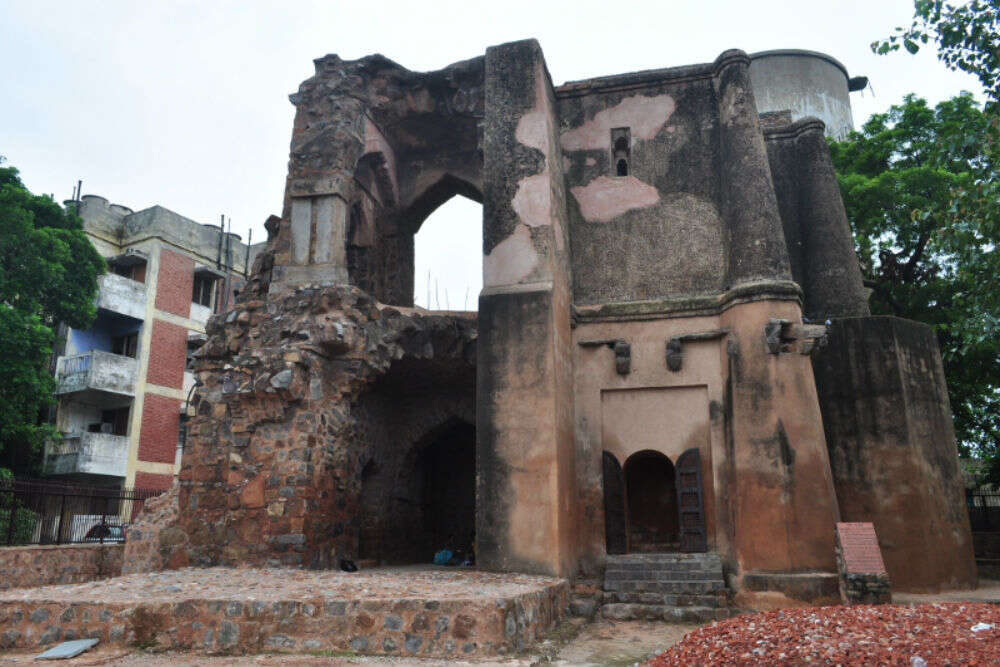 Behind the Bara Hindu Rao hospital premises is the Pir Ghaib structure and Baoli. The Pir Ghaib is a two-storeyed structure built in approximately 1630 AD by Firoz Shah Tuglaq presumably as a part of his hunting lodge since this area was part of the ridge jungles and had a lot of wildlife. Interestingly, it also served as an observatory, this is discernible from the holes carved out in the bottom floor ceiling and second story roof. There is also a chhatri or a covering for covering this hole.
The baoli built next to the hospital and the Pir Ghaib was the water recharge point as well as the only source of water in this area. This baoli was built by Feroz Shah Tughlaq I 1354 AD and was the only source of water for the British officers and soldiers during the revolt of 1857. Legend has it that the British Army was scared that the Indian sepoys employed in the army would poison its waters, hence permanently stationed a guard in the area. Today, this baoli has little water and is mostly covered with trees that have sprouted in its many crevices; this will eventually accelerate its total disrepair. However, there is also a proposal to recharge the baoli through water harvesting and remove the outgrowths.


The baoli had a tunnel originally, this is no longer accessible. Baoli was built by Feroz Shah Tughlaq I 1354 AD and was the only source of water for the British officers and soldiers during the revolt of 1857. Legend has it that the British Army was scared that the Indian sepoys employed in the army would poison its waters, hence permanently stationed a guard in the area. Today, this baoli has little water and is mostly covered with trees that have sprouted in its many crevices; this will eventually accelerate its total disrepair. However, there is also a proposal to recharge the baoli through water harvesting and remove the outgrowths. The baoli had a tunnel originally, this is no longer accessible.

closecomments

Be the first one to review.
We have sent you a verification email. To verify, just follow the link in the message
end of article
Next story
Bara Hindu Rao Hospital
Visual Stories
10 pretty Indian villages to visit this year-end

8 castles in Germany straight out of a fairy-tale

8 tiger reserves every wildlife enthusiast should visit in India

10 animals that are easily spotted in Ranthambore National Park
How to prepare for a night safari in India?

9 rare animals to spot in the Western Ghats and where to find them


Trending Stories
Siberia’s mysterious Indian village: Temples, bhajans, traditions - travellers can’t believe what they found at -40°C
Watch: Shocking video of a travel influencer washing underwear in a hotel coffee machine; 5 things in a hotel that can be dirtier than we think
What’s inside the deep, natural water slides of Snake Canyon in Oman; decoding the mystery
How old is the world's largest tree? 5 facts that inspire travellers to see it
IMD forecasts monsoon rain in these south Indian states, and severe heat in north: What travellers need to know




Comments (0)