
- News
- lifestyle
- travel
- things-to-do
- 5 fun and unusual vacation ideas for the summer holidays in India
5 fun and unusual vacation ideas for the summer holidays in India

5 fun and unusual vacation ideas for the summer holidays in India
The standard practice of summer vacations in India is to head for the usual hill stations. However, there are plenty of other interesting things one can do if one digs deep into Indian culture. This includes everything from trying one's hand at a traditional art form under the guidance of an expert to understanding the local food culture in depth.
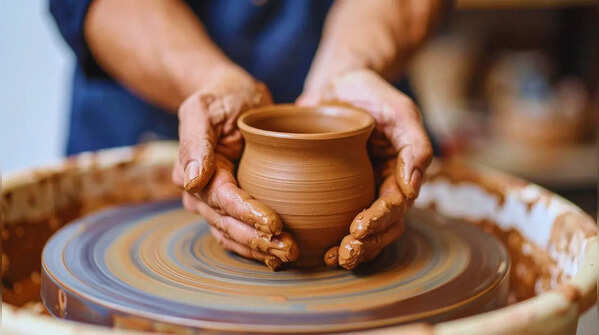
Learn pottery in Andretta in Himachal Pradesh
Andretta, nestled near Palampur in the Kangra Valley of Himachal Pradesh, is far more than a sleepy village—it is one of India’s well-known pottery centres. Its transformation into an artistic hub dates back to the early 20th century, when Irish theatre practitioner Norah Richards founded it as a creative retreat. Over the years, it gained recognition and drew notable artists, including Gurcharan Singh.
Today, institutions such as the Andretta Pottery and Craft Society offer immersive, multi-day workshops designed for varying levels of interest. These sessions introduce participants to key pottery techniques like wheel-throwing, moulding, and glazing, giving them a hands-on understanding of the entire process—from working with raw clay to firing finished pieces.
The ideal time to visit Andretta is from April to June. Accommodation options range from cosy homestays within the village to a wider selection in nearby Palampur.
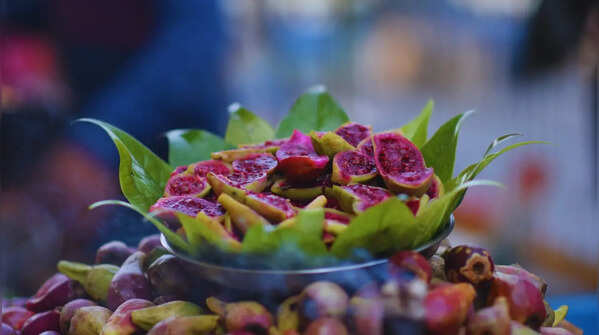
Kumaoni food trail in Uttarakhand
The Kumaon region, home to towns like Almora, Binsar, Mukteshwar, and Nainital, remains one of India’s most underrated destinations for food enthusiasts. Rather than restaurant dining, it is the simplicity of home-cooked meals that truly captures the essence of the region. Staples such as bhatt ki churkani, aloo ke gutke, jhangora kheer, and chainsoo are central to the local diet, and many hosts now offer food experiences and cooking sessions for visitors. In villages around Almora and Mukteshwar, travellers can also take part in farm-to-table experiences, where fresh, locally grown ingredients, often sourced straight from the backyard, are used in the cooking process.
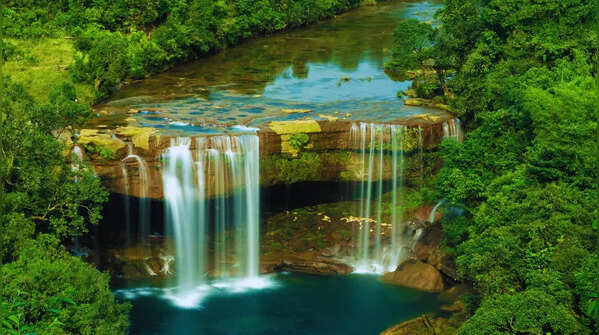
Chase waterfalls in Meghalaya
Meghalaya is one of those rare destinations in India where summer gives way to monsoon charm. From May to July, when the waterfalls are at their best, due to pre-monsoon rainfalls. Nohkalikai Falls around Cherrapunji (also called Sohra) is India’s highest plunge waterfall (roughly 340 meters), but there are many more waterfalls that deserve your attention. Visit Seven Sister Falls (best to visit after it rains), Wei Sawdong Falls, and Krang Suri Falls, famous for its turquoise color waters, near Jowai.
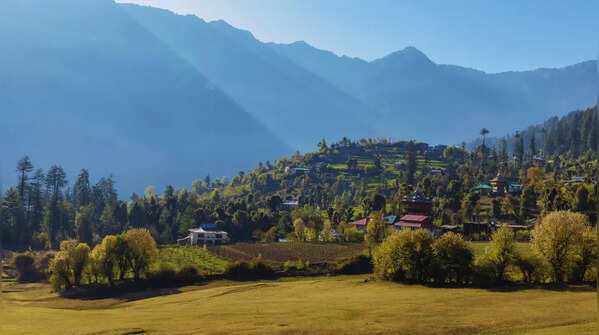
Relax in the meadows of Shangarh in Himachal Pradesh
Shangarh is situated in the Sainj Valley, in the buffer zone of the Great Himalayan National Park. What makes this destination so appealing? The presence of an expansive grassland area known as the Shangarh meadow, which is surrounded by a pine forest. Unlike other hill stations that have luxurious resorts, Shangarh offers modest accommodation facilities such as home stays and guest houses, usually charging INR 1,000-INR 2,500 per night. Visitors engage in activities such as walking through the grasslands or neighboring villages, trekking to the buffer zone, and temple visits like the Shangchul Mahadev Temple. There is low network availability.
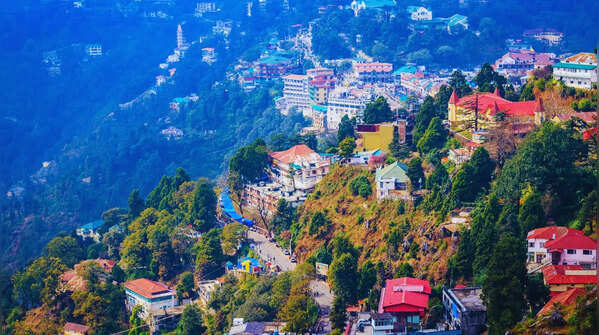
Explore Ruskin Bond’s Mussoorie in Uttarakhand
Mussoorie is considered crowded; however, there is a much better way of experiencing the place—via Ruskin Bond's world. The writer himself has been residing in Landour, the upper quieter portion of Mussoorie, for ages now. One could pay a visit to Cambridge Book Depot on Mall Road (here, the book signing sessions were held most Saturdays. Nowadays, not sure whether things have changed.) One could wander around Landour’s colonial streets, inspiring several stories written by Bond, and visit the likes of Char Dukan, a cluster of quaint cafés beloved by many tourists and residents alike. This would make Mussoorie seem more like an experience rather than just another hill station.
Featured In lifestyle

MORE FROM ETIMES
life & style