4000-year-old fortified town discovered in Saudi Arabia, revealing secrets of early urban life
4000-year-old fortified town discovered in Saudi Arabia, revealing secrets of early urban life
You're Reading

4000-year-old fortified town discovered in Saudi Arabia, revealing secrets of early urban life Delhi pollution update: Capital chokes as AQI hits hazardous levels; Government deploys anti-smog guns Spiritual travel: Alliance Air introduces direct flights from Ahmedabad to Keshod for Somnath pilgrims China expands visa-free travel to 9 more countries: See the list and travel benefits


Synopsis
Archaeologists uncover a 4,000-year-old fortified town in Saudi Arabia’s Khaybar Oasis, revealing a unique shift from nomadic to urban life. Led by Guillaume Charloux, the team identifies sophisticated building techniques, a trade … Read more
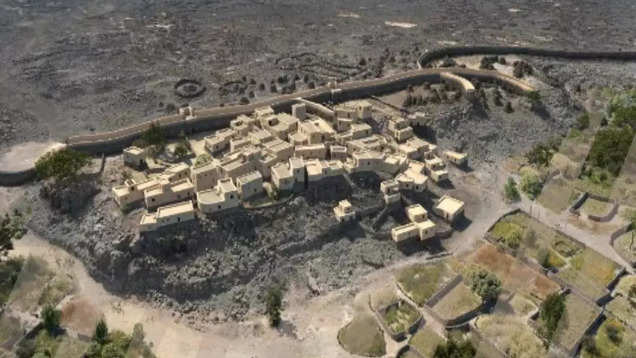

Oldest surviving places in the world!


Read more: 5 most beautiful villages in Uttarakhand for a serene vacation
Reports add that the said settlement, dating back over 4,000 years, showcased a unique path to urbanisation, and also offered insights into how early Arabian societies shifted from nomadic herding to organised urban life.
Unlike the large urban centres of those regions, al-Natah reflects a process of "slow urbanism," where small, organised communities gradually adapted to desert life.
Read more: 9 reasons why everyone is talking about Bandhavgarh National Park
Archaeologists used satellite images to observe al-Natah, and found house foundations and walkways that suggested sophisticated building techniques, like multi-story building support. They also found pottery fragments, pointing to an egalitarian and orderly society focused on survival rather than wealth. Metal artifacts suggest knowledge of metallurgy and a trade network connecting al-Natah with other regions. Additionally, a large necropolis with unique 'stepped tower tombs' reveals the presence of elaborate burial practices.
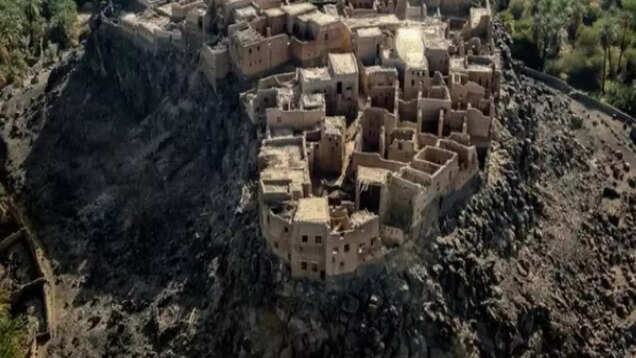
Unlike the rapid development seen in Mesopotamia and Egypt, al-Natah’s gradual urbanisation reflects a distinct societal evolution in northwestern Arabia. Scholars have lauded the research, emphasising its contribution to understanding early Arabian urbanisation. According to Charloux, al-Natah’s steady growth offers an alternative model of urban life that underscores resilience and adaptation. Despite al-Natah’s eventual abandonment around 1500 to 1300 B.C., the site continues to be a focal point for studying the social, cultural, and economic shifts that shaped the region.

closecomments

Be the first one to review.
We have sent you a verification email. To verify, just follow the link in the message
end of article

Visual Stories

10 pretty Indian villages to visit this year-end

8 castles in Germany straight out of a fairy-tale

8 tiger reserves every wildlife enthusiast should visit in India

10 animals that are easily spotted in Ranthambore National Park

How to prepare for a night safari in India?

9 rare animals to spot in the Western Ghats and where to find them



Trending Stories
America by rail: 5 iconic train journeys in the U.S. every traveller must experience once in a lifetime
8 hill stations travellers should avoid during heavy monsoon in India and their safer alternatives
5 classic hill stations in India that are also traffic nightmares
8 places in the world that look AI-generated but exist in real life and and how to visit them
10 unique sea snakes and places they can be found on beach by travellers




Comments (0)